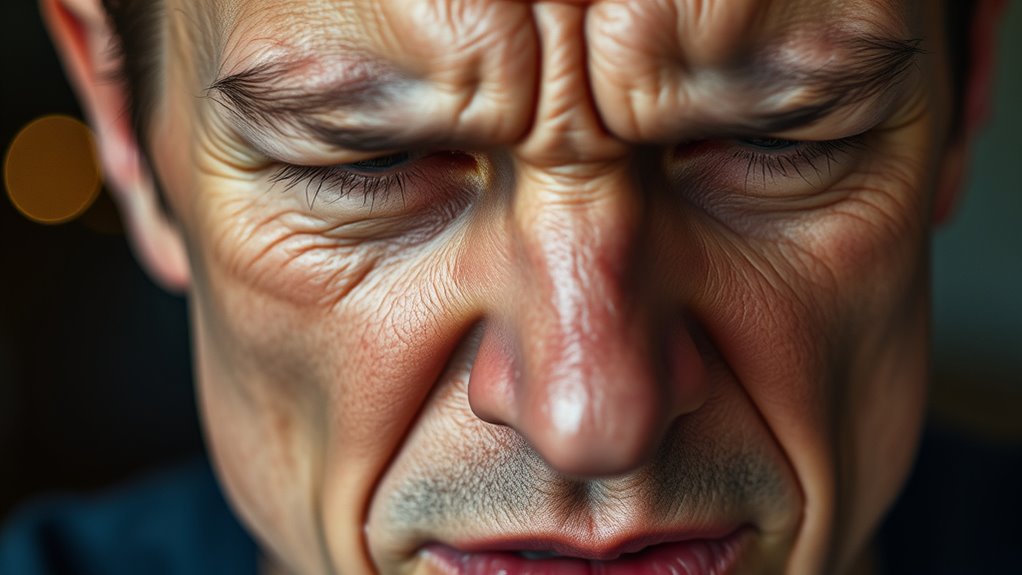

When you’re stressed, your skin releases hormones like cortisol that can weaken your skin barrier, causing breakouts, redness, and dullness. This disruption makes your skin more sensitive, prone to irritation, and less able to retain moisture. Over time, these effects can become persistent and worsen. To cope, focus on reducing stress through relaxation techniques, use soothing skincare ingredients, stay hydrated, and avoid harsh products. Discover more ways to protect your skin amidst stress.
Key Takeaways
- Stress triggers hormonal reactions like cortisol release, leading to skin issues such as breakouts, redness, and dullness.
- A weakened skin barrier from stress increases sensitivity, irritation, dryness, and susceptibility to environmental damage.
- Disrupted skin barrier hampers moisture retention, causing dull skin and heightened reactions to skincare products.
- Managing stress through mindfulness, gentle skincare, and hydration helps strengthen the skin barrier and reduce flare-ups.
- Long-term stress management results in healthier, more resilient skin, improving overall skin appearance and resistance to environmental stressors.
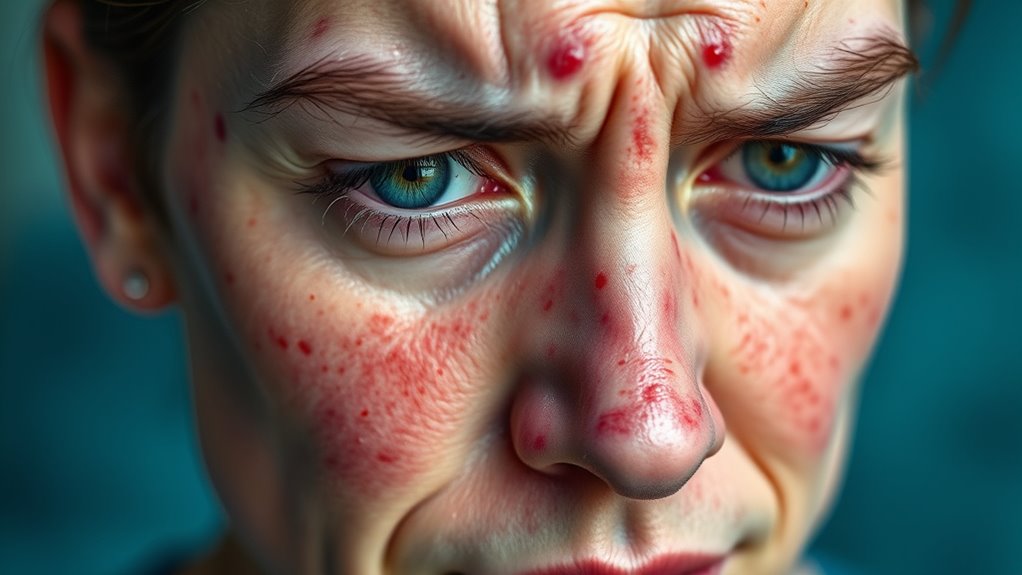
Have you ever noticed how your skin seems to break out or look dull when you’re stressed? That’s no coincidence. Stress can trigger a cascade of reactions in your body, especially affecting your skin. When you’re under stress, your body releases hormones like cortisol, which can lead to stress-induced flare-ups. These flare-ups often show up as acne, redness, or irritation. But the real issue beneath these visible signs is often skin barrier disruption. Your skin barrier is your first line of defense against environmental aggressors, bacteria, and moisture loss. When stress hits, this barrier can weaken, making your skin more vulnerable to irritants, dryness, and breakouts. The disruption not only causes immediate discomfort but also sets the stage for ongoing skin problems if left unaddressed.
As your skin barrier becomes compromised, your skin loses its ability to retain moisture and defend itself effectively. This results in increased sensitivity, redness, and a dull appearance — all common signs of stressed skin. The cycle can continue, with stress-induced flare-ups becoming more frequent and severe. You might notice that your usual skincare routines aren’t as effective when you’re overwhelmed, or that your skin reacts more intensely to products. This is because the disrupted barrier allows irritants to penetrate more deeply, amplifying inflammation and irritation.
To break this cycle, it’s essential to prioritize calming your skin as well as your mind. Start by reducing stress through mindfulness practices like meditation, deep breathing, or gentle exercise. These techniques can lower cortisol levels, helping to prevent further skin barrier disruption. Incorporate soothing skincare ingredients such as ceramides, hyaluronic acid, and niacinamide into your routine. These help rebuild and strengthen your skin’s barrier, restoring moisture and resilience. Avoid harsh cleansers and exfoliants that can strip away natural oils, making your skin more prone to flare-ups.
Hydration is key, so keep your skin well-moisturized, especially during stressful periods. Drinking plenty of water supports your skin’s ability to heal and maintain its protective barrier. Remember, managing stress isn’t just about mental health; it’s directly linked to your skin’s health, too. By taking proactive steps to reduce stress and nourish your skin, you can minimize stress-induced flare-ups and support your skin’s natural barrier. Over time, you’ll notice your skin becoming calmer, more resilient, and better able to withstand the everyday pressures that used to cause trouble.
Frequently Asked Questions
Can Stress Cause Permanent Skin Damage?
Stress can cause permanent skin damage if it leads to prolonged exposure to stress hormones like cortisol, which can break down collagen and reduce skin elasticity. When your skin’s elasticity diminishes, it may result in wrinkles and sagging that become permanent over time. While short-term stress might not cause lasting damage, chronic stress can accelerate aging and lead to irreversible changes in your skin’s appearance.
Do Different Skin Types React Differently to Stress?
Your skin’s reaction to stress is like a tuned instrument—some resonate loudly, while others stay calm. If you have sensitive skin, stress may trigger flare-ups or redness, and hormonal imbalances can amplify these effects. Different skin types respond uniquely, so understanding yours helps you better navigate stress triggers. By managing stress, you can help keep your skin harmonious, avoiding unnecessary sensitivities and hormonal chaos that make your skin react unpredictably.
Are There Natural Remedies to Reduce Stress-Related Skin Issues?
Yes, you can try herbal teas like chamomile or peppermint to soothe your nerves and reduce skin flare-ups. Aromatherapy benefits, such as using lavender or eucalyptus oils, help calm your mind and lower stress levels. Incorporating these natural remedies into your routine can improve your skin’s health, making you feel more relaxed and less prone to stress-related skin issues. Give them a try and notice the calming effects.
How Does Sleep Quality Influence Stress and Skin Health?
Poor sleep quality worsens stress and skin health by causing sleep deprivation, which increases cortisol levels and triggers skin issues like breakouts and dullness. Prioritizing good sleep through dream enhancement techniques can help you relax and reduce stress. When you get enough restful sleep, your skin repairs itself better, and your stress levels drop, leading to healthier, clearer skin. Make sleep a priority for better overall wellness.
Can Stress-Induced Skin Problems Be Prevented Early?
Yes, you can prevent stress-induced skin problems early by practicing stress management techniques like deep breathing, meditation, or exercise regularly. Keep your skin hydrated by drinking plenty of water and using moisturizers suited to your skin type. Maintaining a healthy lifestyle, getting enough sleep, and avoiding triggers like excessive caffeine or alcohol also help. Proactively caring for your mental and skin health reduces the risk of developing stress-related skin issues.
Conclusion
Remember, when stress takes over, your skin pays the price—causing breakouts, dryness, or irritation. For example, imagine you’re preparing for an important presentation, and the anxiety makes your skin flare up just days before. By managing your stress through deep breaths, exercise, or mindfulness, you can protect your skin’s health. Taking these small steps not only calms your mind but also helps keep your skin clear and radiant.