
Reusing damp towels in your beauty routines can be risky because moisture creates a perfect environment for bacteria, fungi, and mold to grow quickly. These microbes can cause skin irritation, redness, or even infections, especially if you have sensitive skin or eczema. Simply rinsing or air drying isn’t enough to eliminate them, and trapped moisture from folding the towel encourages microbial spread. To protect your skin, it’s important to understand proper towel hygiene and how to keep your towels safe—more details to come.

Get beauty and skincare favorites delivered free with Prime
- Fast, free delivery on millions of items
- Prime Video, Amazon Music and more included
- Member-only deals all year
Key Takeaways
- Reusing damp towels fosters bacterial, fungal, and mold growth, increasing infection and skin irritation risks.
- Microorganisms on damp towels can cause skin rashes, redness, and exacerbate conditions like eczema.
- Rinsing alone doesn’t eliminate microbes; thorough drying and regular washing are essential for hygiene.
- Folding or storing damp towels traps moisture, promoting microbial proliferation and odor development.
- Neglecting towel hygiene can lead to long-term health issues requiring medical treatment.
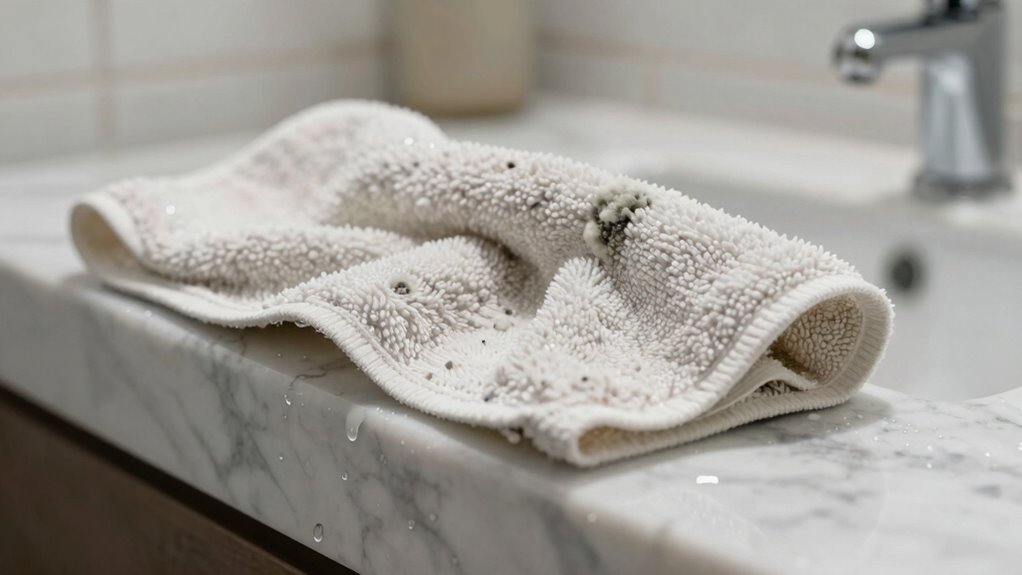
Reusing damp towels might seem convenient, but it can pose notable hygiene risks. When you don’t let your towel dry completely between uses, you create an ideal environment for microbial growth. Moisture provides the perfect breeding ground for bacteria, fungi, and molds, which can multiply rapidly on damp fabric. These microorganisms aren’t just harmless inhabitants; some can cause infections or skin issues, especially if you have cuts or sensitive skin. The longer a towel stays damp, the greater the chance that harmful microbes will thrive on its surface. As you reuse it, these microbes are transferred back onto your skin, increasing the risk of infections or skin irritation.
Reusing damp towels promotes microbial growth, increasing risks of skin infections and irritation.
Skin irritation is another common consequence of reusing damp towels. Bacteria and fungi that grow on moist towels can lead to skin problems such as rashes, redness, or even more severe conditions like folliculitis. If your skin is already sensitive or prone to conditions like eczema, reusing a damp towel can exacerbate irritation and discomfort. The bacteria and fungi on the towel can disrupt your skin’s natural barrier, making it more vulnerable to irritation and inflammation. Additionally, residual soap or skincare products left on a damp towel can also contribute to clogged pores or breakouts, further irritating your skin. Proper towel hygiene is crucial to prevent microbial buildup and maintain skin health.
You might think that simply rinsing your towel after use is enough, but that doesn’t eliminate the risk. Microorganisms can survive washing if the water isn’t hot enough or if detergents don’t contain disinfectants. Air drying is often the best method to prevent microbial growth, but only if you spread the towel out fully and allow it to dry in a well-ventilated space. Folding or cramming damp towels into a laundry hamper traps moisture, encouraging microbial growth and increasing hygiene risks. It’s essential to wash your towels regularly—ideally after every three to four uses—and ensure they are thoroughly dried before reuse. Proper drying techniques, such as air drying, significantly reduce the risk of microbial proliferation on damp towels. Additionally, using proper drying methods ensures that towels are free from excess moisture that can harbor microbes.
Neglecting proper towel hygiene can have more serious implications than just an unpleasant smell or a bit of skin irritation. Persistent microbial contamination can lead to infections that require medical attention. To protect your skin and overall health, you should prioritize drying your towels completely and washing them frequently. It’s also wise to be aware that microbial growth can occur even with seemingly clean towels if hygiene practices aren’t followed correctly. Regularly replacing old towels and practicing good hygiene habits can further reduce the risks associated with damp towels. By doing so, you greatly reduce the chances of microbial growth and skin irritation, keeping your skin healthier and your hygiene routine safer. Reusing damp towels might seem minor, but it’s a habit that can have lasting impacts on your skin’s health and cleanliness.
Products Worth Considering

Garmin Forerunner 55 GPS Running Smartwatch, Black

Therabody Theragun Relief Massage Gun, 3-Speed, Black

Oura Ring 4 Smart Ring – Silver – Size 8
As an affiliate, we earn on qualifying purchases.
Frequently Asked Questions
Can Bacteria Survive on Dried Towels Over Time?
Yes, bacteria can survive on dried towels over time. When towels retain moisture, even after drying, it promotes bacterial growth. If you reuse towels without washing them thoroughly, bacteria and germs can linger, increasing hygiene risks. To minimize this, make sure your towels are completely dry between uses and wash them regularly at high temperatures. Proper drying and hygiene practices help prevent bacteria from thriving on your towels.
Do Different Towel Materials Pose Varying Hygiene Risks?
Imagine your towel as a fortress against cleanliness; its material and fabric porosity determine how well it fights or fosters germs. Cotton towels, with their tight weave, act like sturdy shields, blocking bacteria. Meanwhile, plush microfiber or looser-weaved fabrics may invite more microbes, turning your routine into a germ playground. So, choose your towel material wisely, knowing that fabric porosity markedly influences hygiene risks.
How Often Should I Replace My Towels for Optimal Hygiene?
You should replace your towels every three to four uses, especially if they remain damp after use. Proper towel storage in a dry, ventilated area helps prevent bacteria growth. Washing towels frequently, ideally after three to four uses, maintains hygiene and prevents odors. Regular laundry ensures bacteria and mold don’t thrive, reducing skin irritation or infections. Keep up with this routine for maximum hygiene and healthier skin.
Are There Specific Cleaning Methods to Sanitize Damp Towels?
Sure, you can sanitize damp towels—just remember, towel storage matters. To kill germs effectively, wash your towels with hot water and a strong detergent regularly, ideally after every few uses. Add a bit of bleach for extra sanitation, especially if they’re damp and haven’t dried properly. Keep cleaning frequency high, and make certain towels are thoroughly dried before storage. Irony? Your towels work best when they’re clean and dry!
Can Reusing Damp Towels Cause Skin Irritation or Infections?
Yes, reusing damp towels can cause skin irritation or infections. Bacteria and mold thrive in moist environments, leading to skin issues or infections if you use unwashed towels repeatedly. Over time, towels may lose their softness and develop color fading, which signals bacteria buildup. To prevent these issues, wash your towels regularly, make sure they dry completely, and avoid reusing damp towels to maintain your skin’s health and hygiene.
Conclusion
So, next time you’re tempted to reuse that damp towel, remember it’s basically a cozy hotel for bacteria and fungi. Sure, saving a few minutes and a load of laundry sounds tempting, but your skin and immune system will thank you for choosing hygiene over convenience. Irony? That damp towel that feels so harmless might just be the sneaky villain in your skincare routine. Guess it’s time to say goodbye to dampness and hello to fresh, clean towels!