
To minimize UV exposure risks from nail lamps and beauty devices, always follow the manufacturer’s instructions and limit your time under the lamp. Wearing gloves can protect your skin, and choosing LED devices reduces UV emission. Regularly clean and inspect your equipment for safety and performance. Proper use and maintenance help prevent health concerns and keep your devices working effectively. If you want to know more about keeping yourself safe, this guide has the key details.

Get beauty and skincare favorites delivered free with Prime
- Fast, free delivery on millions of items
- Prime Video, Amazon Music and more included
- Member-only deals all year
Key Takeaways
- Modern nail lamps emit UV within safe limits when used according to manufacturer instructions.
- Wearing gloves and limiting exposure time reduces UV-related health risks.
- Regular cleaning and inspection prevent bacteria buildup and ensure device safety.
- LED nail lamps typically emit lower UV levels than traditional UV lamps, offering safer options.
- Understanding device specifications and following safety standards enhance safe, effective use.
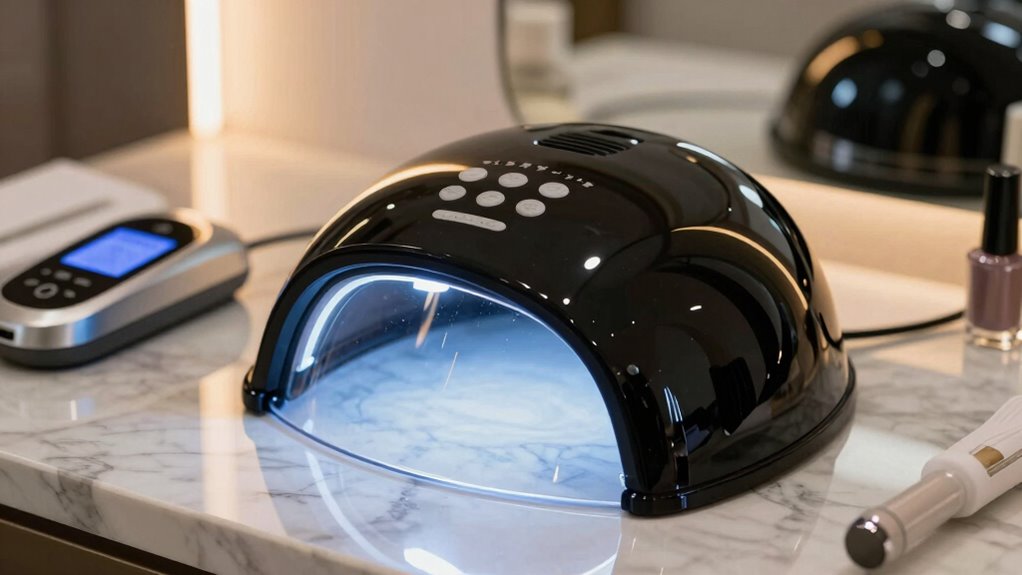
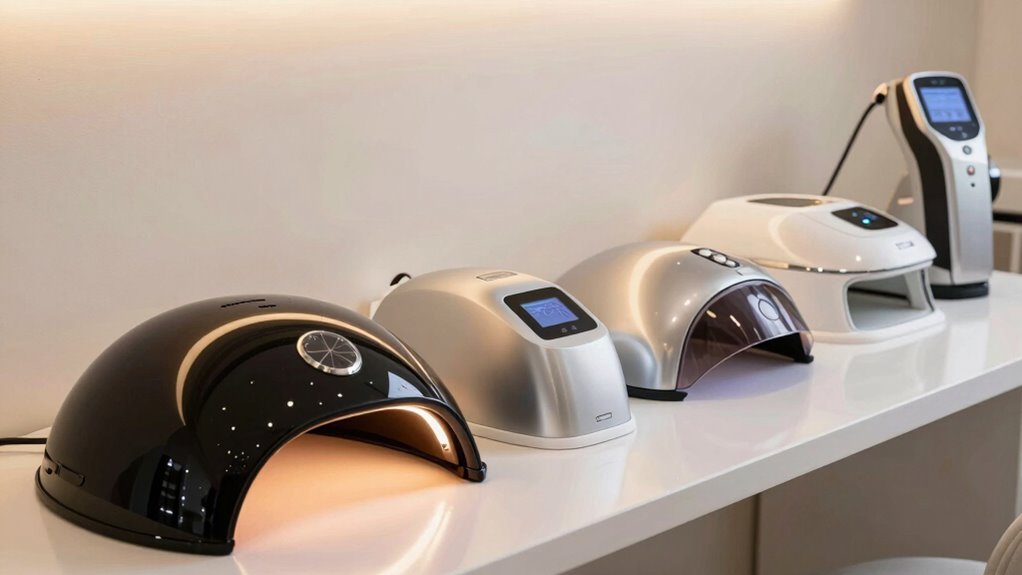
Nail lamps and beauty devices have become indispensable tools for achieving professional-quality results at home. Whether you’re curing gel nails or using LED treatments, understanding how to use these devices safely is vital. Many people worry about UV safety, especially since some nail lamps emit ultraviolet light to cure gels. It’s natural to question whether your exposure poses health risks. The truth is, most modern devices emit UV light within safe limits, but it’s still wise to take precautions. Wearing gloves that protect your skin from UV rays or limiting the amount of time you spend under the lamp can greatly reduce any potential risks. Always follow the manufacturer’s instructions for your specific device to guarantee safe use. Proper device maintenance also plays a big role in safety. Regularly cleaning your nail lamp prevents dust and bacteria buildup, which can compromise its performance. Use a soft, damp cloth or a disinfectant recommended by the manufacturer to wipe down the surface after each use. This keeps your device in top condition and minimizes the risk of infections. Additionally, check the lamp’s bulbs or LEDs periodically. Over time, their effectiveness diminishes, which might lead to uneven curing or longer exposure times, increasing your UV exposure unnecessarily. Replacing worn-out parts promptly ensures your device operates efficiently and safely. Many devices now come with automatic shut-off features, which not only save energy but also reduce accidental overexposure. Be sure to utilize these features and avoid leaving the lamp on longer than needed. Proper device maintenance also extends the lifespan of your equipment, saving you money in the long run. It’s a good idea to keep a routine schedule for cleaning and inspecting your device, especially if you use it frequently. When it comes to UV safety, understanding your device’s specifications is key. If your device uses LED lights, the UV exposure is generally lower than traditional UV lamps, making it a safer choice. Still, no matter what type of device you own, moderation and proper maintenance are your best defenses. Keep your device clean, check for signs of wear, and follow safety guidelines to protect your skin and eyes. Being aware of the UV emission levels of your device can help you better assess potential risks and make informed choices. Recognizing the importance of device longevity can motivate you to properly maintain and care for your tools, ensuring consistent performance over time. Regularly reviewing the manufacturer’s safety recommendations can also help you stay updated on best practices and new safety features. Additionally, understanding the UV safety standards established by health authorities can further guide your usage. Incorporating proper safety precautions into your routine can significantly minimize health risks associated with UV exposure. In the end, being proactive about device maintenance and UV safety ensures you can enjoy beautiful nails without unnecessary worries. With proper care and awareness, your nail lamps and beauty devices remain safe, effective, and a valuable part of your at-home beauty routine.
As an affiliate, we earn on qualifying purchases.
Frequently Asked Questions
Are LED Nail Lamps Safer Than UV Lamps?
Yes, LED nail lamps are generally safer than UV lamps because they emit less harmful UV rays, reducing your risk of skin damage. When doing nail art or applying nail polish, you can use LED lamps confidently, knowing they cure polish efficiently without excessive UV exposure. This makes LED lamps a better choice for frequent use, especially if you’re concerned about long-term skin health while achieving perfect nail designs.
How Long Should I Use a Nail Lamp Each Session?
Think of your nail lamp like a wise old clock—use it just enough to get perfect results. For most LED lamps, 30 to 60 seconds per coat is enough to guarantee ideal curing time adjustments, helping your nail polish last longer. Avoid overexposure; too long can weaken your nails and reduce polish longevity. Keep it precise, and you’ll enjoy beautiful, long-lasting nails without risking unnecessary UV or LED exposure.
Do UV Nail Lamps Increase Skin Cancer Risk?
UV nail lamps can slightly increase your risk of skin damage and, over time, potentially skin cancer, due to UV damage and skin risks. However, the overall risk remains low if you limit exposure, use UV-protective gloves, or apply broad-spectrum sunscreen on your hands before sessions. Being mindful of exposure duration and frequency helps reduce skin risks, making your beauty routine safer while still looking great.
Can I Reduce UV Exposure With Protective Gloves?
Wearing protective gloves can help reduce UV exposure during nail curing, but not all gloves offer effective UV shielding. For example, a salon worker used UV-resistant gloves, notably cutting her skin’s UV contact. Protective barriers like gloves with proper UV-blocking materials are essential for safety. Always choose gloves specifically designed for UV protection, ensuring your skin stays shielded without compromising your ability to work effectively.
Are There Chemical Alternatives to Uv/Led Nail Curing?
Yes, there are chemical alternatives to UV/LED nail curing that minimize LED safety concerns. These options include gel formulas that cure with special chemical activators, like certain soak-off gels or polygel systems, which don’t require UV or LED light. These alternatives reduce your UV exposure and are safer for your skin and nails. Always check product labels for chemical ingredients and follow manufacturer instructions to guarantee safe and effective application.
Conclusion
When it comes to nail lamps and beauty devices, understanding UV exposure isn’t just about knowing the risks; it’s about making informed choices, practicing safe habits, and protecting your skin. By being aware of potential dangers, applying proper safeguards, and staying educated, you take control of your beauty routine. You can enjoy radiant nails and glowing skin without compromising your health, because awareness, caution, and prevention are the keys to beauty and safety—your beauty and safety, always in your hands.
Halloween Picks
halloween
As an affiliate, we earn on qualifying purchases.