Poor lighting in your bathroom or vanity can make your skin look worse in the mirror by casting unflattering shadows, emphasizing uneven texture, or dullness. Harsh or dim lighting often distorts your skin’s true tone and flaws, leading to a less flattering appearance. Switching to natural or well-placed, diffuse lighting can reveal your real skin’s glow and improve how you see yourself. Keep exploring to learn tips that can transform your light setup and boost your confidence.

Get beauty and skincare favorites delivered free with Prime
- Fast, free delivery on millions of items
- Prime Video, Amazon Music and more included
- Member-only deals all year
Key Takeaways
- Harsh, unflattering bathroom or vanity lighting can cast shadows that emphasize imperfections and dull skin appearance.
- Poor lighting conditions may cause the skin to look uneven, dull, or less radiant in the mirror.
- Dim or overly bright lighting distorts true skin tone, making it appear worse than in natural light.
- Overhead lighting creates shadows that accentuate lines and texture, worsening skin perception.
- Inadequate or uneven lighting hampers accurate assessment of skin health and makeup application.

Have you ever noticed how your skin looks flawless in photographs but appears dull or uneven in the mirror? That’s often due to the lighting conditions, which can dramatically influence how your skin appears. The lighting in your bathroom or vanity area might be casting unflattering shadows or emphasizing imperfections that you don’t see in more natural light. This can make you feel less confident about your appearance, especially when you’re trying to get ready for the day. But understanding how lighting impacts your skin can help you make smarter choices about makeup application and skin hydration routines, ultimately improving how you look in both the mirror and photos.
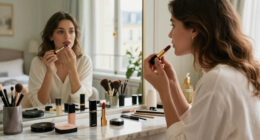
When you apply makeup under poor lighting, it’s easy to make mistakes or unevenly apply products. Harsh or dim lighting can cause you to over-apply foundation or blush, leading to a cakey or patchy look that’s not visible in natural light. To prevent this, you should aim to do your makeup in a well-lit space with natural or full-spectrum lighting that mimics daylight. This helps you see your true skin tone and ensures your makeup blends seamlessly. Proper makeup application in good lighting can hide uneven skin tone, redness, or blemishes, making your skin look smoother and more radiant. Also, focusing on skin hydration before applying makeup is key. Well-hydrated skin creates a better canvas, allowing your makeup to sit evenly and look fresh longer. If your skin is dry or flaky, makeup can cling to dry patches, making imperfections more noticeable under certain lights. Lighting conditions can significantly influence how your skin appears, so choosing the right environment is crucial. Additionally, paying attention to color temperature can help you select lighting that enhances your natural skin tone and reduces the appearance of imperfections. Being aware of lighting placement can further prevent unflattering shadows and highlight your best features.
The way light hits your face can also accentuate or hide skin imperfections. For example, overhead lighting can cast shadows that emphasize lines or uneven texture, while softer, diffused lighting tends to soften those features. You might notice that your skin looks dull or uneven in your bathroom mirror but looks more balanced in photos taken in natural light. To combat this, you can use strategic lighting around your mirror—adding a ring light or multiple light sources at eye level can help distribute light evenly across your face, reducing shadows and highlighting your skin’s natural glow. Adjusting lighting can significantly improve how your skin appears, making a big difference in your overall look. Moreover, experimenting with different light temperatures can help you find the most flattering setup for your skin tone and texture. Understanding the impact of lighting on skin appearance enables you to create a more flattering environment for your daily routines.
Ultimately, understanding how lighting affects your skin’s appearance helps you adjust your makeup application and skincare routine for better results. Keep your skin hydrated to maintain a plump, dewy look that reflects light beautifully. Use makeup techniques suited for your lighting environment, and consider upgrading your lighting setup to see your true skin tone and texture. This way, whether you’re looking in the mirror or snapping a photo, your skin will always look its best, free from the distortions of poor lighting.
As an affiliate, we earn on qualifying purchases.
Frequently Asked Questions
How Can I Test My Mirror Lighting at Home?
To test your mirror lighting at home, start by adjusting the mirror placement so it’s at eye level and reflects natural light. Then, turn on your lights and observe how your skin looks—check for shadows or color distortions. Use a color temperature tester or compare how your skin appears under different lighting colors (warm versus cool). Make small adjustments until your skin looks natural and even, reducing unflattering shadows.
Does Window Lighting Affect How My Skin Appears?
Natural light from windows can subtly influence how your skin appears, often highlighting its true tone and texture. Artificial lighting, especially harsh or dim lights, can distort your skin’s look, making imperfections seem more prominent. When you step into daylight, your skin tends to look more even and vibrant. To get the most accurate reflection, try to balance natural and artificial lighting, avoiding overly bright or shadowy spots that can mislead your perception.
Are Certain Light Bulbs Better for Skin Appearance?
Certain light bulbs can improve your skin’s appearance by choosing ones with a natural or warm color temperature, around 2700K to 3500K, which mimics daylight. Opt for bulbs with moderate light intensity to avoid harsh shadows or overly bright spots. This balanced lighting minimizes skin imperfections and creates a more flattering look. So, selecting bulbs with the right color temperature and appropriate light intensity helps you see your skin more accurately and beautifully.
How Often Should I Adjust My Bathroom Lighting?
You should adjust your bathroom lighting whenever you notice your reflection looking different—say, weekly or as needed. Think of lighting like a makeup artist’s brush; changing the angles and color temperature can highlight your best features. Experiment with different lighting angles to soften shadows, and opt for warmer tones if your skin looks dull. Regular tweaks help guarantee your lighting complements your skin’s natural glow.
Can Skincare Products Change How Lighting Impacts My Skin?
Yes, skincare products can influence how lighting impacts your skin. Proper skincare can even out your skin tone, reduce redness, and improve skin texture, making your makeup application look smoother and more natural under different lighting conditions. When your skin appears healthier and more balanced, lighting tends to highlight flaws less. Use products suited to your skin type to enhance your skin tone, and you’ll notice a better reflection, no matter the lighting.
Conclusion
So, next time you glance in the mirror and feel a tad disappointed, remember it might just be the lighting playing tricks on you. Instead of dwelling on perceived flaws, try shifting your perspective or adjusting the light. After all, everyone has their unique glow, and sometimes, a gentle change in illumination is all it takes to see yourself in a more flattering light. Embrace your natural beauty beyond the mirror’s fleeting illusions.
Halloween Picks
halloween
As an affiliate, we earn on qualifying purchases.