TL;DR

Get beauty and skincare favorites delivered free with Prime
- Fast, free delivery on millions of items
- Prime Video, Amazon Music and more included
- Member-only deals all year
Halloween is becoming a distinct ‘mini-peak’ for beauty retail, with demand building weeks before 31 October as social media trends like ‘Code Orange’ drive early seasonal shopping. The report argues retailers need fulfilment flexibility to handle successive small peaks rather than relying on historical sales data alone.
Halloween is increasingly functioning as a distinct ‘mini-peak’ for beauty retailers, with demand building weeks before 31 October as shoppers act on social media signals such as the ‘Code Orange’ trend, according to an industry analysis published by Cosmetics Business. The report argues that seasonal beauty demand now arrives in a series of smaller, sharper spikes across autumn, pressuring retailers’ inventory and fulfilment operations well before the traditional Golden Quarter begins — just as major players like Target invest in beauty destinations to capture shifting demand.
The report points to social media as the main accelerant. ‘Code Orange’, a hashtag shoppers use to flag that Halloween, autumn and ‘spooky season’ products have arrived in stores, has turned the appearance of seasonal stock into something worth actively seeking out and sharing. By early September, there were 128.1K #CodeOrange posts on TikTok and 255K ‘Code Orange’ posts on Instagram, according to the report. It notes that social media compresses the time between discovery and purchase, meaning an early sighting shared online can convert into product demand quickly, though the report presents these figures as raw observations rather than a measured year-on-year comparison.
The demand itself spans several beauty categories. As consumers move out of summer, the report identifies interest in richer moisturisers, gentler cleansers and products containing ceramides, glycerine and hyaluronic acid to support the skin barrier, along with a return of retinoids to autumn routines. In colour cosmetics, warm copper, berry, burgundy and earthy brown tones are described as typical autumn territory, with sheer finishes making the shades more wearable. Trends such as ‘eyemaxxing’ — coordinating eye make-up shades to eye colour — add a further layer of demand, the report says.
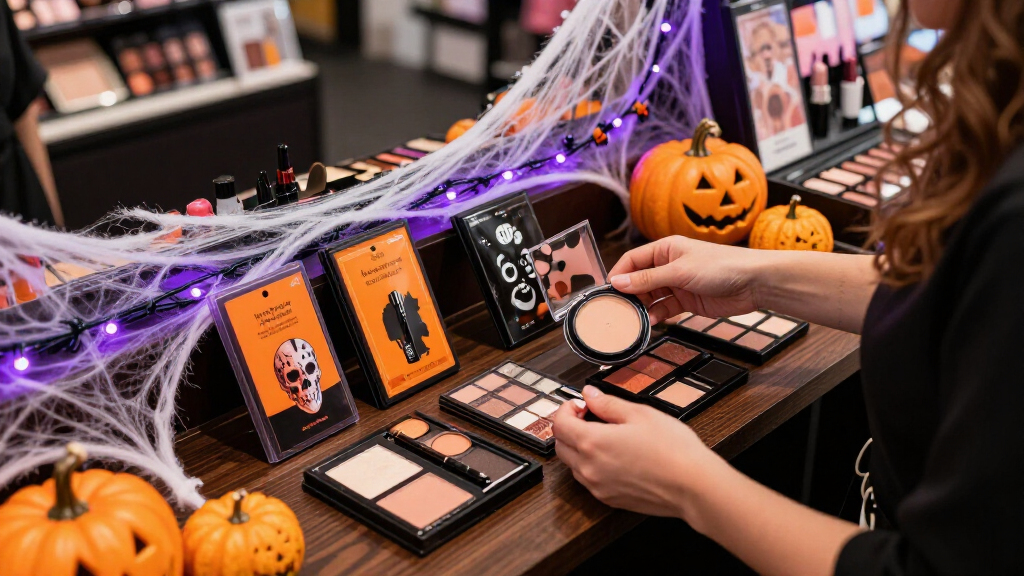
Halloween itself can create particularly sharp spikes, according to the analysis, because purchases of costume make-up, face products and statement colours are concentrated into a short window. Fragrance contributes too, with pumpkin spice, vanilla chai and cinnamon-inspired scents extending autumn demand across perfume and body care.
Why Successive Peaks Strain Fulfilment
The report’s central argument is operational: the challenge for retailers is not the size of any single peak but the cumulative effect of multiple peaks arriving in quick succession — post-summer skincare reset, autumn colour, Halloween, and then the Christmas trading period almost immediately afterwards. Halloween orders also carry firm deadlines, since customers may need products before a party or weekend event, putting pressure on carrier capacity and delivery promises.
The report advises retailers to look beyond historical sales patterns when planning for autumn, using social media activity, marketing campaigns, product launches and weather forecasts as earlier demand signals. In beauty, where trends can change quickly and products have a short window of heightened relevance, real-time visibility across stock, warehouse activity and carrier performance allows teams to respond before availability or delivery commitments are affected. It also flags specialist fulfilment needs, such as temperature-controlled skincare and fragile make-up items.
How the Autumn Beauty Calendar Shifted
The traditional retail calendar has been built around established moments such as Black Friday and Christmas. The report says beauty demand now builds around a series of smaller seasonal and cultural events, with Halloween acting as a mini-peak within the wider Golden Quarter. Social media has shortened the gap between a trend emerging and consumers buying, meaning demand signals can appear before historical sales data would suggest them.
The report recommends building flexibility into fulfilment operations: sufficient labour capacity for concentrated order bursts, the ability to prioritise products or channels when demand shifts, and picking and packing processes that maintain speed under pressure. Automation is described as useful for absorbing repetitive warehouse tasks during short peaks, while experienced operational teams remain needed to handle exceptions.
The report presents the 128.1K TikTok and 255K Instagram ‘Code Orange’ posts as raw counts observed by early September; it does not provide a prior-year baseline or growth rate, so the size of any year-on-year increase is unclear. The analysis is interpretive rather than a sales study — it does not cite specific retailer revenue figures, category sales data or named companies experiencing Halloween-driven spikes.
Whether Halloween demand translates into incremental annual sales or simply shifts purchases forward from the Christmas period is not addressed. The extent to which individual trends such as ‘eyemaxxing’ or cosy-season fragrance produce measurable sales lift, as opposed to social media visibility, also remains unquantified in the source material.
Retailers’ Run-Up to 31 October
Over the coming weeks, retailers will be monitoring whether early social media interest converts into actual order volumes ahead of 31 October, and adjusting inventory and labour plans accordingly. The report recommends connecting demand signals to operational data so that teams can respond when a trend converts into orders faster than forecast.
Immediately after Halloween, attention shifts to the main Christmas trading period, testing whether fulfilment operations built for a single traditional peak can absorb a rapid succession of smaller ones. Future reporting on autumn sales performance may clarify whether Halloween’s mini-peak status is supported by transaction data.
Key Questions
What is the ‘Code Orange’ trend?
‘Code Orange’ is a social media hashtag shoppers use to flag that Halloween, autumn and ‘spooky season’ products have appeared in stores. By early September, the report counted 128.1K posts on TikTok and 255K on Instagram using the term.
Why is Halloween considered a ‘mini-peak’ for beauty retail?
According to the report, Halloween generates sharp, concentrated demand for costume make-up, face products, statement colours and seasonal fragrance within a short window — a smaller peak that sits inside the wider Golden Quarter alongside Black Friday and Christmas.
Which beauty products see autumn demand, per the report?
The report points to richer moisturisers and barrier-supporting ingredients like ceramides, glycerine and hyaluronic acid; the return of retinoids; warm copper, berry and burgundy make-up shades; and pumpkin spice, vanilla chai and cinnamon-inspired fragrances.
Does the report show Halloween beauty sales are growing year on year?
No. The report provides social media post counts as raw observations without a prior-year baseline, and does not cite sales figures. Its claim that Halloween is a growing mini-peak is an interpretation of demand patterns, not a quantified sales comparison.
What does the report recommend retailers do?
It recommends using social media signals alongside historical data for planning, maintaining real-time visibility across stock, warehouse and carrier performance, and building fulfilment flexibility — including labour capacity for order bursts and handling for temperature-controlled or fragile beauty products.
Source: rss
Fall Picks
fall essentials
As an affiliate, we earn on qualifying purchases.