
TL;DR

Get beauty and skincare favorites delivered free with Prime
- Fast, free delivery on millions of items
- Prime Video, Amazon Music and more included
- Member-only deals all year
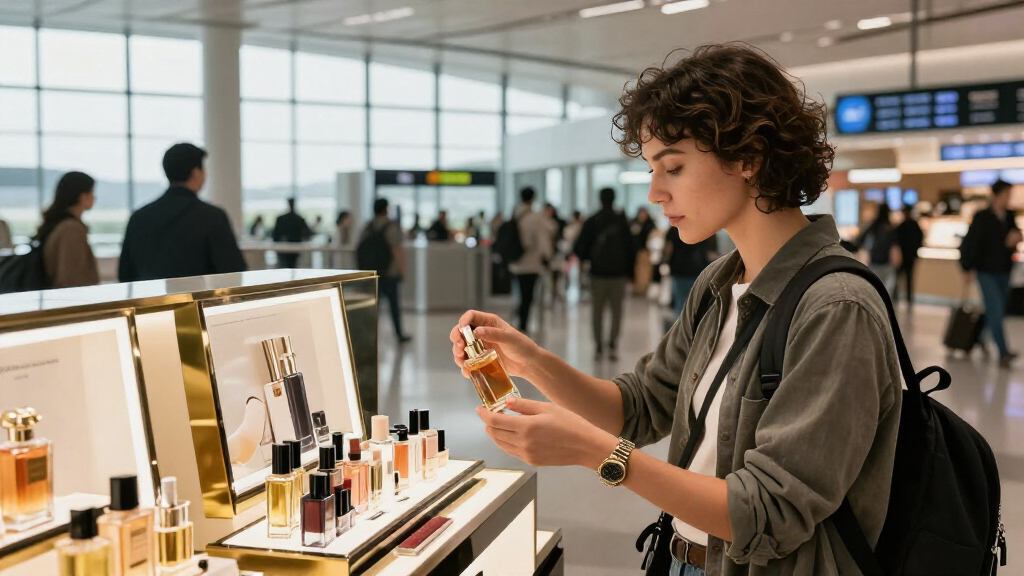
A Cosmetics Business report describes travel retail, including airport beauty shopping, as a potential new sales channel for premium beauty brands facing pressure to justify higher prices. The available report extract does not provide sales figures, brand examples or evidence quantifying the airport-shopping trend.
Travel retail is emerging as a new opportunity for luxury beauty brands facing pressure to defend higher prices, according to a 2026 report by Cosmetics Business. The report points to airport shopping as a setting where beauty brands may be benefiting from changing consumer habits, though the available extract provides no sales data to measure the trend.
The report describes the beauty market in 2026 as crowded with products, brands and what it calls “so-called innovations.” It says premium brands are finding it harder to maintain and justify higher price points as consumers encounter more lower-cost alternatives, including dupes.
Skin care illustrates the challenge. Cosmetics Business cites McKinsey’s State of Beauty Industry Trends 2026 report, which found that consumers are increasingly choosing lower-priced products, including offerings from dermatologist-backed and Korean beauty brands. According to the cited research, these products can appeal through visible results and clinical credibility without luxury pricing.
Against that backdrop, Cosmetics Business identifies travel retail as a possible route for premium brands to connect with shoppers. It says airport beauty shopping is changing consumer habits in ways not seen online or in conventional physical stores. However, the extract does not specify which brands or airports are involved, how shoppers’ behavior differs, or how much revenue the channel generates.
The development matters because it points to a potential way for luxury beauty companies to reach customers while their usual pricing advantage is under pressure. If airport shopping encourages purchases that consumers might not make through online or high-street channels, travel retail could give brands a distinct sales and discovery environment.
That possibility is not the same as proof that airports are reversing wider price pressures. The source extract offers no figures on airport beauty sales, conversion rates, average spending or growth. For now, the report’s central point is a channel opportunity, not evidence that premium brands have resolved the challenge of showing why their products cost more.
Products Worth Considering

Oral-B iO Series 5 Rechargeable Electric Toothbrush with 3 Brush Heads and Travel Case, Black

Garmin Venu® 3 Premium Fitness Smartwatch 45mm Black

Oura Ring 5 Smart Ring – Stealth, Size 11
As an affiliate, we earn on qualifying purchases.
Price Pressure Behind the Airport Shift
Cosmetics Business frames the travel-retail development against a broader struggle for premium beauty. Its account says dupes and consumer interest in cheaper products have made it more difficult for higher-priced brands to justify their positioning. The pressure is especially relevant in skin care, where the idea that premium products necessarily perform better is being challenged.
The report attributes that change in consumer preference to McKinsey’s 2026 beauty-industry research, which it says identified growing interest in lower-priced brands with perceived results and clinical credibility. Travel retail is presented as a possible counterpoint: a different shopping environment in which brands may reach consumers in ways that differ from standard stores and online retail. The source provided does not explain the mechanisms behind that difference.
““The beauty industry has become a battleground in 2026.””
— Cosmetics Business, describing the 2026 beauty market
Sales Evidence Still Missing
The available extract does not state how much luxury beauty sales have grown in travel retail, what period any growth covers, or what baseline is used for comparison. It also names no brands, airport operators or specific market examples that would allow readers to assess the scale of the development.
It is not clear whether airport shopping changes what consumers buy, how much they spend, or simply where they make purchases. Nor does the extract establish that the channel can offset the wider shift toward lower-priced products. Those points would require further reporting and supporting data.
Evidence Needed to Test the Trend
The next useful indicators would be reported travel-retail sales figures, clearly identified time periods and comparisons with other sales channels. Examples from brands or airport retailers could also clarify which products are gaining traction and how shoppers’ behavior differs from online and high-street purchasing.
Until those details are available, the development is best understood as a reported opportunity for luxury beauty, rather than a quantified market turnaround. The supplied extract does not announce a next event, forecast or company initiative.
Key Questions
What is the reported development?
Cosmetics Business identifies travel retail and airport beauty shopping as a potential opportunity for premium beauty brands facing pressure on prices.
Why are luxury beauty brands under pressure?
The report cites competition from dupes and lower-priced products. It also says consumers are turning to some dermatologist-backed and Korean beauty brands that offer visible results and clinical credibility at lower prices.
Does the source show how much airport beauty sales have grown?
No. The supplied extract gives no sales figures, growth rate or comparison period, so the scale of the trend cannot be determined from it.
What is still unknown about the airport-shopping shift?
The extract does not identify the brands or airports involved, explain how shopper behavior differs, or show whether travel retail is offsetting the shift toward cheaper beauty products.
Source: cosmeticsbusiness.com