
TL;DR
Listen free for 30 days with Audible
Thousands of audiobooks and originals — cancel anytime.
Start your free trialAs an affiliate, we earn on qualifying purchases.
Lab Denim has announced the launch of WTRLSS, a new digital dyeing process that promises to reduce water and chemical use in textile production. This marks a significant step in sustainable fashion innovation. Details about the technology’s capabilities and adoption are still emerging.
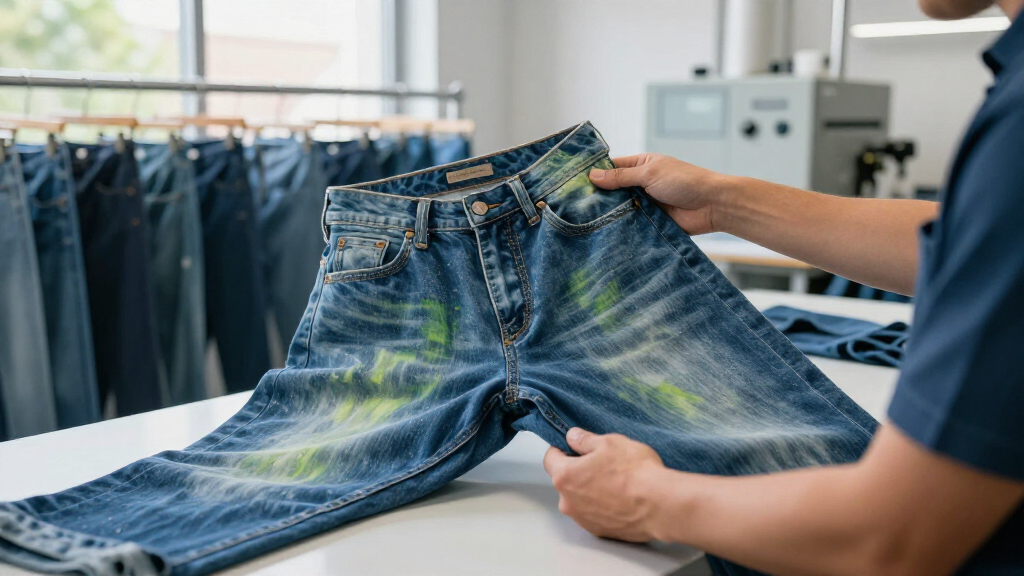
Lab Denim has unveiled WTRLSS, a new digital dyeing process designed to significantly reduce water, energy, and chemical consumption in fabric production. This development is part of ongoing efforts to make sustainable fashion more scalable and environmentally friendly, with the company positioning WTRLSS as a breakthrough in digital textile treatment technology.
Lab Denim, a pioneer in sustainable denim manufacturing, announced the launch of WTRLSS, a proprietary digital dyeing technology. According to the company, WTRLSS uses a digital printing process that minimizes water and chemical use compared to traditional dyeing methods. The technology is currently in pilot testing with select partners, with plans for broader industry adoption later this year. Industry experts suggest that WTRLSS could significantly cut the environmental footprint of textile dyeing, which is traditionally resource-intensive. However, detailed technical specifications and the extent of its environmental benefits remain undisclosed, and the company has not yet announced commercial rollout timelines.Meanwhile, WTRLSS builds on Lab Denim’s previous innovations in eco-friendly manufacturing, including waterless finishing techniques. The company emphasizes that the new process aligns with its commitment to sustainability and circular fashion. The announcement was made during a recent industry event, where Lab Denim highlighted WTRLSS as part of its broader strategy to lead in sustainable textile innovation.
Potential Impact on Sustainable Fashion Industry
The introduction of WTRLSS could be a major step toward reducing the environmental impact of textile dyeing, which accounts for a significant portion of global water and chemical use. If successful at scale, this technology may influence industry standards, encouraging other brands and manufacturers to adopt digital and eco-friendly dyeing methods. This development supports the growing consumer demand for sustainable products and could help brands meet stricter environmental regulations. However, the actual environmental benefits and commercial viability are still to be proven through wider testing and adoption, making this an important but early-stage innovation in sustainable fashion.As an affiliate, we earn on qualifying purchases.
Evolution of Digital and Eco-Friendly Textile Treatments
Textile dyeing remains one of the most resource-intensive processes in fashion, consuming vast quantities of water, chemicals, and energy. Over recent years, brands like Lab Denim have invested in alternative methods such as waterless dyeing and digital printing to improve sustainability. The launch of WTRLSS continues this trend, representing a move toward fully digital, resource-efficient fabric treatment technologies. Prior to this, Lab Denim developed waterless finishing techniques, positioning itself as a leader in eco-conscious manufacturing. The new WTRLSS technology signals a potential shift in how textiles are dyed, with digital processes offering more precise, less wasteful alternatives. Details about the technical workings of WTRLSS are still emerging, and industry experts are watching closely to see if it can be scaled effectively.Unverified Claims and Technical Details Still Unclear
It is not yet confirmed how scalable WTRLSS is or whether it can be adopted widely across different textile types and manufacturing settings. The company has not disclosed detailed technical specifications or environmental performance data, and the timeline for commercial deployment remains uncertain. Industry experts caution that further testing and validation are needed to verify the claimed resource savings and environmental benefits.Upcoming Pilot Programs and Industry Adoption Plans
Lab Denim plans to expand pilot testing of WTRLSS with selected manufacturing partners over the coming months. Broader industry adoption will depend on pilot results, technical scalability, and cost-effectiveness. The company is expected to release more detailed technical information and performance data in the second half of 2024, alongside potential commercial rollout plans. Industry observers will be watching closely to see if WTRLSS can deliver on its sustainability promises at scale.Key Questions
What is WTRLSS technology?
WTRLSS is a digital dyeing process developed by Lab Denim aimed at reducing water, energy, and chemical use in fabric treatment. Its specifics are still being disclosed, but it is positioned as a more sustainable alternative to traditional dyeing methods.
How does WTRLSS differ from traditional dyeing?
Unlike conventional dyeing, which often involves large quantities of water and chemicals, WTRLSS uses digital printing techniques that can precisely deposit dyes onto fabrics with minimal resource use. The exact technical differences are still under wraps.
When will WTRLSS be commercially available?
Lab Denim has not announced an exact launch date. Pilot testing is ongoing, with wider industry adoption expected later in 2024, pending successful validation of the technology’s performance and scalability.
What are the environmental benefits of WTRLSS?
Based on claims, WTRLSS could significantly lower water and chemical consumption during dyeing, contributing to more sustainable textile manufacturing. However, detailed environmental impact data has not yet been released.
Could WTRLSS influence industry standards?
If proven effective at scale, WTRLSS has the potential to set new benchmarks for digital, eco-friendly dyeing processes, encouraging wider industry adoption of sustainable practices.
Source: rss
NFL season / tailgating Picks
team gear
As an affiliate, we earn on qualifying purchases.