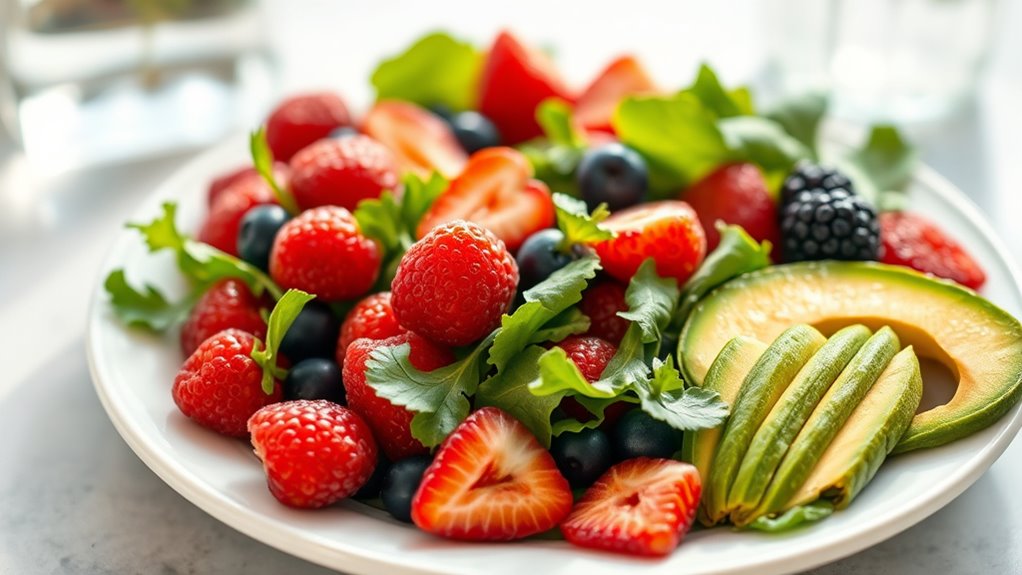

A balanced diet rich in vitamins A, C, E, zinc, and healthy fats supports skin health by boosting collagen, improving elasticity, and promoting a natural glow. Avoid excessive sugar, processed foods, and inflammatory ingredients, which can accelerate aging and cause irritation. Foods like berries, leafy greens, and fatty fish reduce inflammation and strengthen your skin’s barrier. For lasting results, focus on nourishing your body with nutrient-dense choices—more tips await if you keep exploring.
Key Takeaways
- Adequate intake of vitamins A, C, E, and zinc supports collagen synthesis and skin repair.
- Anti-inflammatory foods like berries and fatty fish can reduce skin sensitivity and promote resilience.
- Limiting sugar and processed foods helps prevent glycation and skin aging.
- Identifying and avoiding food sensitivities reduces chronic inflammation and skin irritation.
- Proper hydration and a balanced diet with nutrient-rich whole foods enhance overall skin health.

Your diet plays a essential role in maintaining healthy, radiant skin. What you eat directly influences your skin’s appearance and resilience. When your body isn’t getting enough essential nutrients, it can lead to nutritional deficiencies that manifest visibly on your skin. For example, a lack of vitamins A, C, E, and zinc can cause dryness, dullness, and slow healing. These deficiencies weaken your skin’s barrier, making it more prone to irritation and premature aging. Conversely, consuming a balanced diet rich in fruits, vegetables, lean proteins, and healthy fats can support collagen production, improve elasticity, and give your skin a natural glow. Paying attention to your nutritional intake is fundamental because even small gaps in essential nutrients can have noticeable effects on your skin’s health.
In addition to deficiencies, food sensitivities can also impact your skin’s appearance. Food sensitivities, unlike allergies, often cause subtle, chronic inflammation that shows up as redness, acne, or irritation. Common culprits include dairy, gluten, soy, and processed foods. When you consume foods you’re sensitive to, your immune system reacts, leading to inflammation that can compromise your skin’s health and slow down its repair mechanisms. Identifying these sensitivities often requires paying close attention to how your skin reacts after certain meals. Eliminating or reducing these foods can markedly improve skin clarity and reduce flare-ups. It’s not just about avoiding specific ingredients—your overall diet matters, too. Incorporating anti-inflammatory foods like berries, fatty fish, and leafy greens can help soothe skin and reduce sensitivity reactions.
Furthermore, what you avoid is just as important as what you include. Overly processed foods, high sugar content, and unhealthy fats can accelerate aging and promote breakouts. Excess sugar, for instance, triggers glycation, a process that damages collagen and elastin, leading to sagging and wrinkles. Meanwhile, processed foods often contain additives and preservatives that can irritate sensitive skin or trigger allergic responses. By choosing whole, minimally processed foods, you support your skin’s natural defenses and reduce the burden of inflammation. Hydration is another key aspect—water helps flush toxins, keeps your skin plump, and promotes a healthy complexion. A diet that balances nutrient-rich foods, minimizes potential food sensitivities, and avoids inflammatory ingredients provides a solid foundation for enduring skin health.
Vitamin A C E supplements for skin
As an affiliate, we earn on qualifying purchases.
As an affiliate, we earn on qualifying purchases.
Frequently Asked Questions
Do Specific Diets Cause or Prevent Skin Conditions Like Acne?
You might think certain diets cause or prevent skin conditions like acne, but many nutritional myths and fad diets lack solid evidence. While some people notice improvements by avoiding dairy or sugar, it’s not universal. Focus on balanced, nutrient-rich foods rather than chasing trendy diets. Your skin’s health depends on overall nutrition, not quick fixes. Consult a healthcare professional for personalized advice, rather than relying on unproven dietary claims.
Can Supplements Replace a Balanced Diet for Skin Health?
Supplements can’t replace a balanced diet for skin health, despite popular beliefs. While they can fill nutrient gaps, supplement safety and nutrient absorption vary widely, and they often lack the complexity of whole foods. Relying solely on supplements might lead to deficiencies or imbalances, so it’s better to prioritize nutrient-rich foods. A well-rounded diet supports ideal skin function, making supplements a complementary choice rather than a substitute.
How Quickly Can Diet Changes Improve Skin Appearance?
You might notice improvements in your skin appearance within a few weeks of changing your diet. Focusing on diet timing and nutrient-rich foods can boost skin elasticity and overall glow. Eating antioxidant-rich fruits, vegetables, and healthy fats regularly helps support collagen production and hydration. Consistency is key, so stick with your new habits, and you’ll likely see visible results in skin firmness and texture within just a month or two.
Are There Any Foods to Avoid for Better Skin?
You should cut back on processed foods and dairy products to improve your skin. Processed foods often contain high levels of sugar and unhealthy fats, which can trigger breakouts and inflammation. Dairy has been linked to acne in some people, possibly due to hormones or insulin spikes. By avoiding these foods, you may notice clearer, healthier skin over time. Stick to whole, nutrient-dense options for the best results.
Does Drinking More Water Significantly Impact Skin Hydration?
Drinking more water can improve your skin’s hydration, but the impact isn’t as dramatic as hydration myths suggest. Staying well-hydrated helps maintain skin elasticity and can reduce dryness, but water quality also matters—poor-quality water may contain contaminants that affect your skin. While increasing water intake is beneficial, don’t rely solely on it; a balanced diet and good skincare are equally important for healthy, hydrated skin.
Omega-3 fatty fish oil capsules
As an affiliate, we earn on qualifying purchases.
As an affiliate, we earn on qualifying purchases.
Conclusion
By now, you see that what you eat shapes your skin’s story more than you might think. Embracing a balanced diet rich in antioxidants, healthy fats, and hydration is like watering a garden—your skin blooms with vigor. Remember, your plate is a palette for glowing skin, not a battleground. So, choose wisely, nourish deeply, and let your diet be the brush that paints your skin’s best version—bright, resilient, and undeniably healthy.
Zinc supplements for skin health
As an affiliate, we earn on qualifying purchases.
As an affiliate, we earn on qualifying purchases.
Anti-inflammatory berry supplements
As an affiliate, we earn on qualifying purchases.
As an affiliate, we earn on qualifying purchases.