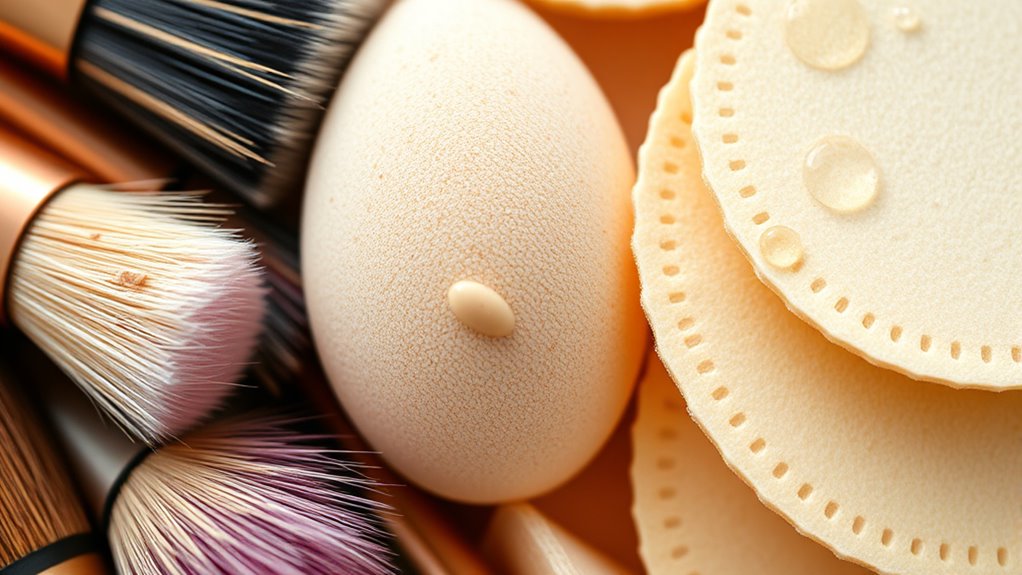
To keep your beauty tools hygienic, wash brushes weekly, clean sponges after every few uses, and scrub patches after each application. Always inspect your tools for damage and replace worn-out items promptly. Store them in dry, well-ventilated places to prevent mold and bacterial growth. Dry tools thoroughly after cleaning to avoid bacteria buildup. Following proper handling and storage practices helps guarantee healthier skin—and if you want to learn more about maintaining tool hygiene, keep exploring.
Key Takeaways
- Clean brushes weekly and sponges after every few uses to prevent bacteria buildup.
- Regularly inspect tools for damage and replace worn or damaged items promptly.
- Store tools in dry, well-ventilated areas to avoid mold and moisture-related issues.
- Always dry tools thoroughly after cleaning to inhibit bacteria and mold growth.
- Handle tools with clean hands and follow proper cleaning methods for optimal hygiene.
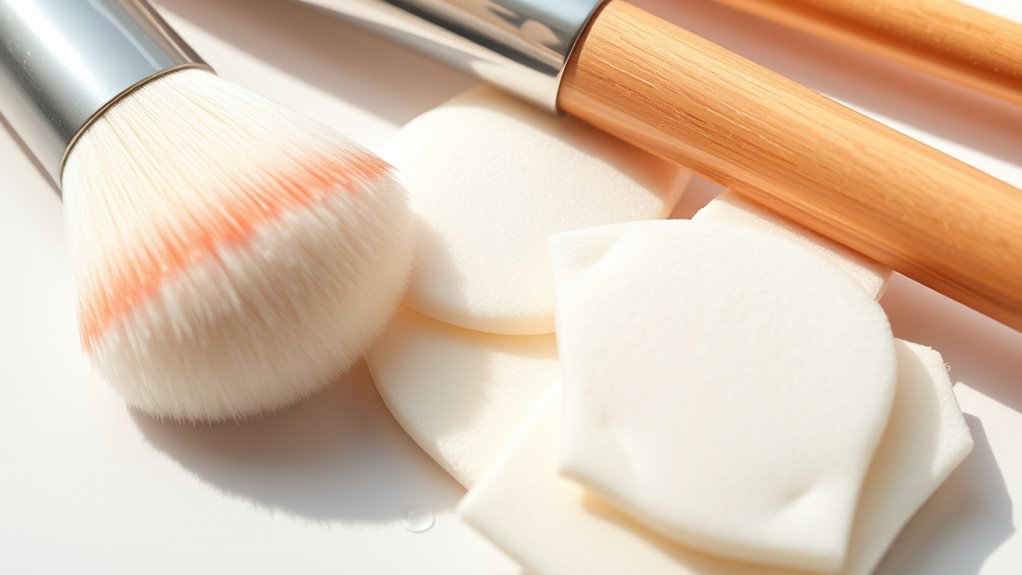
Ever wonder if your beauty tools are truly clean? It’s easy to forget how quickly bacteria can build up on brushes, sponges, and patches, especially if you don’t pay attention to your cleaning routines. Knowing the right cleaning frequency is key to maintaining their hygiene and ensuring your skin stays clear and healthy. For brushes, aim to wash them at least once a week. Sponges, which tend to harbor bacteria more rapidly, should be cleaned after every few uses or at least twice a week. Patches, like hydrogel or adhesive varieties, require regular replacement and cleaning as recommended by the manufacturer, but generally, you should clean reusable patches after each use to prevent bacteria transfer. Keeping a consistent schedule helps prevent breakouts and skin irritation caused by bacteria, oils, and dead skin cells lingering on your tools. Regularly inspecting your tools for signs of wear and damage is also crucial, as damaged tools can harbor bacteria more easily and may harm your skin.
Storage safety is another critical aspect of maintaining clean beauty tools. Proper storage not only prolongs their lifespan but also minimizes contamination risks. Always store your brushes and sponges in a clean, dry place. Avoid leaving them in damp environments like the bathroom counter or shower area, where mold and bacteria thrive. Instead, opt for a well-ventilated container or a brush holder designed to keep tools separated and dry. For sponges, consider using a breathable container that allows air circulation, preventing moisture buildup. Patches should be stored in a clean, sealed container or in their original packaging until use. Never leave your tools sitting in makeup bags that accumulate dust, dirt, or residual product, as this can introduce bacteria to your tools and skin.
Additionally, be mindful of how you handle your beauty tools. Always wash your hands before cleaning or using your tools to avoid transferring bacteria. After cleaning, ensure tools are thoroughly dried before storing; dampness is a breeding ground for germs. Replace worn-out brushes and sponges regularly—once they start to shed or show signs of damage, toss them out. Proper cleaning frequency combined with safe storage practices creates a protective barrier against bacteria and fungi, reducing the risk of skin issues. Incorporating proper cleaning methods from reputable sources can ensure your tools remain hygienic and effective. Remember, your beauty tools are an extension of your skincare routine. When kept clean and stored safely, they help you achieve better results and healthier skin. Neglecting these simple steps can undo all your skincare efforts, so stay consistent and mindful about how you care for your tools. Your skin will thank you for it.
beauty brush cleaner
As an affiliate, we earn on qualifying purchases.
As an affiliate, we earn on qualifying purchases.
Frequently Asked Questions
How Often Should I Replace My Beauty Sponges?
You should replace your makeup sponge every 3 to 4 weeks for maximum hygiene. Regular cleaning with soap or a cosmetic exfoliation brush helps, but over time, bacteria can build up. Using a clean sponge with your makeup primer ensures a smooth application and reduces breakouts. Don’t forget to inspect your sponge regularly; if it starts to smell or shows signs of wear, it’s time for a new one to keep your skin healthy.
Can Dirty Brushes Cause Skin Infections?
Imagine bacteria lurking in your unwashed brushes like tiny invaders. Yes, dirty brushes can cause skin infections, leading to bacterial contamination and skin irritation. When you skip cleaning, you risk transferring germs onto your skin, which can result in redness, acne, or more serious infections. Keep your brushes clean to protect your skin’s health, preventing bacteria buildup and ensuring a fresh, irritation-free glow every time you apply makeup.
What’s the Best Way to Dry Beauty Tools?
To dry your beauty tools effectively, you should use air drying techniques by placing them in a well-ventilated area, ideally upside down to prevent water pooling. Consider drying storage options like a clean, open container or a dedicated drying rack to keep them hygienic and dust-free. Avoid towel drying, which can harbor bacteria. Proper drying guarantees your tools stay clean and ready for safe use.
Are There Natural Disinfectants for Beauty Tools?
Sure, because nothing says “clean” like rubbing your beauty tools with natural disinfectants, right? You can use tea tree oil, witch hazel, or even vinegar for beauty tool sanitization. These natural disinfectants help kill germs without harsh chemicals, making your routine feel more eco-friendly. Just remember to dilute appropriately and let your tools dry thoroughly afterward—because even nature’s disinfectants need a little time to do their magic.
How Do I Prevent Bacteria Buildup on Makeup Patches?
To prevent bacteria buildup on makeup patches, regularly disinfect them using antibacterial sprays designed for skincare tools. After each use, wash patches with gentle soap and warm water, then sterilize them using appropriate techniques like boiling or UV sterilization. Store patches in a clean, dry container, and avoid sharing them. Consistent cleaning and proper sterilization help keep bacteria at bay and ensure your skin stays healthy.
makeup sponge cleaning brush
As an affiliate, we earn on qualifying purchases.
As an affiliate, we earn on qualifying purchases.
Conclusion
Keep your beauty tools spotless, or risk turning your face into a breeding ground for bacteria that could take over your entire world! Imagine your brushes and sponges as tiny armies of germs, ready to wage war every time you apply makeup. Regular cleaning isn’t just a chore—it’s your secret weapon against chaos and skin disasters. Stay vigilant, stay clean, and keep those tools sanitized—your skin’s happiness depends on it!
reusable hydrogel patches
As an affiliate, we earn on qualifying purchases.
As an affiliate, we earn on qualifying purchases.
ventilated brush holder
As an affiliate, we earn on qualifying purchases.
As an affiliate, we earn on qualifying purchases.