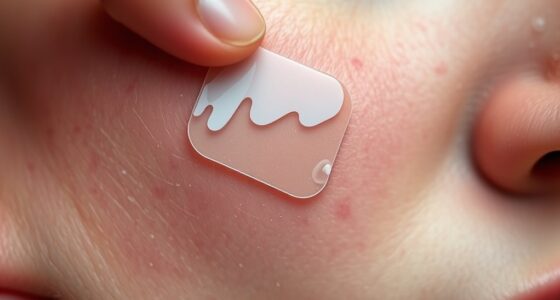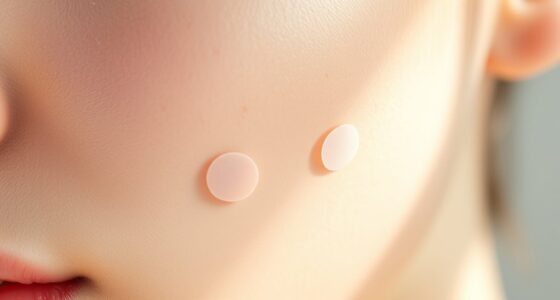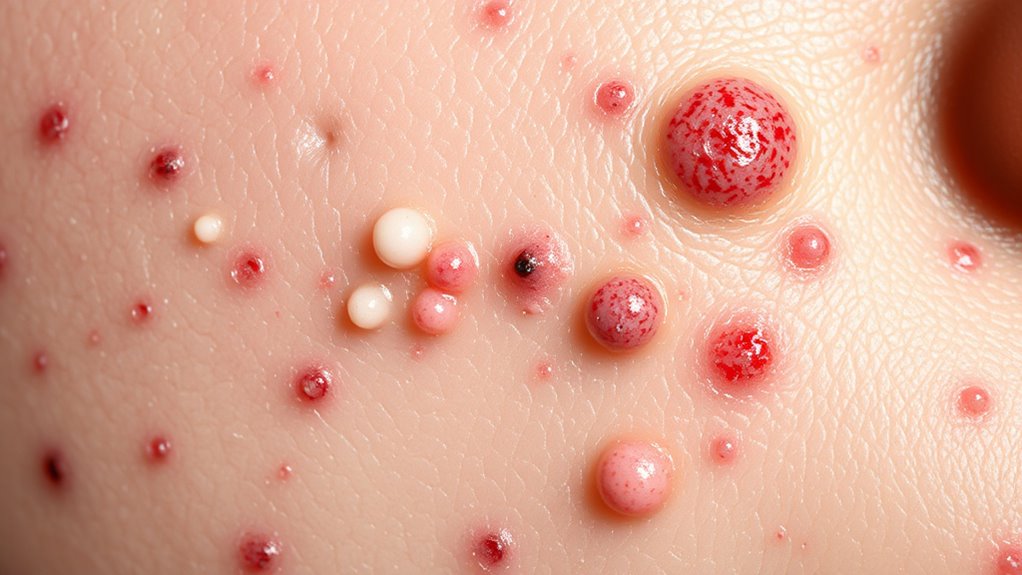

Use patches for whiteheads and blackheads to target surface bumps, as they help reduce inflammation and unclog pores effectively. They’re best for open or closed comedones, providing quick relief and preventing future breakouts. However, if you have cysts, patches won’t work well because these deep, painful lesions need professional treatments like drainage or injections. For more tips on choosing the right approach for your skin concerns, keep exploring the details below.
Key Takeaways
- Use patches for whiteheads and blackheads to target surface lesions and reduce inflammation effectively.
- Patches are generally not suitable for cysts, which require professional medical treatment.
- Choose treatment based on whether the lesion is an open pore (blackhead), closed bump (whitehead), or deep cyst.
- For persistent or severe whiteheads and blackheads, consider professional extraction or chemical peels alongside patches.
- Avoid patches for cysts to prevent worsening inflammation or scarring; seek medical advice instead.
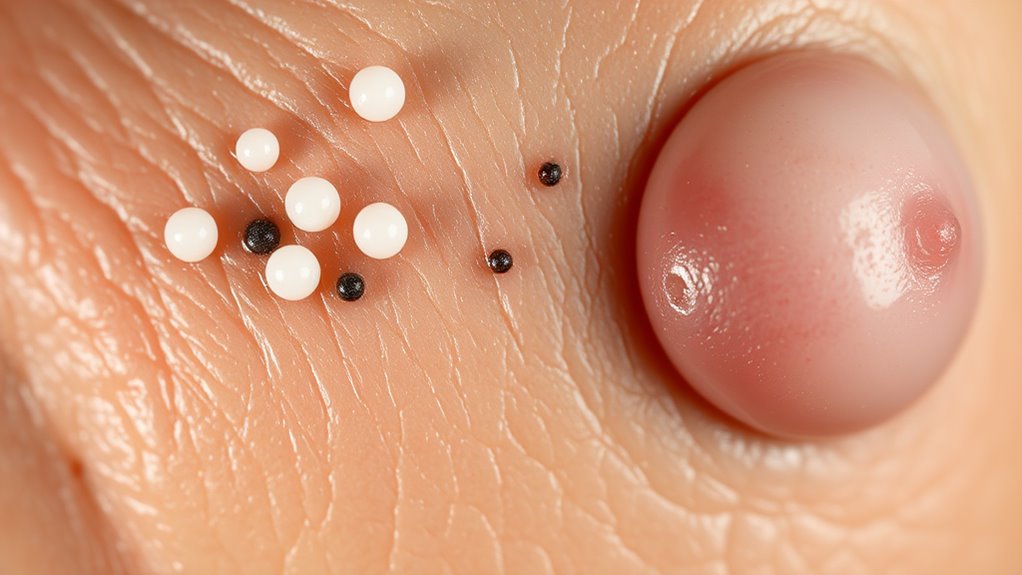
Understanding the differences between whiteheads, blackheads, and cysts is key to managing skin concerns effectively. Each skin issue involves different pore types and requires tailored skin treatments. Whiteheads are closed comedones that form when a pore becomes clogged with oil, dead skin cells, and bacteria. They appear as small, flesh-colored bumps and are often less noticeable but can be persistent. Blackheads, on the other hand, are open comedones. Their dark appearance results from oxidation of the trapped sebum and debris within the pore, which exposes the pore to air, causing it to darken. Recognizing these differences helps you choose the right approach for treatment, whether it’s over-the-counter remedies or professional procedures.
Whiteheads are closed pores clogged with oil and bacteria, appearing as flesh-colored bumps.
When it comes to skin treatments, understanding pore types is essential. Whiteheads tend to form in pores that are more tightly closed at the surface, making them resistant to certain topical treatments. Regular gentle cleansing and exfoliation can help prevent buildup, but if whiteheads become stubborn, professional options like extractions or chemical peels might be necessary. Blackheads, being open, are more accessible to treatments like salicylic acid or retinoids, which help dissolve the excess oil and dead skin cells clogging the pore. Using pore strips might offer quick relief, but they don’t address underlying causes, so consistent skincare is vital.
Cysts are a different matter altogether. These are deep, painful bumps beneath the skin that result from inflammation or infected sebaceous glands. They don’t involve the same pore types as whiteheads or blackheads and usually require more intensive skin treatments. Trying to squeeze or pop a cyst can worsen inflammation or cause scarring, so it’s best to seek professional help. Dermatologists might recommend corticosteroid injections, drainage procedures, or antibiotics to reduce swelling and eliminate infection.
Knowing when to use a patch depends on the type of skin concern you’re facing. Patches can work well for whiteheads or blackheads by delivering targeted ingredients directly to the pore, helping to reduce inflammation or unclog the pore. However, for cysts, patches are generally ineffective unless specifically designed for deep lesions. In such cases, professional treatments are more appropriate. Ultimately, understanding your skin’s pore types and how they respond to various skin treatments enables you to choose the most effective and safe options, ensuring healthier skin with fewer complications.
Frequently Asked Questions
Can Patches Prevent Future Breakouts?
Yes, patches can help prevent future breakouts by absorbing excess oil and reducing inflammation. They also protect your skin from dirt and bacteria, minimizing the need for pimple extraction. When worn consistently, patches help maintain a clearer complexion and prevent new pimples from forming. Just remember to choose the right patch for your skin type, and incorporate other skincare routines for the best results.
Are Patches Suitable for Sensitive Skin Types?
Yes, patches can be suitable for sensitive skin types, but you should check for patch sensitivity and potential skin irritation first. Look for patches labeled hypoallergenic or designed for sensitive skin, and do a patch test on a small area before full application. If you experience redness, itching, or discomfort, remove the patch immediately to prevent further skin irritation. Always follow the product instructions to minimize any adverse reactions.
How Long Should a Patch Be Left On?
Did you know that most patches should stay on for about 8-12 hours? For ideal results, you should follow the instructions on patch removal and patch duration provided with your product. Leaving a patch on too long can cause irritation, while removing it too early might reduce effectiveness. Typically, you’ll want to remove your patch after the recommended time, usually overnight or as directed, to ensure safe and effective use.
Can Patches Be Used With Other Acne Treatments?
You can often use patches with other acne treatments, but verify their compatibility first. Combining therapies, like patches with topical creams or medications, can boost effectiveness through combination therapy. Always read product labels and consult your dermatologist to ensure patch compatibility with your current regimen. Avoid mixing treatments without guidance, as some ingredients may cause irritation or reduce each other’s effectiveness. Properly coordinated, it can help clear your skin faster.
Do Patches Work on All Skin Tones?
Patches are like chameleons—they blend surprisingly well with different skin tones. They generally work on all skin tones, but their visibility can vary depending on your skin color. Lighter skin might show the patch more, while darker skin tones may conceal it better. So, yes, patches do work on all skin tones, but consider the patch’s visibility to ensure it stays discreet and effective for you.
Conclusion
Knowing when to use a patch can make all the difference between hiding a blemish and letting it heal naturally. Whiteheads may disappear with a simple patch, but cysts demand professional care. It’s like choosing between a band-aid and a surgeon’s tools; both are effective, but only in the right situation. So, pay attention to your skin’s story—sometimes a patch is your best friend, and other times, it’s a sign to see a specialist.