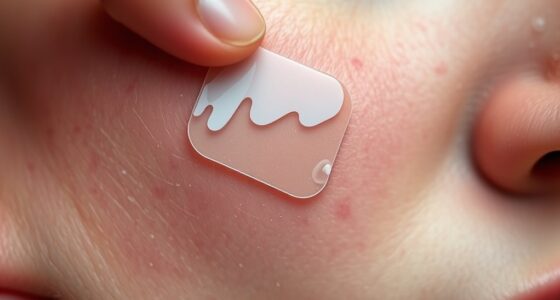
Acne patches can effectively target surface-level blackheads by drawing out impurities and reducing inflammation. They create a barrier over pores, helping absorb excess oil, dirt, and debris that clog your pores. While they work well for open or partially exposed blackheads, they may not clear deeply embedded ones. For best results, combine patches with gentle skincare routines. Want to discover more about how to optimize blackhead removal? Just keep exploring.
Key Takeaways
- Acne patches create a barrier that helps draw out surface-level blackheads and reduce inflammation.
- They are most effective on open or partially exposed blackheads but less so on stubborn, deep ones.
- Patches promote pore cleansing without squeezing, reducing the risk of scarring and infection.
- Proper skin hydration and a regular skincare routine enhance overall blackhead prevention and treatment.
- Combining patches with exfoliation and good skincare practices yields better, long-term blackhead management results.

Are acne patches effective at removing blackheads? The truth is, they can help, but their success depends on the type of blackhead and how you use them. Acne patches are designed to create a barrier over your pores, which helps with pore cleansing by drawing out impurities and reducing inflammation. When you place a patch over a blackhead, it can absorb excess oil, dirt, and debris that clog your pores, making them less visible and preventing further buildup. However, it’s important to note that patches work best on surface-level blackheads, especially those that are open or partially exposed. They might not be as effective on deeply embedded or stubborn blackheads that require professional extraction or other treatments.
One of the key benefits of using acne patches is their ability to promote pore cleansing without aggressive scratching or squeezing, which can lead to scarring or infection. As the patch does its job, it pulls out the material clogging your pores, giving you a clearer appearance. But for the best results, you should also focus on maintaining skin hydration, which plays a vital role in preventing blackheads from forming in the first place. Hydrated skin is more resilient and less prone to overproduction of oil, which is a major contributor to blackhead development. Incorporating a good moisturizer into your skincare routine helps balance oil levels and keeps your pores clean and less likely to get clogged.
While acne patches are convenient and can provide quick relief, they shouldn’t be viewed as the sole solution for blackheads. Combining their use with proper pore cleansing routines, such as gentle exfoliation and regular cleansing, can greatly improve your results. Remember that over-drying your skin can have the opposite effect, causing your skin to produce more oil to compensate, which can lead to more blackheads. Hence, selecting a hydrating, non-comedogenic moisturizer is essential to keep your skin healthy and balanced.
Frequently Asked Questions
Can Acne Patches Prevent Blackheads From Forming?
Acne patches mainly target active pimples rather than preventing blackheads from forming. While they can reduce inflammation and absorb excess oil, their effectiveness in blackhead prevention is limited. For blackhead prevention, you should focus on regular cleansing, exfoliation, and using products containing salicylic acid. Acne patch effectiveness is best seen in treating current breakouts, but they aren’t a reliable method for preventing blackheads before they appear.
Are There Specific Ingredients That Make Patches Effective on Blackheads?
Ironically, the magic lies in ingredient formulations that target blackheads, like salicylic acid or charcoal. These ingredients, combined with patch absorption, work to unclog pores and pull out blackheads effectively. A well-designed patch acts like a magnet, drawing out impurities while you go about your day. So yes, specific ingredients make patches more effective, transforming them into tiny pore-clearing superheroes.
How Long Should I Leave an Acne Patch on a Blackhead?
You should leave an acne patch on a blackhead for about 6 to 8 hours, or overnight, to maximize blackhead extraction. This allows the patch enough time to absorb excess oil and impurities, easing the blackhead removal process. Keep in mind that proper acne patch timing helps prevent skin irritation and enhances effectiveness. Remove the patch gently in the morning, and if needed, repeat the process for clearer skin.
Do Acne Patches Work Better on Certain Skin Types?
About 70% of users find acne patches more effective on oily or acne-prone skin. If you have sensitive skin, you might notice irritation or poor patch adhesion, reducing their effectiveness. Patches work best when they stick well and target the specific skin type; for example, hydrating patches suit dry skin better. Always choose products formulated for your skin sensitivity to maximize results and minimize discomfort.
Are There Any Side Effects of Using Acne Patches on Blackheads?
Using acne patches on blackheads can cause potential allergic reactions or skin irritation, especially if you have sensitive skin or allergies. You might notice redness, itching, or swelling after applying them. To minimize risks, do a patch test first and follow the product instructions carefully. If you experience severe irritation or allergic reactions, remove the patch immediately and consult a dermatologist for guidance.
Conclusion
So, while acne patches can help reduce blackheads, they aren’t a magical fix. Sometimes, it’s almost like nature’s way of reminding you that patience and consistent care matter more than quick fixes. You might find that the right routine and a little persistence reveal clearer skin over time—almost like the universe aligning in your favor. Just remember, the small steps you take today can lead to bigger confidence tomorrow.