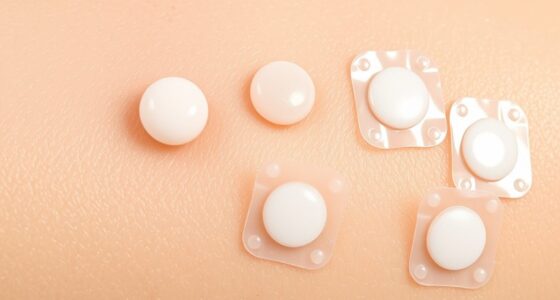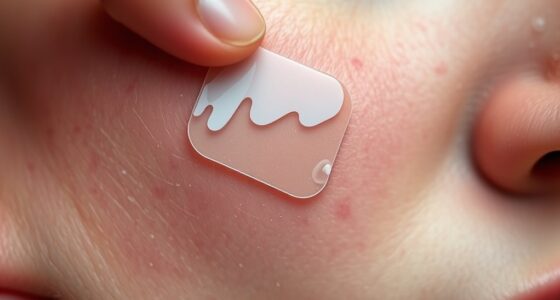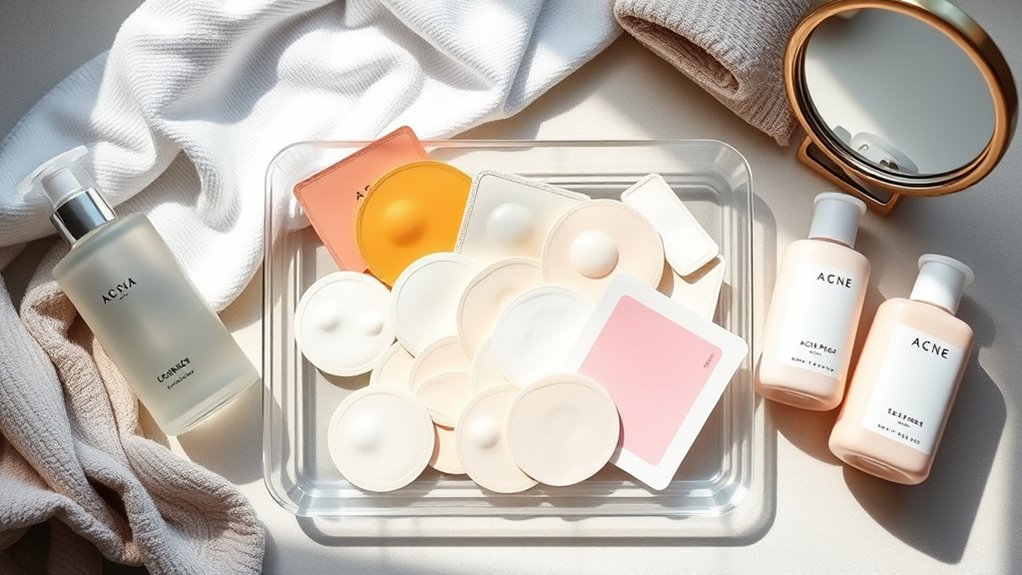

Acne patches fit smoothly into your full routine by targeting blemishes directly after cleansing and before moisturizing. Use them on clean, dry skin, placing the patch directly over the active spot. They can be worn overnight or during the day under makeup, helping reduce redness and inflammation quickly. Incorporate patches as an effective step alongside serums and moisturizers, enhancing healing. Keep exploring to discover how to maximize their benefits and create a balanced skincare routine.
Key Takeaways
- Use acne patches after cleansing and before moisturizing to target active blemishes effectively.
- Apply patches on clean, dry skin to ensure proper adhesion and maximize treatment benefits.
- Incorporate patches as a supplementary step alongside serums, toners, and treatments in your routine.
- Wear patches overnight or during the day to accelerate healing and reduce redness of pimples.
- Remove patches before applying additional products or makeup, and follow recommended usage times for best results.
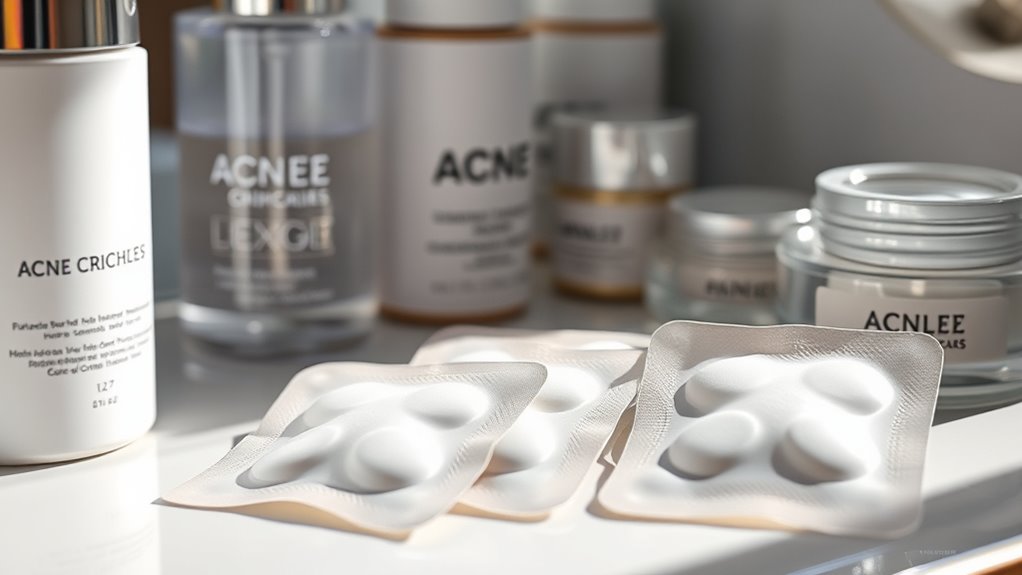
Acne patches have become a popular addition to many skincare routines because they offer targeted treatment and convenience. When you’re dealing with a breakout, it’s easy to feel overwhelmed trying to decide the best way to treat it. That’s where acne patches come in—they act as a spot treatment, directly addressing the blemish without affecting the surrounding skin. Their adhesive design allows you to apply them precisely on the spot, making them ideal for reducing inflammation, absorbing excess oil, and encouraging skin healing. Unlike traditional creams or gels, these patches create a barrier that protects your pimple from picking and further irritation, which can help speed up recovery.
Incorporating acne patches into your routine works best when you use them after cleansing and before moisturizing. Clean your skin thoroughly to remove dirt, oil, and makeup, then pat dry. Applying the patch directly onto a clean, dry blemish guarantees maximum adhesion and effectiveness. You don’t need to wait long to see results—many patches contain ingredients like hydrocolloid, salicylic acid, or tea tree oil that work overnight or within a few hours to reduce the size and redness of your pimple. Over time, you’ll notice that skin healing accelerates because these patches concentrate active ingredients right where they’re needed most, promoting faster recovery without spreading bacteria or causing additional irritation.
While acne patches are excellent for targeted spot treatment, they shouldn’t replace your entire skincare routine. Instead, think of them as a complement to your cleanser, toner, serum, and moisturizer. Use a gentle cleanser to keep your skin clear and prevent future breakouts. Incorporate a treatment serum with ingredients like benzoyl peroxide or retinoids if needed, but always apply these before your patches for best results. Once your routine is complete, applying an acne patch on active spots can help contain the blemish and prevent it from worsening. During the day, you can leave them on under makeup if they’re transparent and thin enough, or remove them before bed for maximum skin healing overnight.
Frequently Asked Questions
Can Acne Patches Be Used With Other Topical Treatments?
Yes, you can use acne patches with other topical treatments, but it’s important to consider treatment compatibility. Combining acne patches with treatments like benzoyl peroxide or salicylic acid can be part of effective combination therapy. Just make sure to apply the patch after your other treatments have dried to avoid irritation. Always check with your dermatologist to ensure your skincare products work well together and don’t cause adverse reactions.
How Long Should I Leave an Acne Patch On?
You should leave an acne patch on for the recommended patch removal timing, usually 6-8 hours or overnight. Don’t worry about patch longevity—it’s designed to stay put until it has absorbed impurities. If you notice the patch turning white or sticky, it’s time to remove it. By following these guidelines, you guarantee maximum effectiveness while preventing irritation or unnecessary patch replacement.
Are Acne Patches Suitable for All Skin Types?
Acne patches are generally suitable for most skin types, but if you have sensitive skin, choose patches with gentle ingredients to avoid irritation. Keep in mind, patches can be visible, especially on certain skin tones or areas, so consider patch visibility when applying. Always do a patch test first, and if you notice redness or discomfort, switch to a different product or consult a dermatologist.
Can I Wear Makeup Over Acne Patches?
Think of acne patches as your secret weapon—yes, you can wear makeup over them. Just make sure your patches are fully dry before applying makeup for maximum makeup compatibility. When it’s time to remove the patch, use gentle patch removal tips like peeling slowly to avoid irritation. Remember, a little patience goes a long way. Wearing makeup over patches lets you conceal blemishes while letting the patch work its magic underneath.
Do Acne Patches Prevent Future Breakouts?
Acne patches mainly target existing pimples, but they can support pimple prevention as part of your skincare routine. By reducing inflammation and absorbing excess oil, they help prevent future breakouts. However, for effective pimple prevention, you need a thorough skincare routine that includes cleansing, moisturizing, and sun protection. Incorporate acne patches thoughtfully, and you’ll improve your chances of avoiding future breakouts while treating current ones.
Conclusion
So, next time you slap on an acne patch, remember it’s just one piece of the puzzle. It’s funny how these tiny stickers promise clear skin overnight, yet often require a consistent routine to truly work. Ironically, what seems like a quick fix might actually be your best bet for long-term results. Don’t rely solely on patches—embrace a complete routine and watch how your skin truly transforms over time. Sometimes, patience really is the ultimate skincare hack.