If you experience sensitivities to acne patch adhesives, it’s often due to ingredients causing irritation or allergic reactions. To reduce discomfort, choose hypoallergenic or sensitive skin formulas, and always do a patch test first. Make sure your skin is clean and dry before applying, and remove the patch gently to avoid skin damage. If irritation persists, consult a dermatologist for personalized solutions and tips on minimizing skin reactions. Keep exploring to learn more about managing adhesive sensitivities effectively.
Key Takeaways
- Hypoallergenic adhesives reduce skin irritation, especially for sensitive skin types.
- Conduct patch tests before full application to identify potential allergic reactions.
- Gentle removal techniques, like peeling edges slowly or using warm water, minimize skin trauma.
- Choosing adhesive formulations free from common irritants helps prevent redness and itching.
- Proper skin preparation ensures better adhesion and reduces the risk of adverse sensitivities.

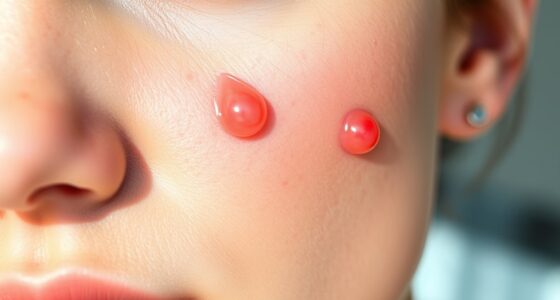
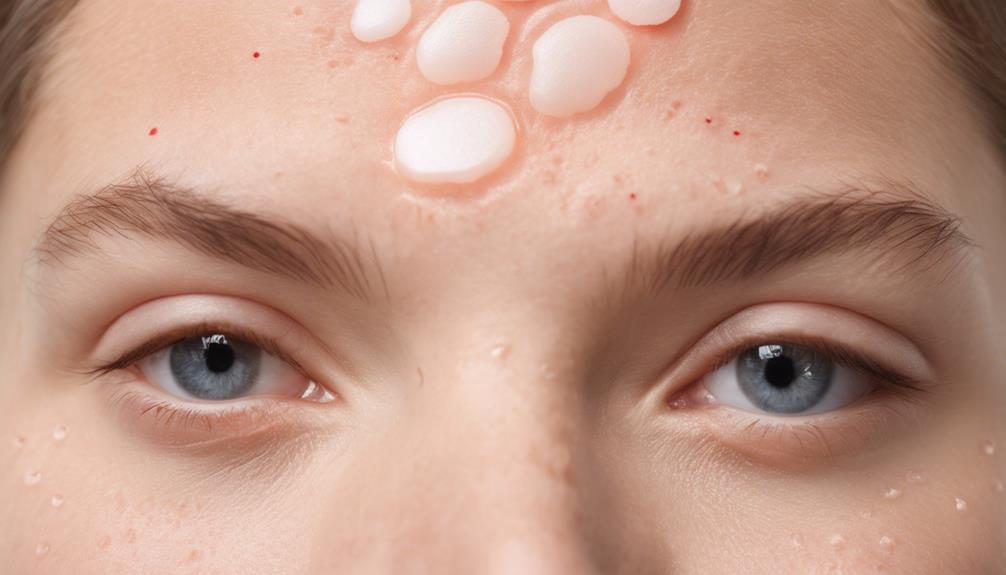
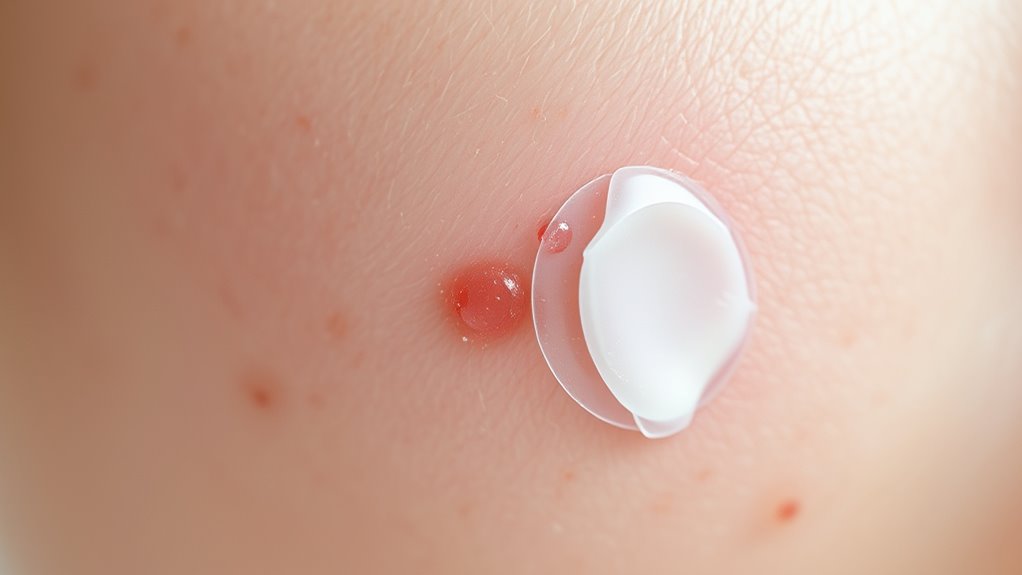
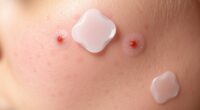
Adhesives in acne patches play a crucial role in delivering targeted treatment and maintaining the patch’s position on your skin. Without a secure adhesive, the patch wouldn’t stay in place, and the medication wouldn’t effectively reach the blemish. However, while these adhesives are designed to be gentle, some individuals may experience skin reactions such as redness, itching, or irritation. These reactions can occur for various reasons, including sensitivity to certain adhesive ingredients or prolonged wear. If you notice discomfort or irritation after applying a patch, it’s essential to remove it promptly and assess your skin’s response.
Adhesives keep acne patches in place but may cause skin reactions in sensitive individuals.
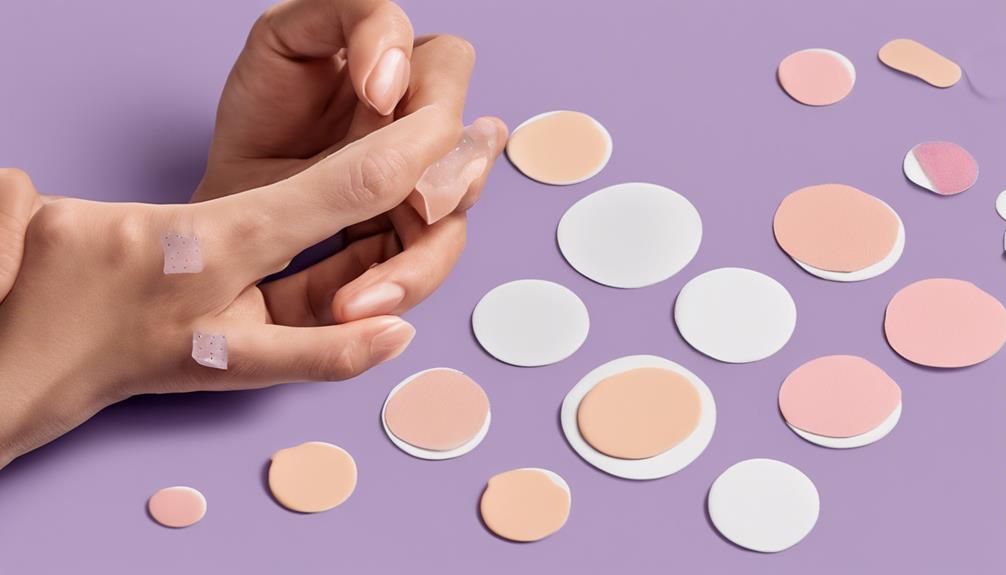
When it comes to adhesive removal, doing it carefully can make a significant difference in preventing additional skin reactions. Ripping the patch off quickly often leads to unnecessary pulling on your skin, which can cause redness or even minor damage. Instead, gently peeling the edges of the patch back helps reduce discomfort and minimizes skin trauma. Using warm water or a mild oil-based cleanser can help loosen the adhesive, making removal smoother. Applying gentle pressure and slowly lifting the patch ensures you’re not pulling on the skin excessively, which can exacerbate reactions or cause irritation. Additionally, understanding skin sensitivities can help you choose the most suitable adhesive formulations for your needs.
If you find that your skin reacts negatively to a particular acne patch, consider switching to a product with a different adhesive formulation. Some patches are designed with hypoallergenic adhesives that are less likely to cause skin reactions, making them suitable for sensitive skin types. Before applying a new patch, it’s wise to do a patch test on a small area of skin to check for any adverse reactions. If you experience persistent irritation, it may be best to stop using the product altogether and consult with a dermatologist for alternative options.
Another helpful tip is to ensure your skin is clean and dry before applying the patch. Oils, lotions, or dirt can interfere with the adhesive’s ability to stick properly, potentially leading to more frequent adhesive removal and skin irritation. Also, avoid applying patches to broken or inflamed skin, as this increases the chance of reactions and slows healing.
Frequently Asked Questions
Can Adhesive Ingredients Cause Long-Term Skin Damage?
Adhesive ingredients can cause long-term skin damage if they lead to adhesive toxicity or weaken your skin barrier. Repeated exposure to harsh adhesives might irritate or inflame your skin, making it more vulnerable over time. To prevent this, choose patches with gentle adhesives, give your skin breaks, and monitor for signs of irritation. Protecting your skin barrier helps maintain healthy skin and avoids potential long-term damage.
Are Custom Adhesives Available for Sensitive Skin?
Yes, you can find custom adhesive formulations designed specifically for sensitive skin. While regular adhesives might cause irritation, hypoallergenic adhesive options are available to minimize reactions. These tailored formulations prioritize skin safety and comfort, making them ideal for those with sensitivities. By choosing patches with custom adhesives, you guarantee your skin stays protected without sacrificing effectiveness, giving you peace of mind and a better skincare experience.
How Do Adhesives Interact With Different Skin Types?
Adhesives interact with different skin types through their formulation, which impacts skin compatibility. You might notice that some adhesives stick well on oily skin but cause irritation on sensitive skin, while others are gentler but less adhesive. To find the right fit, look for patches with adhesive formulations designed for your skin type, ensuring better compatibility and comfort. Always patch test new products to avoid adverse reactions.
Can Adhesives Trigger Allergic Contact Dermatitis?
Yes, adhesives can trigger allergic contact dermatitis if you have an adhesive allergy. You might notice patch irritation, redness, and itching where the patch was applied. If you’re sensitive to certain adhesives, this reaction can be quite uncomfortable. It’s important to choose patches with gentle, hypoallergenic adhesives to reduce the risk of irritation. Always monitor your skin’s response and discontinue use if you experience persistent patch irritation or allergic symptoms.
Are There Eco-Friendly Adhesive Options for Acne Patches?
You might be surprised to learn that eco-friendly adhesive options like biodegradable and plant-based adhesives are increasingly available for acne patches. These adhesives are designed to be gentle on skin and break down naturally, reducing environmental impact. Many brands now prioritize sustainable ingredients, offering effective solutions that align with eco-conscious values. So, yes—there are environmentally friendly adhesives that provide safe, effective options for acne treatment while caring for the planet.
Conclusion
Think of adhesives as the silent guardians of your skin’s battle. When they cause sensitivities, it’s like a shield breaking, leaving your skin exposed to harm. But with careful choices and gentle solutions, you can restore this fragile armor. Remember, the right adhesive acts as a steadfast ally, symbolizing resilience and care. By understanding and respecting this delicate balance, you ensure your skin’s journey remains resilient, turning each patch into a symbol of your mindful self-care.