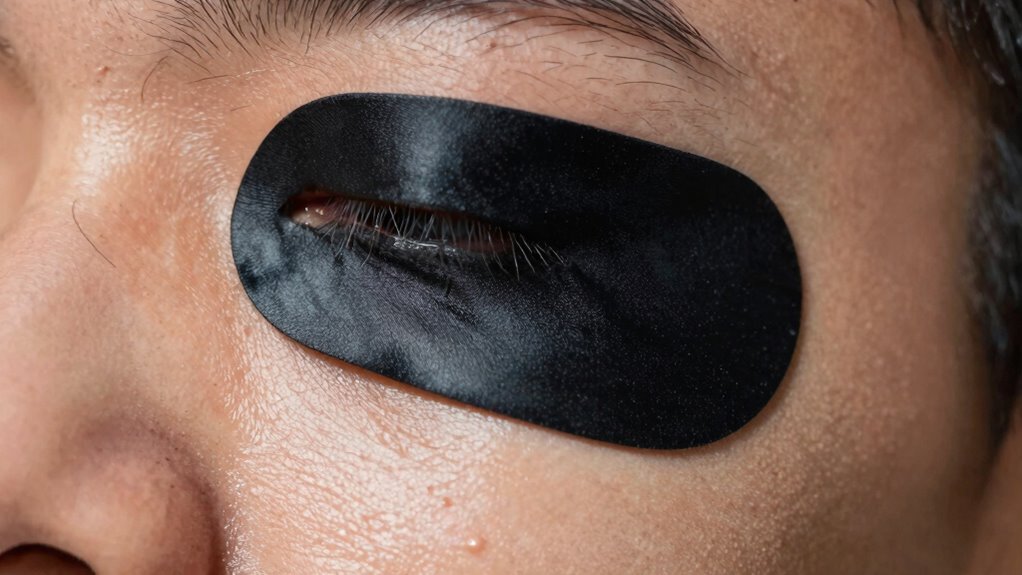
The main placement mistake causing eye patches to slide down is not aligning them with your natural eye contours. If you place the patch too far from the eye socket or on uneven skin, it won’t stick properly and will slip. Make certain to position the patch carefully, following the natural shape of your eye area. Proper placement ensures better adhesion and effectiveness. Keep going to discover tips that help maximize your patch’s stay and benefits.
Key Takeaways
- Placing the patch too far from natural eye contours causes instability and slippage.
- Incorrect positioning on uneven or oily skin reduces adhesion, leading to sliding.
- Failing to align the patch properly before pressing results in poor grip and movement.
- Applying on moist or sweaty skin prevents the hydrogel from adhering securely.
- Not smoothing out air bubbles or wrinkles allows the patch to shift and slide down.
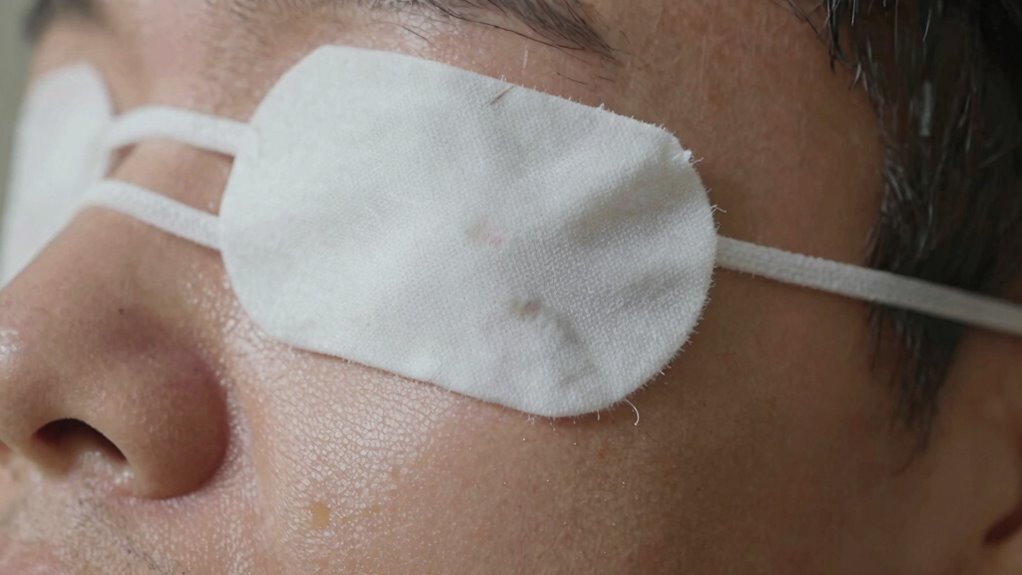
Have you ever wondered why your eye patch keeps slipping down during use? The answer often lies in the placement and how well you’re applying it. Eye patches, especially those made with hydrogel properties, are designed to be comfortable and adhere securely. However, if you’re not using proper adhesive techniques, even the best hydrogel patches can slide out of place. Understanding how these patches work and how to apply them can make a big difference in staying put and providing the benefits you need.
Hydrogel properties are key because they allow the patch to conform to your skin, creating a snug fit. But this snug fit depends heavily on proper placement and adhesion. If you place the patch too far from the eye’s contours or on uneven skin, it won’t adhere correctly, increasing the chance of slipping. The smooth, gel-like surface is intended to mold seamlessly to your skin, but only if you position it precisely. When you don’t follow the right adhesive techniques—like ensuring your skin is clean, dry, and free of oils—the hydrogel’s adhesive qualities can be compromised. Residual oils, lotions, or sweat create a barrier that prevents the patch from sticking securely, leading to slippage.
Proper placement and clean, oil-free skin are essential for hydrogel patches to conform and stay securely in place.
Applying the patch with the right techniques is simple but essential. First, gently cleanse the area around your eye with a mild cleanser, then pat dry thoroughly. This removes any oils or dirt that might interfere with adhesion. Next, carefully peel the patch from its packaging, avoiding touching the sticky side too much, which can reduce its stickiness. When placing it, make sure you align it with the natural contours of your eye socket. Press the edges gently and hold for a few seconds to activate the adhesive. If the patch has a peel-off backing, remove it just before application to prevent unnecessary contamination of the adhesive surface. Using your fingertips, smooth out any air bubbles or wrinkles, ensuring even contact across the entire patch. Additionally, proper skin preparation can greatly enhance the adhesion process and prevent slippage. Applying the patch on slightly cooler, dry skin can also improve its grip, especially in warmer or more humid environments. It’s helpful to consider the material’s properties when choosing the best application technique for your skin type, as different formulations may require slight adjustments.
Another common mistake is applying the patch too early or too late in your skincare routine. Ideally, do it after cleansing and before applying any creams or serums, which could interfere with adhesion. Also, avoid excessive movement immediately after placement; give it time to adhere properly. Paying attention to the hydrogel properties and following proper adhesive techniques can significantly improve the staying power of your eye patch. Proper placement isn’t just about positioning; it’s about understanding the material’s characteristics and applying them correctly. When you do, you’ll find that your eye patches stay put, making your skincare routine more effective and hassle-free.
hydrogel eye patch application tools
As an affiliate, we earn on qualifying purchases.
As an affiliate, we earn on qualifying purchases.
Frequently Asked Questions
Can Specific Skin Types Cause Eye Patches to Slide Down More?
Yes, your skin type can cause eye patches to slide down more. If you have oily skin, the excess oil reduces skin compatibility, making it hard for patches to stay in place. Conversely, dry or textured skin may not grip the patches well. To prevent slipping, choose patches suited for your skin type, and make sure your skin is clean and dry before application for better adhesion.
Are There Alternative Methods to Prevent Eye Patch Slippage?
To prevent eye patch slippage, focus on achieving a proper eye patch fit. You can try using a thinner or more adhesive patch to better conform to your skin. Ensuring your skin is clean and dry reduces skin irritation, which can cause patches to loosen. Additionally, lightly tap the edges to secure better contact, and consider using skin-friendly tape for added grip. These methods help keep your eye patch in place comfortably.
How Long Should I Wait Before Reapplying a New Eye Patch?
Think of your skin as a delicate garden, needing time to recover. You should wait at least a few hours, ideally overnight, before reapplying an eye patch. This pause allows skin sensitivity to settle, preventing irritation. When you reapply, make sure the eye patch adhesives are clean and dry, and test for any skin reactions. Patience helps the patch stay secure and your skin stay healthy.
Do Different Eye Patch Materials Affect Slipping?
Yes, different eye patch materials do affect slipping. Materials like soft fabric or silicone tend to stay in place better, providing greater eye patch comfort. Meanwhile, less durable or slick materials might slide down more easily. Choosing a patch with good material durability guarantees it stays put longer, while a comfortable material makes the experience more pleasant. Always opt for high-quality, well-suited materials to prevent slipping and enhance your overall comfort.
Is It Safe to Use Adhesive Tapes to Secure Eye Patches?
Using adhesive tapes to secure eye patches isn’t always safe, especially if you’re prone to contact dermatitis or have an adhesive allergy. These reactions can cause redness, irritation, or even skin damage. If you choose to try it, do a patch test first and opt for hypoallergenic tapes designed for sensitive skin. Always consult your healthcare provider beforehand to avoid potential allergic reactions or skin issues.
Conclusion
If your eye patches keep sliding down, it’s likely because of incorrect placement rather than a faulty patch. Try positioning the patch slightly above your cheekbone, ensuring it’s snug but comfortable. Some say this trick activates the natural grip of your skin, preventing slips. While there’s little scientific evidence, many users swear by it. So, next time, adjust your placement and see if it stays put—sometimes, a small tweak makes all the difference.