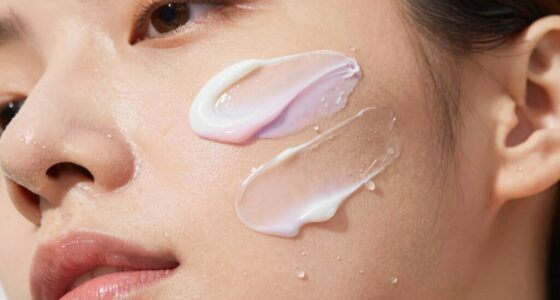

Skin cycling feels great for some because their skin responds well to a tailored routine, allowing it to recover and strengthen. If your skin is sensitive, it may become irritated or uncomfortable if actives aren’t properly spaced or if ingredients aren’t compatible. Personalization is key—you need to listen to your skin’s reactions and adjust accordingly. Curious why your routine isn’t working as expected? Keep exploring to discover how to make skin cycling suit you best.
Key Takeaways
- Individual skin sensitivity levels influence how well skin cycling feels, with sensitive skin often experiencing irritation.
- Proper ingredient compatibility and spacing prevent discomfort and enhance positive sensations during skin cycling.
- A healthy skin barrier supports better tolerance, making skin cycling feel more comfortable and effective.
- Personalization of routines based on skin response ensures a positive experience, while rigid routines may cause discomfort.
- Overly aggressive routines can damage the skin barrier, leading to irritation and less pleasant sensations.

Have you ever wondered why skin cycling works wonders for some people but not for others? The answer often comes down to how your skin responds to different ingredients and the level of skin sensitivity you have. When you follow a skin cycling routine, you’re fundamentally giving your skin a chance to recover from active ingredients like retinoids and acids, which can be powerful but also irritating. For some, this approach boosts ingredient effectiveness, allowing products to work more efficiently without causing excessive irritation. For others, however, their skin sensitivity makes the process less tolerable, leading to redness, dryness, or discomfort that outweighs the benefits.
Your skin’s sensitivity plays an essential role in how well skin cycling works for you. If you have sensitive skin, you might find that even mild active ingredients cause irritation when used too frequently. In such cases, the cyclical approach helps because it limits exposure, giving your skin time to heal and rebuild its barrier. But if your skin isn’t particularly sensitive and you still experience discomfort, it may be that the active ingredients you’re using aren’t suitable for your skin’s current state or that you’re overdoing it. The key is to listen closely to how your skin reacts; if it feels overly dry, tight, or inflamed, you may need to adjust the frequency or switch to gentler formulations. Recognizing your skin’s tolerance level can guide you toward a more personalized and effective routine.
Your skin’s sensitivity determines how well skin cycling works; listen closely and adjust for your best results.
Another factor influencing skin cycling’s effectiveness is ingredient compatibility. Not all active ingredients work well together, and some can diminish each other’s effectiveness if used improperly. For example, combining retinoids with certain exfoliating acids without proper spacing can lead to irritation without delivering the desired results. By cycling these ingredients—using them on different days—you give your skin time to adapt, which can maximize ingredient effectiveness while minimizing adverse reactions. This tailored approach works well for many, but if your skin is particularly reactive or if you’re using potent actives without proper guidance, you might find skin cycling less effective or even counterproductive. Additionally, understanding the role of skin barrier health can help optimize your routine for better tolerance and results. Furthermore, keeping an eye on long-term skin health is crucial, as overusing actives can sometimes compromise your skin’s natural defenses over time.
Ultimately, whether skin cycling feels great or not depends on your skin’s unique needs and how you manage ingredient combinations. If your skin tolerates active ingredients well and you follow a thoughtful schedule, you could experience noticeable improvements. Conversely, if your skin is especially sensitive or you rush into a routine without understanding your skin’s limits, you might find the process uncomfortable or ineffective. The trick is to personalize your routine, paying close attention to how your skin responds, and adjusting as needed to find that sweet spot where ingredient effectiveness and skin sensitivity are balanced.
gentle retinoid for sensitive skin
As an affiliate, we earn on qualifying purchases.
As an affiliate, we earn on qualifying purchases.
Frequently Asked Questions
Can Skin Cycling Cause Long-Term Skin Damage?
Skin cycling, when done correctly, usually doesn’t cause long-term skin damage. However, overdoing it or using harsh products can weaken your skin barrier and lead to long-term effects like increased sensitivity or irritation. You should listen to your skin’s signals and adjust your routine accordingly. If you notice persistent discomfort or damage, it’s best to consult a dermatologist to protect your skin’s health over time.
Is Skin Cycling Suitable for All Skin Types?
Just like Cinderella’s slipper, skin cycling isn’t one-size-fits-all. It may suit some skin types but not others. Your skin compatibility depends on factors like product sensitivity and individual needs. If you have sensitive skin or specific concerns, it’s wise to consult a dermatologist before trying it. Listening to your skin’s signals helps you determine if skin cycling will be a helpful routine or a cause for irritation.
How Quickly Can I See Results From Skin Cycling?
You can typically start seeing results from skin cycling within a few weeks, but it varies based on your product compatibility and your daily routine. Consistency is key, so sticking to your schedule helps your skin adapt and improves over time. Keep in mind that individual skin types respond differently, so patience and adjusting your routine as needed are essential for ideal results.
Are There Any Ingredients to Avoid During Skin Cycling?
During skin cycling, you should avoid harsh chemicals and irritating ingredients like alcohol, fragrances, and strong acids, which can cause redness or irritation. These ingredients can disrupt your skin’s balance and hinder your progress. It’s best to use gentle, soothing products on rest days and be cautious with active ingredients. Listening to your skin and adjusting your routine helps prevent setbacks and keeps your skin healthy and happy.
Can Skin Cycling Replace My Regular Skincare Routine?
Skin cycling can’t fully replace your personalized skincare routine, but it offers routine flexibility, allowing you to adapt based on your skin’s needs. It’s a targeted approach that works well for some, yet others might need more specialized treatments. You should consider your skin’s unique response and consult with a dermatologist to determine if skin cycling complements your existing regimen or if adjustments are necessary for best results.
Conclusion
Skin cycling can be a game-changer for some, giving them clearer, healthier skin. But remember, it’s not one-size-fits-all—about 20% of people might experience irritation instead. Think of it like trying on clothes; what fits perfectly for one person might be uncomfortable for another. So, listen to your skin’s signals and adjust your routine accordingly. After all, finding what works best is the key to feeling confident in your own skin.