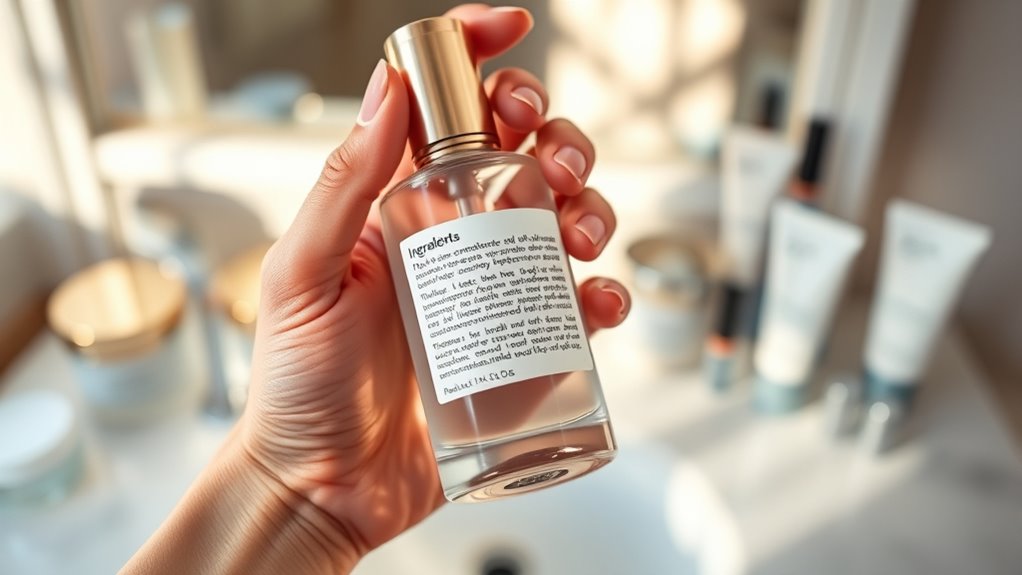

To understand a skincare ingredient list, look at the order of ingredients—you’ll find the main components at the top, listed from highest to lowest concentration. Focus on key ingredients you want, like hydrators or active treatments, which should appear early if present in significant amounts. Avoid unwanted ingredients if they show up near the top. Keep practicing, and you’ll become confident in identifying what makes a product work for your skin. If you keep exploring, you’ll master the details behind each label.

Get beauty and skincare favorites delivered free with Prime
- Fast, free delivery on millions of items
- Prime Video, Amazon Music and more included
- Member-only deals all year
Key Takeaways
- Focus on the first five ingredients to identify the product’s main components and purpose.
- Check the placement of active ingredients to determine their concentration and effectiveness.
- Look for nourishing ingredients like humectants or emollients at the top of the list.
- Avoid ingredients you want to skip, such as parabens or artificial fragrances, early in the list.
- Understand that ingredient order reflects their percentage, helping evaluate product strength and suitability.
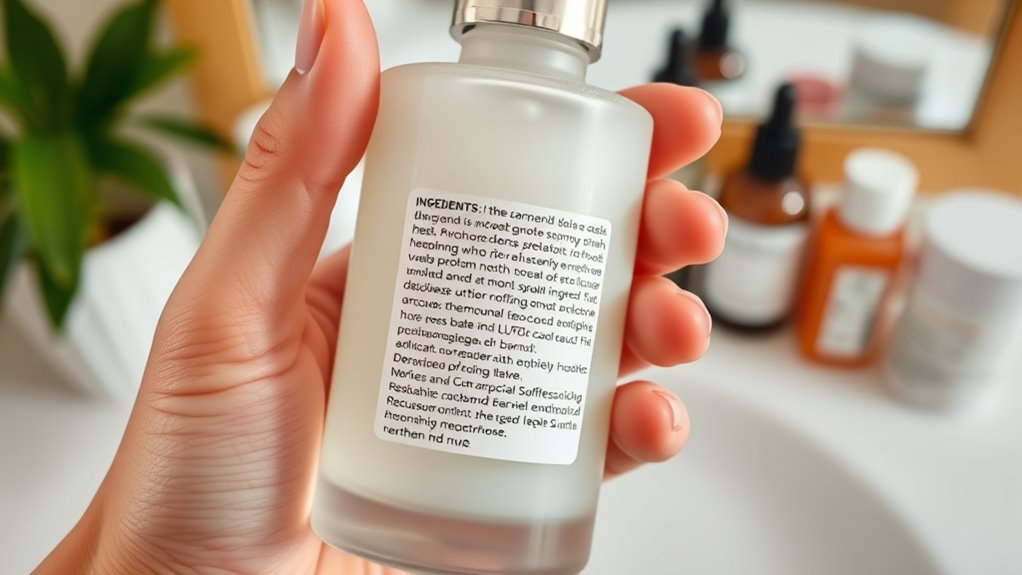
Have you ever looked at a skincare product’s ingredient list and felt overwhelmed? You’re not alone. Ingredient lists can seem like a jumble of unfamiliar words and chemicals, but understanding how they’re organized can make a big difference. Clear product labeling is essential because it helps you quickly identify the key components, and the ingredient order is a vital part of that. Manufacturers are required to list ingredients in order of concentration, starting with the highest amount first. This means that the first few ingredients on the list are present in the largest quantities, giving you a good idea of what the product mainly contains. For example, if water and glycerin are at the top, it’s likely a hydrating product. Conversely, if a potent active like retinol appears further down the list, it’s present in smaller amounts, but that doesn’t mean it’s ineffective.
Getting comfortable with ingredient order helps you make smarter choices. When you’re shopping for skincare, pay attention to the first five ingredients. These are the ones that will have the most impact on your skin. If you’re looking for a moisturizer, you’d want it to contain nourishing ingredients like humectants or emollients at the top. If an ingredient you’re trying to avoid, such as parabens or artificial fragrances, appears early on the list, it’s best to steer clear. Also, keep in mind that some ingredients, like preservatives, are necessary for product safety, even if they’re listed later on. The key is balancing what’s beneficial with what might cause irritation or allergies.
Product labeling can sometimes be misleading, so it’s important to read beyond the front of the package. Labels may highlight certain ingredients with bold fonts or claims, but the ingredient list is where you find the real details. Look for the ingredient order to see if the product’s active components are present in significant amounts. For example, if you want a product with a high concentration of vitamin C, check if it’s listed among the first few ingredients. Remember that ingredients are measured in percentages, but the exact amounts aren’t always specified. Still, the order gives you a reliable guide. Developing this skill takes practice, but over time, you’ll be able to quickly assess whether a product aligns with your skin’s needs, avoiding unnecessary ingredients or potential irritants.
hydrating moisturizer with glycerin
As an affiliate, we earn on qualifying purchases.
As an affiliate, we earn on qualifying purchases.
Frequently Asked Questions
How Can I Identify Harmful Ingredients Quickly?
You can identify harmful ingredients quickly by checking ingredient sources and functions on the list. Look for known irritants like alcohol or fragrances, and understand their functions—whether they’re preservatives or potential allergens. Pay attention to labels that highlight harmful substances like parabens or sulfates. This way, you can make informed choices, avoid ingredients that might cause irritation or long-term damage, and select products suited to your skin’s needs.
Are Natural Ingredients Always Safer Than Synthetic Ones?
Think of natural ingredients as lush, green forests and synthetic ones as manufactured factories. Natural isn’t always safer; some can cause allergies, while synthetics might be well-tested. Always check for chemical synonyms like parabens or phthalates, and look for organic certifications that guarantee purity. You’re in control—by understanding labels, you can choose ingredients that align with your safety and values, regardless of whether they’re natural or synthetic.
What Do the Numbers on Ingredients Indicate?
The numbers on ingredients indicate ingredient codes or symbols that help identify specific substances. These codes, often called INCI numbers, make it easier to recognize ingredients across brands. When you see ingredient symbols with numbers, it means that the product uses standardized codes for safety and clarity. Pay attention to these numbers to better understand what’s in your skincare, especially if you have allergies or sensitivities.
How Do I Understand Ingredient Concentrations?
Imagine you’re choosing a moisturizer with 10% hyaluronic acid. Understanding ingredient concentrations helps you gauge ingredient safety and effectiveness. Higher percentages often indicate more potent effects but also potential irritation. Look for ingredient transparency on labels to see concentrations—some brands list them clearly, others don’t. By paying attention to these details, you guarantee you’re using products with safe, effective ingredient levels tailored to your skin needs.
Can I Rely on Ingredient Order for Product Effectiveness?
You can’t fully rely on ingredient order for product effectiveness because ingredient hierarchy isn’t always accurately depicted due to labeling practices. Manufacturers might list ingredients in order of concentration, but sometimes they prioritize marketing, leading to labeling inaccuracies. To guarantee a product’s efficacy, focus on key ingredients rather than just their position on the list. Always look for transparency and trusted brands to get the best results.
Conclusion
By mastering how to read a skincare ingredient list, you hold the key to reveal your best skin. Think of it as your personal treasure map—guiding you past false promises and toward products that truly serve you. With a little practice, you’ll navigate labels like a pro, making informed choices that turn your skincare routine into a confident, empowering ritual. Remember, knowledge is your most beautiful accessory—wear it proudly!
Fall Picks
fall essentials
As an affiliate, we earn on qualifying purchases.