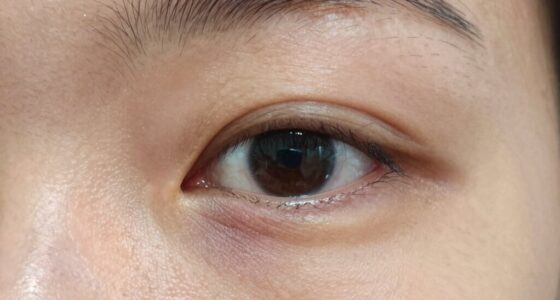

To apply sunscreen around your eyes without stinging, choose a mineral-based formula with zinc oxide or titanium dioxide, as these are gentle and safe for sensitive skin. Use your ring finger to gently dab small amounts along the orbital bone, avoiding direct contact with eyelids and eyes. Pat softly rather than rubbing, and look for labels indicating ophthalmologist-tested or sensitive skin formulas. Following these tips can help protect your eyes comfortably—keep going to discover more effective application techniques.
Key Takeaways
- Use mineral sunscreens with zinc oxide or titanium dioxide, as they are gentler and less likely to cause stinging.
- Apply a small amount gently around the orbital bone using your ring finger, avoiding direct contact with eyelids.
- Opt for formulations labeled as sensitive or ophthalmologist-tested to minimize irritation risk.
- Gently pat or dab the sunscreen, avoiding rubbing or harsh spreading motions near the eyes.
- Check ingredient labels for irritants like fragrances, alcohol, or preservatives before applying.

Have you ever wondered why the skin around your eyes needs special attention when applying sunscreen? It’s because this area is delicate, thin, and more prone to damage from UV rays. Proper eye area care isn’t just about avoiding sunburn; it also helps prevent premature aging, dark circles, and fine lines. When choosing a sunscreen for this sensitive region, paying attention to sunscreen ingredients is essential. Some ingredients, like chemical filters, can cause stinging or irritation if they come into direct contact with the eyes. That’s why selecting formulations designed for sensitive skin or specifically labeled as eye-safe makes all the difference.
The key to effective eye area care with sunscreen is to opt for products with gentle, non-irritating ingredients. Mineral sunscreens containing zinc oxide or titanium dioxide are often better choices because they sit on the skin’s surface and reflect UV rays without penetrating or irritating the eyes. These physical filters tend to be less likely to cause stinging, making them ideal for the delicate eye area. When applying, use your ring finger to gently dab a small amount of sunscreen around your orbital bone, avoiding direct contact with your eyelids and eyes. This careful application helps protect against UV damage without risking discomfort or irritation.
Another essential aspect of eye area care is understanding how to apply sunscreen properly. Instead of rubbing or spreading harshly, gently pat the product into your skin. This minimizes the chance of particles getting into your eyes and reduces irritation. If you’re using a chemical sunscreen, look for formulas that are specially designed for sensitive areas or labeled as ophthalmologist-tested. These often contain ingredients that are less likely to cause stinging or redness. Always read the label to check for potential irritants like alcohol, fragrances, or preservatives that might cause a reaction around your eyes.
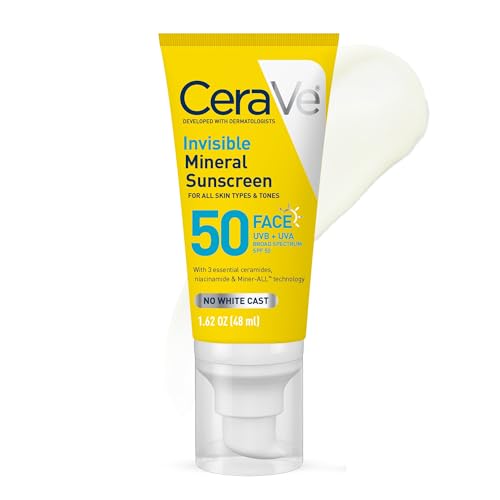
CeraVe Invisible Mineral Sunscreen SPF 50, Face Sunscreen for Sensitive Skin With Zinc Oxide & Titanium Dioxide, Vitamin E + Niacinamide + Ceramides, Oil Free, Travel Size 1.62 oz
- Invisible Finish: Provides 100% invisible protection for all skin tones
- Broad Spectrum Protection: Protects against UVA and UVB rays
- Hydrating Primer: Can be used as a makeup primer with hydration
As an affiliate, we earn on qualifying purchases.
As an affiliate, we earn on qualifying purchases.
Frequently Asked Questions
Can I Use Facial Sunscreen Around My Eyes if I Have Sensitive Skin?
Yes, you can use facial sunscreen around your eyes if you have sensitive skin, but opt for a gentle application. Look for sunscreens with minimal ingredients and avoid those with potential irritants like fragrances or alcohol. Test a small patch first to check for ingredient sensitivity. Gently pat the sunscreen around your eyes, being careful not to rub or get too close to the eyes to prevent stinging.
Are There Specific Ingredients to Avoid in Eye-Area Sunscreens?
You should avoid ingredients that can cause ingredient sensitivity, like fragrances, alcohol, and certain preservatives in eye-area sunscreens. Opt for mineral sunscreens with zinc oxide or titanium dioxide, as they’re gentler and less likely to cause stinging. Chemical sunscreens often contain ingredients like avobenzone or oxybenzone, which can irritate sensitive skin around your eyes. Always check labels, and choose formulations specifically designed for delicate areas to prevent discomfort.
How Often Should I Reapply Sunscreen Around My Eyes During the Day?
Ever wonder how often you should reapply sunscreen around your eyes for proper protection? You need to reapply every two hours during the day to maintain effective eye area protection. If you’re sweating, swimming, or wiping your face, reapply sooner. This keeps your skin safe from UV rays and prevents damage. Don’t forget, frequent reapplication is key to safeguarding this delicate area without causing irritation.
Is It Safe to Use Waterproof Sunscreen Around the Eyes?
Yes, waterproof formulas are generally safe around your eyes, but you should check for ingredients that might cause skin irritation. Waterproof sunscreens tend to stay on longer, so reapplication might be less frequent, but it’s still essential to reapply after swimming or sweating. Be gentle when applying, avoiding direct contact with your eyes, and rinse thoroughly if you experience any irritation. Always choose a product designed for sensitive skin around the eyes.
Can Eye Creams With SPF Replace Sunscreen Around the Eyes?
Eye creams with SPF can supplement your sun protection but shouldn’t fully replace sunscreen with peptides for your face. Eye cream SPF is designed for delicate skin around your eyes, but it often lacks the broad coverage and higher SPF levels of regular sunscreens. For ideal protection, apply a dedicated sunscreen around your eyes and use an eye cream with SPF for added hydration and targeted care.
Conclusion
Remember, applying sunscreen around your eyes is like gently shielding delicate petals from harsh sunlight. Use your fingertips to softly pat the lotion, avoiding any stinging. Imagine a soothing veil protecting your skin, keeping it safe and hydrated through every sunlit adventure. With careful application, you’ll keep your eyes bright and comfortable, ready to enjoy the warmth without discomfort. So, take a moment to shield your eyes—your skin will thank you for the gentle, stinging-free care.