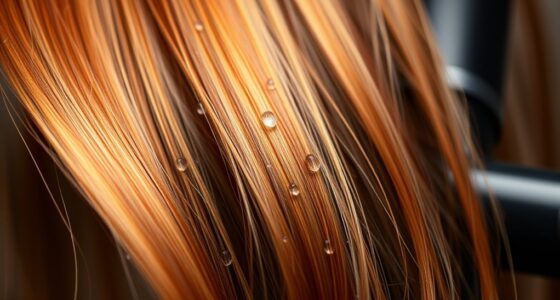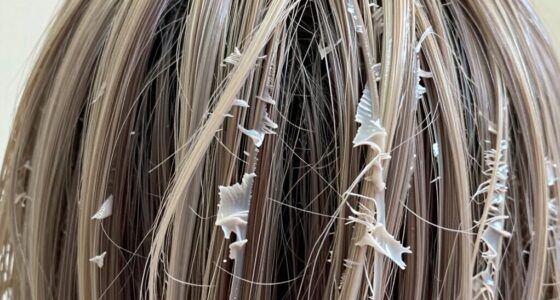
When you air-dry your hair, natural evaporation removes moisture, which affects whether your hair looks frizzy or shiny. Faster evaporation in dry, breezy environments helps your hair dry smoothly with a glossy finish. However, high humidity slows evaporation, trapping moisture and causing frizz. Hair texture also plays a role—curly hair traps more moisture, increasing frizz, while straight hair dries more evenly. Understanding this science can help you achieve healthier, shinier results; keep exploring to learn more.

Get beauty and skincare favorites delivered free with Prime
- Fast, free delivery on millions of items
- Prime Video, Amazon Music and more included
- Member-only deals all year
Key Takeaways
- Natural evaporation releases moisture gradually, with even drying minimizing cuticle lifting and frizz.
- Retaining moisture through gentle air-drying helps maintain hair shine and flexibility.
- High humidity slows evaporation, trapping moisture and increasing frizz, while dry air promotes smoothness.
- Texture influences evaporation: curly hair traps more moisture, requiring careful drying to prevent frizz.
- Controlled airflow and temperature optimize evaporation, balancing moisture loss for shiny, frizz-free hair.

Have you ever wondered how things dry naturally without heat or artificial methods? It’s a fascinating process driven primarily by natural evaporation, where moisture leaves a surface and turns into vapor, gradually reducing the water content. When you air-dry your hair, this same principle applies. As the moisture in your strands evaporates into the air, the rate of drying depends on factors like air circulation, humidity, and temperature. But beyond just drying, this process influences the look and feel of your hair—whether it ends up frizzy or shiny.
One key aspect to think about is moisture retention. When hair dries naturally, it tends to retain more of its natural oils and moisture compared to heat-drying methods. This retention can be a double-edged sword. On one side, it helps keep your hair soft, flexible, and healthy, reducing the risk of damage caused by heat. On the other, if the environment’s humidity is high or if your hair is prone to absorbing moisture, it might not dry completely or evenly, leading to frizz. The way your hair interacts with moisture during air-drying is essential. When moisture stays trapped or isn’t evenly evaporated, the cuticles can lift or become uneven, causing frizz. Conversely, if moisture escapes smoothly and evenly, your hair remains sleek and shiny.
The natural evaporation process is also affected by your hair’s natural texture and the environment. For example, curly or textured hair tends to trap more moisture, making it more susceptible to frizz if not dried carefully. On the other hand, straight hair often dries faster and more evenly, resulting in a sleeker appearance with less frizz. Environmental humidity plays a significant role: in humid conditions, moisture in the air can slow down evaporation, leaving your hair damp longer and increasing the chances of frizz. In contrast, a dry, breezy environment accelerates natural evaporation, helping your hair dry more efficiently and often leaving it with a shiny, smooth finish. Additionally, understanding the science behind evaporation rates can help you optimize your drying technique for better results.
Ultimately, how your hair dries naturally hinges on balancing moisture retention and evaporation. When you allow your hair to air-dry properly, you give it a chance to dry gently, preserving its natural oils and minimizing damage. A slow, even evaporation process supports a glossy, frizz-free look. But rushing the process or drying in an overly humid space can disrupt this balance, leading to frizz and dullness. By understanding these underlying science principles—natural evaporation and moisture retention—you can better control your hair’s final appearance, choosing the right environment and techniques to achieve the shine you want without relying on heat.
As an affiliate, we earn on qualifying purchases.
Frequently Asked Questions
How Does Humidity Affect Air-Drying Results?
Humidity levels substantially impact your air-drying results. When humidity is high, your hair retains more moisture, which can lead to frizz and a lack of shine. Conversely, low humidity helps moisture evaporate more quickly, leaving your hair smoother and shinier. To get the best results, adjust your drying routine based on humidity levels, using products that help control moisture retention in humid conditions and enhance shine when it’s dry.
Can Hair Type Predict Frizz or Shine After Air-Drying?
Imagine your hair as a delicate canvas, each strand telling its own story. Your hair type, influenced by porosity and curl pattern, shapes whether it shines or frizzes after air-drying. High porosity hair absorbs moisture quickly, often leading to frizz, while low porosity resists moisture, resulting in shine. Curly hair tends to frizz more, but with proper care, it can also achieve a glossy, defined look.
Does Using Certain Products Improve Air-Drying Outcomes?
You can improve your air-drying results by choosing products with the right formulation for your hair type. Look for leave-in conditioners or serums that tame frizz and boost shine. Proper application techniques, like evenly distributing products through damp hair and avoiding excessive use, help maximize their effectiveness. When you combine the right product formulation with careful application, you’ll notice smoother, shinier hair and less frizz after air-drying.
How Long Should I Air-Dry My Hair for Optimal Results?
You might think longer air-drying is better, but it’s actually about your hair’s porosity and scalp health. For ideal results, air-dry your hair until it’s about 80% dry, which usually takes 20-30 minutes. If your hair has high porosity, it dries faster; low porosity takes longer. Avoid over-drying to protect your scalp health, and use a gentle towel to reduce frizz and damage.
What Environmental Factors Influence Air-Drying Effectiveness?
Environmental factors like temperature fluctuations and air circulation markedly influence how well your hair air-dries. If the temperature varies or is too cold, your hair may take longer to dry and become frizzier. Good air circulation helps moisture escape more evenly, reducing drying time and enhancing shine. To get better results, dry your hair in a warm, well-ventilated space, avoiding sudden temperature changes that can disrupt the drying process.
Conclusion
So, savvy stylists, stay sharp and steer your strands toward success. By understanding the science of air-drying, you can master the magic of minimizing frizz and maximizing shine. Remember, patience and practice pave the path to perfect, polished hair. With the right routine and a little know-how, you’ll wield the wisdom to win the war against wild, wavy, and unruly strands. Embrace the science, and let your hair’s natural beauty bloom beautifully.
Fall Picks
fall essentials
As an affiliate, we earn on qualifying purchases.