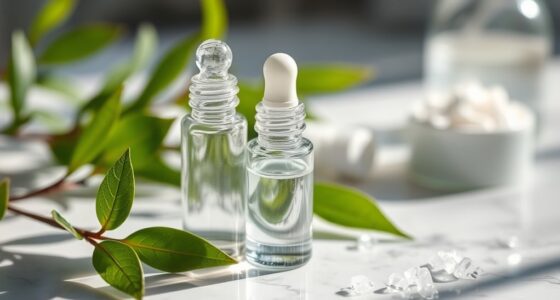

Some toners leave a film on your skin because of ingredients like silicones, occlusive agents, or alcohol, which create a protective barrier or temporary residue. This isn’t always a sign of a problem—sometimes it indicates beneficial ingredients working as intended. Proper application methods, such as using the right amount and allowing time for absorption, can help prevent buildup. If you’re curious about managing or avoiding this residue, there’s more to take into account.
Key Takeaways
- Residue from occlusive ingredients like silicones or thickeners is common and can form a protective barrier on skin.
- Applying too much product or not allowing proper absorption may result in a visible film.
- Ingredients such as alcohol or astringents evaporate quickly, leaving a temporary film that is often normal.
- Slight residue can indicate beneficial ingredients creating a skin barrier, but persistent irritation suggests a routine adjustment.
- Proper cleansing, correct application amount, and waiting for absorption help minimize unwanted film formation.
Have you ever noticed a dull, filmy layer forming on your toner cartridges or printed pages? If so, you’re not alone. The same kind of film can sometimes appear on your face after applying toner, and it’s natural to wonder what’s causing it. The truth is, certain toner ingredients can leave behind a residue if not formulated or used properly. This film isn’t always a sign of a problem, but understanding why it happens can help you decide whether it’s normal or a sign to change your skincare routine.
A filmy layer on your skin after toner can be normal or a sign to adjust your routine—know the cause to care better.
When you look at your toner ingredients, you’ll notice that some contain occlusive agents, silicones, or thickeners designed to lock in moisture or provide a smooth application. These ingredients can create a thin, protective barrier on your skin, which is intended to help your skincare products work better. However, if you don’t follow your toner with the right steps—like properly cleansing your face beforehand or not waiting long enough for it to absorb—you might end up with a residual film. This is especially true if your skin isn’t thoroughly prepared or if you apply too much product. The film might also form if you layer multiple products without allowing each to fully absorb, creating a buildup that looks and feels filmy. Residual buildup can occur when layering products improperly, which is a common issue in skincare routines. Sometimes, the formulation ingredients can also influence how your skin reacts and whether a film develops, especially if they contain occlusive agents or alcohol.
Additionally, some toner formulations include alcohol or astringents that can leave a temporary residue on your skin. When these ingredients evaporate, they can sometimes leave behind a thin film, especially if your skin is oily or if you’re in a dry environment. If your toner has humectants like glycerin or hyaluronic acid, these can attract moisture but might also contribute to a sticky or film-like feeling if you don’t follow up with moisturizer. That’s why it’s essential to weigh your overall skincare routine and how each product interacts. Proper application techniques can make a significant difference in preventing unwanted residue and ensuring your skin remains comfortable.
Sometimes, the layering of skincare products can contribute to the buildup and the formation of a film, especially if each step isn’t given enough time to absorb properly. Paying attention to your skin’s unique needs and adjusting your routine accordingly can help prevent unnecessary residue. Whether this film is normal depends on your skin type and the toner you’re using. For most people, a slight film or residue isn’t harmful and can be a sign that your toner contains beneficial ingredients forming a barrier. However, if you notice breakouts, irritation, or a persistent, uncomfortable film, it might be time to reassess your toner choices. Look for formulas with fewer occlusive or pore-clogging ingredients, and make sure you’re applying your toner correctly—using the right amount, waiting for absorption, and following up with moisturizer. Ultimately, paying attention to how your skin reacts will guide you towards a skincare routine that leaves your skin feeling fresh, not filmy.

CeraVe Hydrating Toner for Face Non-Alcoholic with Hyaluronic Acid, Niacinamide, and Ceramides for Sensitive Dry Skin, Fragrance-Free Non Comedogenic, Full Size, 6.8 Fl Oz
[HYALURONIC ACID & NIACINAMIDE TONER] pH balanced toner gently removes impurities after cleansing. With ceramides, hyaluronic acid, and…
As an affiliate, we earn on qualifying purchases.
As an affiliate, we earn on qualifying purchases.
Frequently Asked Questions
Can Toner Residue Cause Breakouts or Skin Irritation?
Yes, toner residue can cause breakouts or skin irritation, especially if it disrupts your skin’s pH balance. When excess residue remains, it can clog pores and lead to texture issues like roughness or bumps. To avoid this, choose a toner suited for your skin type, apply it properly, and make sure you remove any film thoroughly. Maintaining a balanced pH helps keep your skin healthy and reduces irritation risks.
How Long Should Toner Film Typically Last on Skin?
Typically, toner film should last a few minutes after application, depending on your skin and toner consistency. If you use the right application techniques—like applying a thin, even layer—you’ll notice the film dissipates faster. A thicker or more viscous toner might leave a longer-lasting film. To avoid excess residue, opt for a toner with a lighter consistency and make certain you’re not over-applying, which can lead to prolonged film.
Does Skin Type Influence Toner Film Formation?
They say, “You are what you eat,” but your skin’s also influenced by your skin type. Yes, your skin type impacts toner film formation because it affects skin absorption and pH balance. Oily skin may leave more residue, while dry skin absorbs toner differently, reducing film. Understanding your skin’s needs helps choose the right toner, ensuring it balances pH and absorbs properly without leaving a film.
Are There Specific Ingredients That Prevent Toner From Leaving a Film?
Yes, specific ingredients can prevent toner from leaving a film. Ingredients like glycerin and hyaluronic acid improve hydration and reduce residue, thanks to better ingredient interactions that enhance absorption. Additionally, stabilizing formulas with ingredients like alcohol or certain silicones can improve formula stability, ensuring the toner absorbs evenly without leaving a film. Look for lightweight, hydrating ingredients and formulations designed for quick absorption to avoid unwanted residue.
How Can I Remove Excess Toner Film Effectively?
To remove excess toner film effectively, start with a proper application technique, using a damp cotton pad or soft cloth to gently wipe away residue. Focus on areas with thicker film. Consider toner formulation—opt for alcohol-free or water-based options that reduce film buildup. Avoid over-application and let the toner fully absorb before applying other products. Regularly cleanse your skin thoroughly to prevent excess buildup and maintain a fresh, matte finish.
CeraVe Hydrating Toner for Face Non-Alcoholic with Hyaluronic Acid, Niacinamide, and Ceramides for Sensitive Dry Skin, Fragrance-Free Non Comedogenic, Full Size, 6.8 Fl Oz
[HYALURONIC ACID & NIACINAMIDE TONER] pH balanced toner gently removes impurities after cleansing. With ceramides, hyaluronic acid, and…
As an affiliate, we earn on qualifying purchases.
As an affiliate, we earn on qualifying purchases.
Conclusion
So, next time your toner leaves a film, remember—sometimes it’s a sign your skin needs a little extra love, not a flaw. That thin layer can be a gentle shield, protecting your skin from environmental stressors. Instead of frustration, see it as a reminder to adjust your routine or choose a different formula. After all, skincare is about finding what works for you—sometimes, a little film is just part of your glow.

Paula's Choice Skin Balancing Pore-Reducing Face Toner with Niacinamide for Combination & Oily Skin, Minimizes Large Pores, Controls Oil & Shine, Acne-Prone Friendly, Travel Size, 1 Fl Oz
DIMINISH ENLARGED PORES: Niacinamide + balancing antioxidants help minimize the look of enlarged pores while evening skin tone.
As an affiliate, we earn on qualifying purchases.
As an affiliate, we earn on qualifying purchases.

Neutrogena Alcohol-Free Gentle Daily Facial Toner, Fragrance-Free to Tone & Refresh Skin, Gently Removes Impurities & Reconditions Skin, Hypoallergenic, 8 fl. oz
8-fluid ounce bottle of Neutrogena Alcohol-Free Facial Toner gently tones and refreshes skin, removing makeup and impurities without…
As an affiliate, we earn on qualifying purchases.
As an affiliate, we earn on qualifying purchases.