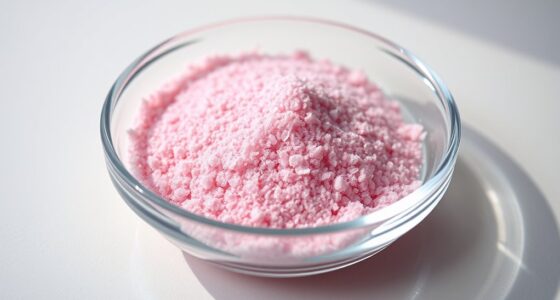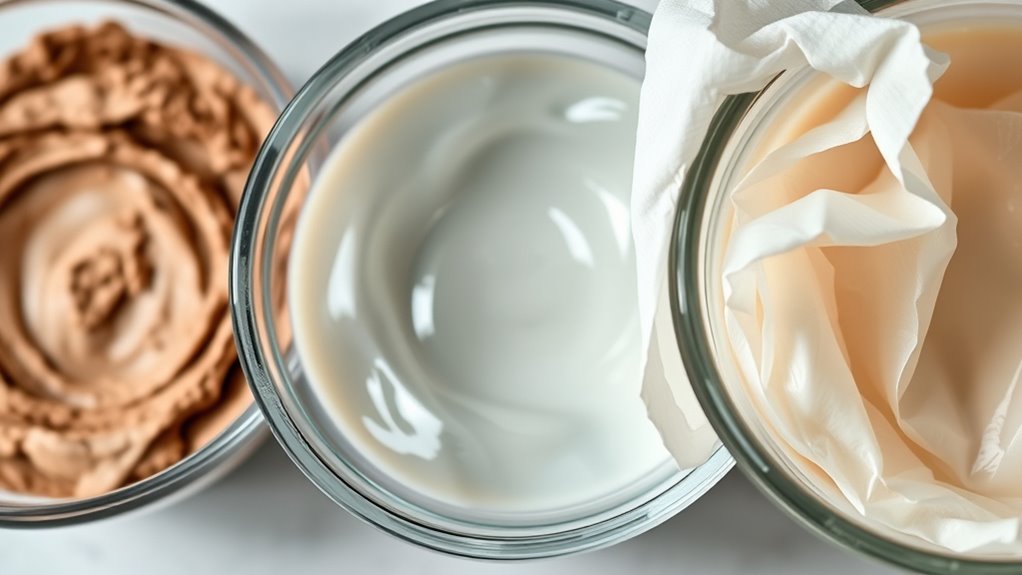

Clay masks help deep-cleanse and control oil by absorbing excess sebum, perfect for oily or acne-prone skin. Sheet masks deliver concentrated nutrients quickly through soaked fabrics, offering hydration or brightening in minutes. Gel masks combine calming and hydrating benefits with a lightweight feel, making them suitable for sensitive or irritated skin. Each type serves a unique purpose; exploring their differences can help you choose the best mask for your skin’s needs. Keep going to learn more about each mask type.
Key Takeaways
- Clay masks deeply cleanse, absorb excess oil, and unclog pores, ideal for oily or acne-prone skin.
- Sheet masks deliver concentrated active ingredients like hyaluronic acid or vitamin C directly to the skin for quick benefits.
- Gel masks hydrate and soothe, combining the advantages of both clay and sheet masks, suitable for dry or sensitive skin.
- Ingredient formulations vary across mask types, targeting specific concerns such as oil control, hydration, or calming.
- Each mask type offers unique application benefits, from deep cleansing with clay to rapid nutrient delivery via sheet masks.
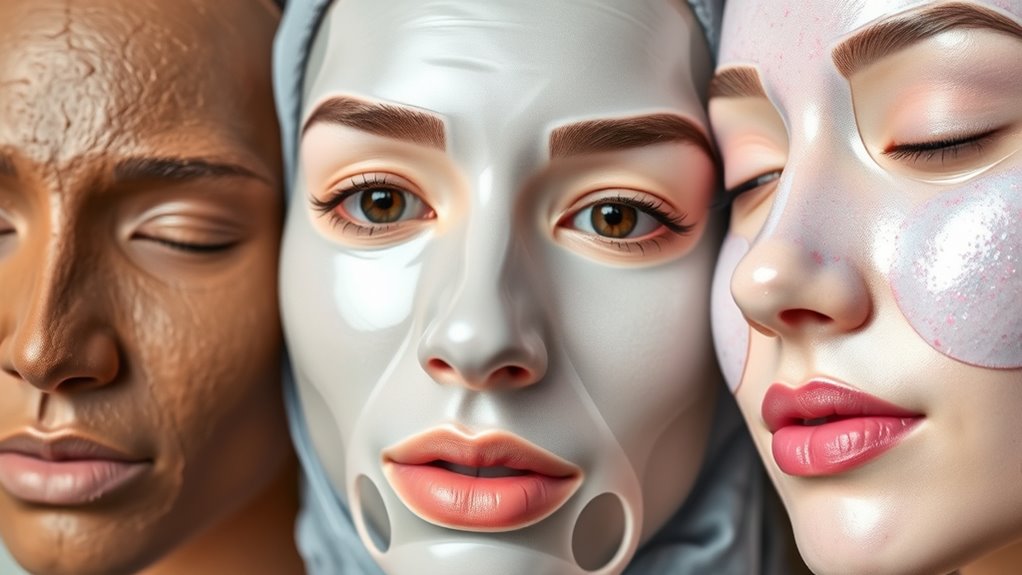
Have you ever wondered which mask type offers the best protection for your needs? Choosing between clay, sheet, and gel masks can feel overwhelming, but understanding their unique application benefits and ingredient differences can help you make an informed decision. Each mask type is designed to target specific skin concerns and offers distinct advantages, so knowing how they work is essential for achieving your skincare goals.
Clay masks are renowned for their deep-cleansing properties. They excel at absorbing excess oil, unclogging pores, and removing dirt and impurities from your skin. The primary ingredients, such as kaolin or bentonite clay, are mineral-rich and highly absorbent. These ingredient differences make clay masks particularly effective for oily and acne-prone skin, as they help control shine and reduce breakouts. Their application benefits include a quick, easy process where you spread a thin layer onto your face and rinse after a few minutes. Clay masks also help reduce inflammation and calm irritated skin, making them suitable for sensitive skin types when formulated with gentle clays. Their drying effect can sometimes be harsh if left on too long, so it’s important to follow the recommended application time. Additionally, understanding how market trends influence product formulation can help you select masks with the right ingredients for your skin.
Clay masks effectively absorb excess oil, unclog pores, and calm irritated skin.
Sheet masks, on the other hand, offer a different experience. These pre-soaked fabric or fiber sheets are infused with serums packed with active ingredients tailored to your skin needs. The application benefits lie in their convenience and ability to deliver concentrated nutrients directly to your skin. Because they fit snugly over your face, sheet masks maximize ingredient absorption, which can result in immediate brightening, hydration, or soothing effects. Ingredient differences in sheet masks vary widely, with options containing hyaluronic acid for hydration, vitamin C for brightening, or botanical extracts for calming. Their ease of use makes them perfect for quick skincare boosts or when you need targeted treatment. While they don’t provide the deep pore-clearing benefits of clay masks, sheet masks excel at delivering a high dose of active ingredients efficiently.
Gel masks are versatile and often combine the benefits of both clay and sheet masks. They are usually water-based and contain soothing ingredients like aloe vera or cucumber, making them ideal for hydrating and calming irritated or sensitive skin. The application benefits of gel masks include their cooling sensation and ease of spreading across your face. They can be left on longer without drying out, allowing for extended treatment sessions. Ingredient differences in gel masks often focus on hydration and soothing properties, making them suitable for dry or irritated skin. They typically have a lightweight, non-greasy texture, which absorbs quickly and leaves your skin feeling refreshed. Moreover, gel masks are often formulated to complement other skincare products, enhancing overall skin health.
Ultimately, knowing your skin type and concerns will guide you toward the right mask type. Whether you want to control oil, boost hydration, or deliver targeted nutrients, understanding application benefits and ingredient differences will help you select the perfect mask to meet your skincare needs.

Blackhead Remover Vacuum, USB Interface Type Pore Vacuum, Black Head Extractions Tool with Camerafor, Men and Women Pore Cleaner, 3 Adjustment Modes & 6 Suction Heads(Light Pink)
【HD camera】Blackhead remover vacuum cleaner built-in 1080P HD camera & 8 LED lights, can magnify the skin 20...
As an affiliate, we earn on qualifying purchases.
Frequently Asked Questions
How Often Should I Use Each Mask Type for Best Results?
You should use each mask type based on your skin’s needs and the recommended frequency guidelines. Generally, clay masks can be used 1-2 times a week to control oil, sheet masks 2-3 times weekly for hydration, and gel masks 2-3 times weekly for soothing and revitalizing. Always consider ingredient considerations to avoid irritation, and adjust your routine if your skin becomes dry or sensitive.
Can I Combine Different Mask Types in One Skincare Routine?
Think of your skincare routine as a carefully choreographed dance. You can combine different mask types through mask layering, but you need to guarantee ingredient compatibility to avoid skin conflicts. Use lighter gels first, then follow with clay or sheet masks if needed. Always patch test and listen to your skin’s signals—this way, each mask harmonizes perfectly, leaving your skin glowing without any missteps.
Are There Specific Skin Types That Benefit More From Certain Masks?
Yes, your skin type influences which masks work best. If you have sensitive skin, look for masks with gentle, soothing ingredients to avoid irritation. Oily or acne-prone skin benefits from clay masks that absorb excess oil. Dry skin needs hydrating gel masks with nourishing ingredients. Always check mask ingredients to verify they suit your skin sensitivity, and avoid harsh chemicals that could cause redness or discomfort.
What Ingredients Should I Look for in Each Mask Type?
When choosing masks, look for ingredients suited to your skin needs. For clay masks, seek ingredients like kaolin or bentonite to absorb excess oil and impurities. Sheet masks benefit from hydrating ingredients like hyaluronic acid or aloe vera, while gel masks often include soothing ingredients like chamomile or cucumber extract. Pay attention to product formulation to guarantee the mask delivers the active ingredients effectively and matches your skin type.
How Do I Properly Remove Each Mask Without Damaging My Skin?
To properly remove each mask without damaging your skin, use gentle removal techniques. For clay masks, rinse with warm water and pat dry; avoid scrubbing. For sheet masks, gently peel off from the edges and pat remaining serum into your skin. For gel masks, rinse with lukewarm water and softly pat dry. Always avoid aggressive rubbing to prevent skin irritation and guarantee your skin stays healthy and refreshed.

Blackhead Remover Vacuum, Black Head Remover for Face with Camera, Pore Vacuum for Men and Women, USB Interface Type Blackhead Remover Tools, 6 Suction Heads & 3 Adjustment Modes (Grey)
【HD Camera & LED Lighting】Built-in 1080P HD camera magnifies skin up to 20 times; eight adjustable LED lights...
As an affiliate, we earn on qualifying purchases.
Conclusion
Now that you know about clay, sheet, and gel masks, you can choose the perfect one for your skin. Did you know that over 60% of people feel more confident after a relaxing mask session? Whether you prefer deep cleansing, hydrating, or soothing, incorporating masks into your routine can boost your skin’s health and your mood. So, go ahead—pamper yourself and enjoy that fresh, radiant glow every time!
Amazon Product B0GDXCQH2G
As an affiliate, we earn on qualifying purchases.

KmaxShip Blackhead Remover Vacuum Heat Visible, Pore Vacuum with Heating & HD Camera, Black Head Extractions Tool for Men and Women Pore Cleaner Facial Skincare Kits Set
6-IN-1 SUCTION HEAD SYSTEM: Conquer every curve and corner of your face. This pore vacuum remover comes with...
As an affiliate, we earn on qualifying purchases.