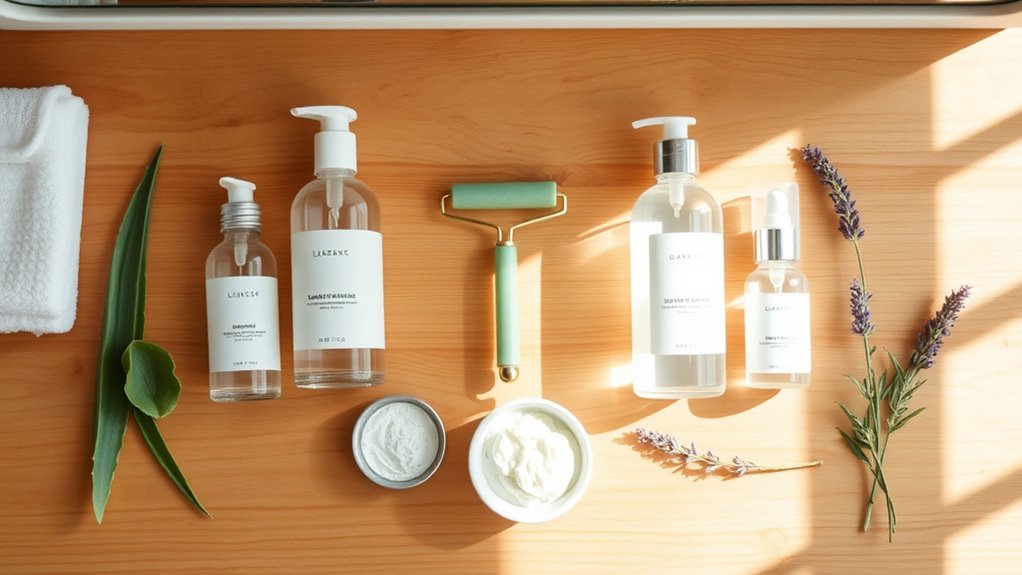

To build a skincare routine from scratch, start by identifying your skin type—oily, dry, sensitive, or combination—so you can choose appropriate products. Use gentle, natural ingredients like botanical cleansers and soothing elements such as aloe vera. Always apply broad-spectrum sunscreen daily and reapply as needed. Begin with basic steps — cleanser and moisturizer — then add targeted treatments gradually, observing how your skin responds. Keep consistent, be patient, and explore more tips as you develop your personalized routine.
Key Takeaways
- Identify your skin type to select appropriate gentle, natural products tailored to your needs.
- Start with a basic routine: cleanse, moisturize, and apply sunscreen daily.
- Gradually add targeted treatments like serums or exfoliants, testing for skin reactions.
- Prioritize natural ingredients and consistent use for optimal results over time.
- Monitor your skin’s response and adjust products or routine as needed for personalized care.
Have you ever wondered how to create an effective skincare routine that truly works for your skin type? Building a routine from scratch might seem overwhelming, but focusing on the basics can make it manageable and even enjoyable. The first step is understanding your skin’s unique needs—whether it’s oily, dry, sensitive, or combination. Once you know your skin type, you can choose products that address those specific concerns without causing irritation or imbalance.
Understanding your skin type is the key to creating a personalized, effective skincare routine.
When starting your routine, prioritize natural ingredients. These are often gentler and less likely to cause adverse reactions, especially if you have sensitive skin. Look for cleansers with botanical extracts or plant-based oils that cleanse without stripping away essential moisture. Incorporate products with soothing ingredients like aloe vera or chamomile to calm irritation. For moisturizers, opt for formulations containing natural oils such as jojoba or argan oil, which mimic your skin’s own sebum and provide hydration without clogging pores.
Sun protection is a vital step you shouldn’t skip. Applying a broad-spectrum sunscreen daily shields your skin from harmful UV rays that accelerate aging and cause damage. Even if you stay indoors most of the day, UV rays can penetrate windows, making sun protection a non-negotiable. Choose a sunscreen suited for your skin type—gel-based formulas work well for oily skin, while cream-based sunscreens suit dry or sensitive skin. Reapply every two hours if you’re outdoors or sweating, and remember, sun protection isn’t just about SPF; look for ingredients like zinc oxide or titanium dioxide, which provide effective physical barriers against UV radiation.
Building your routine gradually helps you understand how each product interacts with your skin. Start with a gentle cleanser, followed by a moisturizer suited for your skin type. Incorporate a vitamin-rich serum or treatment if needed, but don’t overload your skin with too many products at once. Always patch-test new products to avoid allergic reactions. As you get comfortable, add targeted treatments like exfoliants or masks, but do so one at a time to monitor how your skin responds.
Consistency is essential. Stick to your routine daily, morning and night, and give your skin time to adapt. Over weeks, you’ll notice improvements—fewer breakouts, glowing skin, and a healthier appearance. Remember, building a skincare routine is a personal journey; listen to your skin’s signals and adjust accordingly. Well-chosen products with high color accuracy can also enhance your skincare results by providing more true-to-life feedback on your skin’s condition. With patience and mindful choices, you’ll create a routine that not only works but also feels good to maintain.
Frequently Asked Questions
How Often Should I Change My Skincare Routine?
You should change your skincare routine seasonally, about every 3 to 4 months, to account for seasonal adjustments. As weather and skin needs evolve, you might need ingredient changes—like switching to more hydrating products in winter or oil-control formulas in summer. Pay attention to how your skin reacts and adjust accordingly, ensuring your routine stays effective without overloading or irritating your skin.
Are Natural Ingredients Always Better for My Skin?
Natural ingredients aren’t always better for your skin because ingredient safety and sourcing matter. Some natural ingredients can cause allergies or irritation, so it’s essential to check their quality and how they’re sourced. Synthetic ingredients aren’t inherently bad; they’re often tested for safety. Focus on choosing products that prioritize ingredient safety and transparency in sourcing, regardless of whether they’re natural or synthetic, to best support your skin health.
Can I Skip Sunscreen if I Have Dry Skin?
Skipping sunscreen is like leaving a fortress unguarded; your dry skin still needs protection. Sunscreen necessity goes beyond moisture—it’s your shield against harmful rays that can worsen dryness and cause damage. Even with dry skin, you can’t skip it. Think of sunscreen as a daily shield, essential for dry skin protection and overall health. Don’t risk it—embrace sunscreen as part of your routine for lasting, radiant skin.
How Do I Know if My Skincare Products Are Expired?
You can tell if your skincare products are expired by checking their expiration dates on the packaging. Even if there’s no date, look for changes in product stability, like a change in color, texture, or smell. If it separates, becomes watery, or develops an unusual odor, it’s time to discard it. Always prioritize fresh products to ensure effectiveness and avoid skin irritation.
Should I Patch Test New Products Before Full Application?
Think of patch testing as your skincare safety net. You should always patch test new products before full application because it’s a crucial step in product sensitivity testing. I once skipped this step and faced irritation, which could’ve been avoided. Patch test importance is clear—apply a small amount on your jawline or behind your ear, wait 24-48 hours, and then observe for any adverse reactions before using it on your entire face.
Conclusion
Now that you know how to build your skincare routine, remember it’s about consistency and listening to your skin. For example, Sarah started with gentle cleansers and added sunscreen gradually. After a month, her skin looked brighter and healthier. Don’t get discouraged if progress feels slow—every step counts. Stick with your routine, tweak as needed, and watch your skin transform over time. Your glow is just a routine away!