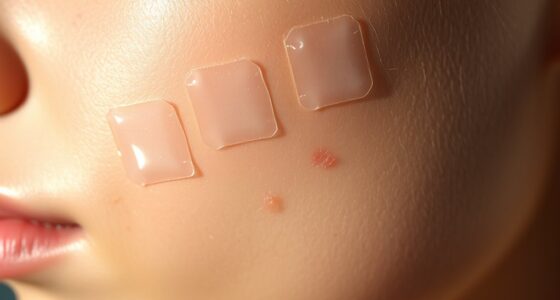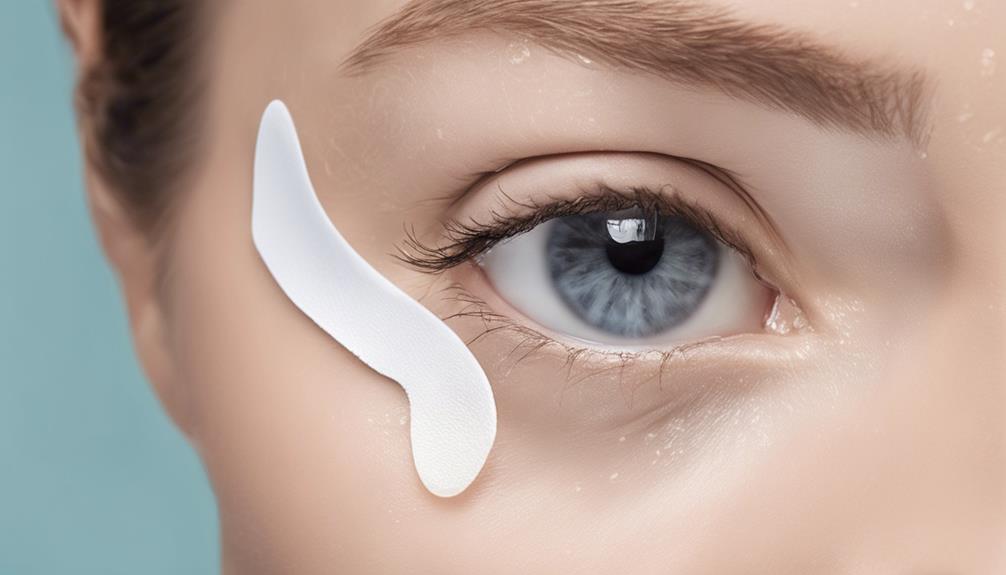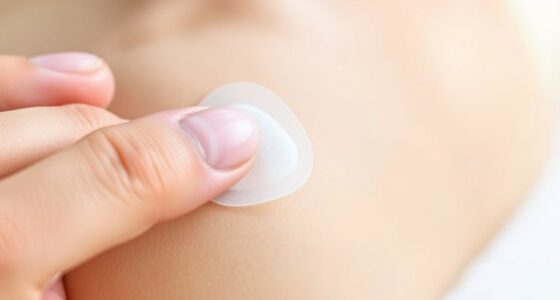

Skincare patches for teens are generally safe when used correctly, targeting specific blemishes without irritation. Make sure to clean your skin before applying a patch and follow the instructions to avoid leaving it on too long. Patches help reduce inflammation and absorb pus, offering quick, discreet results. They’re an easy part of your routine and less messy than creams. Keep discovering how these convenient solutions can improve your skin with proper use.
Key Takeaways
- Follow instructions carefully, including cleaning skin before applying patches to prevent irritation and ensure proper adhesion.
- Use patches for 8-12 hours maximum to avoid irritation or sensitivity; remove promptly if discomfort occurs.
- Patches are safe when used as directed, targeting specific blemishes without spreading bacteria or causing overuse.
- Expect visible results within 1-2 days, with improved skin clarity and reduced inflammation with consistent use.
- Incorporate patches into a broader skincare routine, including gentle cleansing and hydration, for optimal safety and effectiveness.

Have you ever wondered if there’s an easier way to treat teen skin concerns without messy creams or complicated routines? Skincare patches are gaining popularity among teens because they offer a simple, targeted solution. These small, adhesive patches are designed to deliver active ingredients directly to problem areas, making patch application a quick and hassle-free process. When it comes to teenage skin, convenience is key, especially if you’re juggling school, activities, and social life. Patches stick on easily and stay in place, so you can go about your day without worrying about smudging or reapplying products. This makes them especially appealing for busy teens who want effective skincare without the fuss.
Understanding how patch application works is straightforward. You start by cleaning the affected area thoroughly, ensuring there’s no oil, dirt, or leftover skincare products. Once dry, you peel off the backing of the patch and gently press it onto your skin. It’s important to position it accurately over the blemish or trouble spot. The adhesive is usually gentle enough to avoid irritation but strong enough to stay put for several hours, often up to 8-12 hours. During this time, the patch slowly releases the active ingredients—such as salicylic acid, hydrocolloid, or other acne-fighting substances—directly into your skin. This targeted delivery helps reduce inflammation, absorb pus, and diminish the appearance of pimples faster than traditional creams. Using patches also minimizes the risk of spreading bacteria or contaminating other areas of your face.
Clean skin, apply patch, and let active ingredients work overnight.
One of the biggest advantages of using skincare patches is that they keep the active ingredients focused on specific spots, preventing overuse of products on your entire face. Plus, they’re discreet and transparent, so you can wear them during school or while hanging out with friends without drawing attention. For teens with sensitive skin, patches can be less irritating than some topical creams, since they limit contact to targeted areas. However, it’s essential to follow the instructions carefully and avoid leaving patches on for too long, as that can cause irritation or skin sensitivity.
Expect results to vary based on your skin type and the severity of your skin concerns. Some teens notice a significant difference within a day or two, especially with active ingredients like hydrocolloid for cystic acne or salicylic acid for surface pimples. Remember, patches are not a cure-all; they’re a complementary tool within a broader skincare routine. Using them consistently, along with gentle cleansing and proper hydration, will give you the best results. Overall, skincare patches offer a simple, effective, and mess-free way to manage teen skin concerns, making them a handy addition to your skincare arsenal. Proper patch placement and following the recommended application times can help maximize their benefits and ensure your skin stays healthy and clear.
Frequently Asked Questions
Are Skincare Patches Suitable for Sensitive Teenage Skin?
Yes, skincare patches can be suitable for sensitive teenage skin if you choose gentle, hypoallergenic options. However, you should always do a patch test first to check for any patch irritation. If you notice redness or discomfort, discontinue use immediately. Look for patches formulated specifically for sensitive skin, and follow the instructions carefully to minimize any risk of irritation. Always consult a dermatologist if you’re unsure.
Can Teens Use Skincare Patches With Active Ingredients?
Yes, teens can use skincare patches with active ingredients, but you should always check for teen product compatibility and patch ingredient safety first. Look for patches specifically formulated for teens and confirm they contain gentle, safe ingredients. It’s wise to do a patch test before full application to avoid irritation. Always follow the instructions carefully, and if you experience any discomfort, discontinue use and consult a dermatologist.
How Often Should Teens Change or Reuse Patches?
Think of your skincare patch as a fresh canvas—once it’s been used, it’s time for a new start. You should change patches every 24 to 48 hours, following the patch replacement frequency recommended by the manufacturer. Reuse guidelines generally advise against reapplying used patches, as they lose their effectiveness and can cause irritation. Keep track of your patch schedule for the best results and healthy skin.
Are There Any Side Effects for Teenage Skin?
You might experience side effects like irritation, redness, or dryness due to teenage hormonal changes and skincare product interactions. Your skin is more sensitive during adolescence, so it’s important to monitor how it reacts to patches. If you notice persistent discomfort or breakouts, stop using the patch and consult a dermatologist. Always patch-test new products and follow usage instructions to minimize adverse effects on your teenage skin.
Can Skincare Patches Be Used Alongside Other Acne Treatments?
Yes, you can use skincare patches alongside other acne treatments, but you should verify patch compatibility first. Combining therapies, known as combination therapy, can boost effectiveness. However, it’s important to consult your dermatologist to ensure the treatments won’t cause irritation or interfere with each other. Always follow instructions carefully, and introduce new products gradually to monitor how your skin reacts to the combination.
Conclusion
While skincare patches seem like a quick fix, their effectiveness varies. Some believe they deliver active ingredients directly to your skin, but research shows results can depend on the type of patch and skin type. Always stay cautious and follow instructions. Remember, no patch can replace a consistent skincare routine or professional advice. So, approach these patches as a helpful tool, not a magic solution—your skin’s health still relies on good habits and proper care.