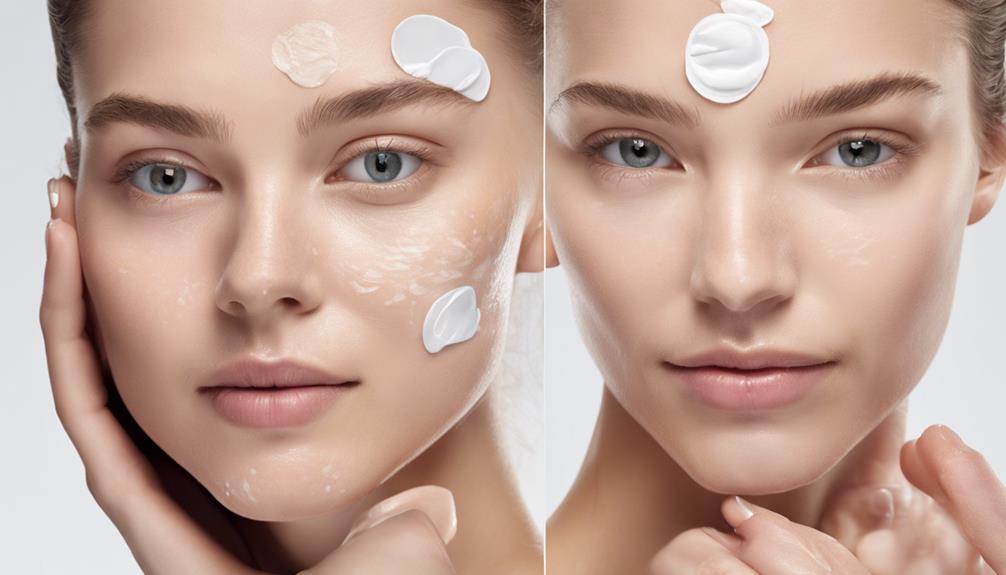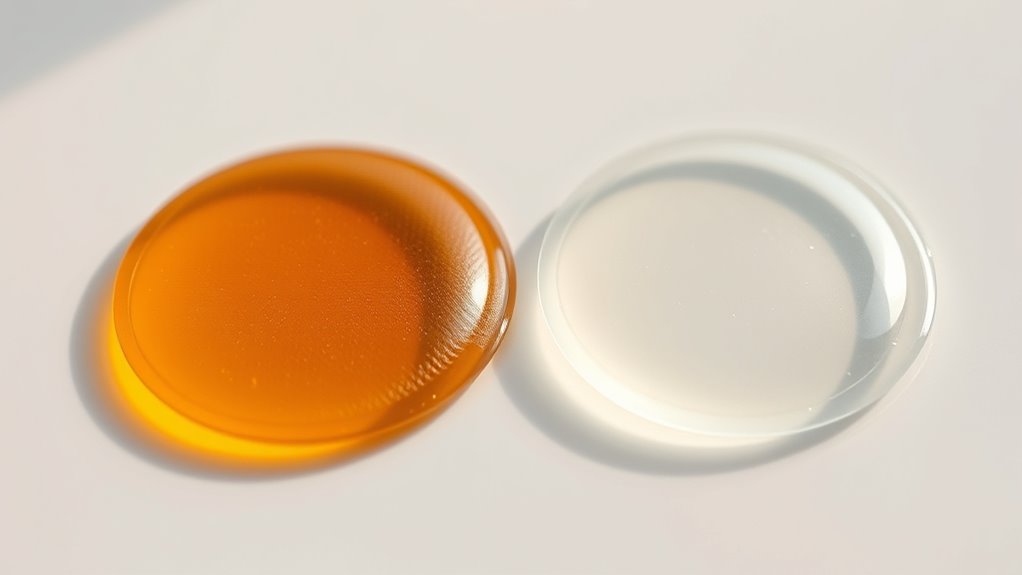

Hydrocolloids and hydrogels are both moist wound dressings, but they serve different purposes. Hydrocolloids absorb moderate to heavy exudate, forming a gel that helps maintain a moist healing environment, ideal for drainage wounds. Hydrogels contain high water content, rehydrating dry wounds and softening necrotic tissue without absorbing much exudate. Understanding these differences helps you choose the right option to support your wound healing process effectively. Keep exploring to learn more about their unique features.
Key Takeaways
- Hydrocolloids absorb more exudate and form gels, ideal for moderate to heavy drainage wounds, while hydrogels mainly hydrate dry wounds.
- Hydrogels contain high water content to provide moisture, whereas hydrocolloids create a gel upon contact with wound fluid for absorption.
- Hydrocolloids are better for exudating wounds, reducing dressing change frequency, while hydrogels support tissue regeneration and necrotic tissue debridement.
- Hydrogels are gentle and soothing, suitable for burns and delicate tissues; hydrocolloids maintain a moist environment and promote faster healing.
- The choice depends on wound drainage level: hydrocolloids for heavy exudate, hydrogels for dry or necrotic wounds.
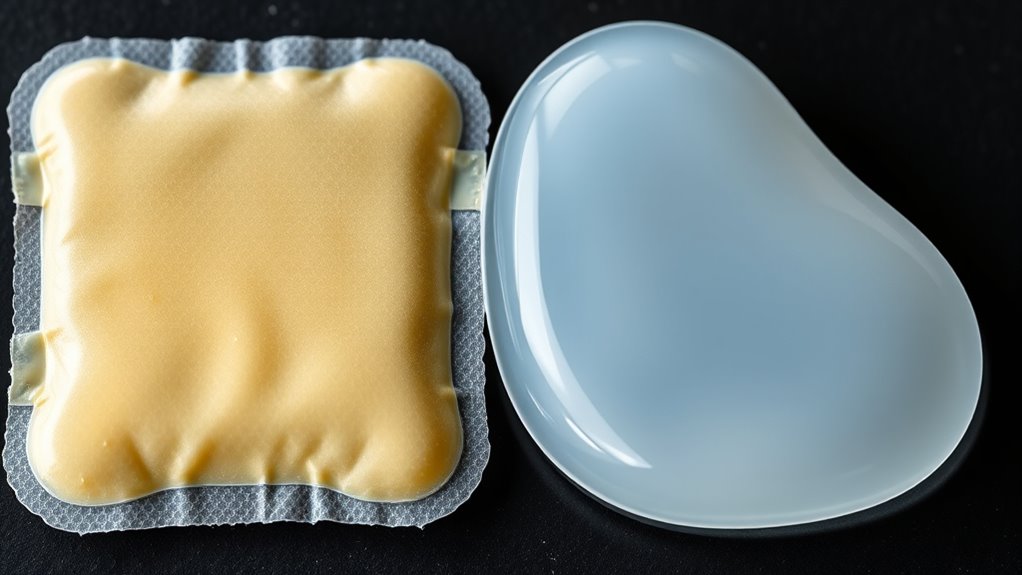
When choosing wound dressings, understanding the differences between hydrocolloids and hydrogels can help you make an informed decision. Both are popular options for wound healing, but they serve different purposes based on their unique properties. Hydrocolloids are designed to absorb exudate efficiently, making them ideal for wounds with moderate to heavy drainage. Their high absorption capacity creates a moist environment that promotes faster healing while preventing the wound from drying out. You’ll notice that hydrocolloid dressings form a gel-like substance upon contact with wound fluid, which helps maintain a consistent moist environment. This feature not only supports wound healing but also reduces the frequency of dressing changes, offering convenience and comfort.
On the other hand, hydrogels are primarily used for wounds that require moisture addition or those with minimal exudate. They contain high water content, which helps hydrate the wound bed, softening necrotic tissue and facilitating debridement. Hydrogels are less absorbent than hydrocolloids, so they’re better suited for dry or minimally exudating wounds. Their main role is to provide a soothing, moist environment that encourages tissue regeneration. Because of their ability to deliver moisture directly to the wound, hydrogels are often chosen for burns, skin tears, or ulcers that need gentle hydration. They don’t typically form gels in the same way hydrocolloids do; instead, they stay as a gel or sheet that can be easily removed or replaced without disturbing new tissue. Additionally, both dressings contribute to creating a moist wound environment, which is crucial for optimal healing.
Choosing between a hydrocolloid and a hydrogel depends heavily on the wound’s characteristics. If your wound produces a lot of exudate, a hydrocolloid’s high absorption capacity makes it the better choice, as it can handle the drainage while promoting a moist environment for healing. Conversely, if the wound is dry, or if you’re aiming to rehydrate necrotic tissue, a hydrogel offers the necessary moisture without overwhelming the wound with absorption. Both dressings play essential roles in wound care, but understanding their specific functions ensures you select the most appropriate material for ideal healing. By matching the dressing type to your wound’s needs, you support faster recovery, reduce discomfort, and minimize the risk of complications.
Frequently Asked Questions
Can Hydrocolloid or Hydrogel Patches Be Used for All Wound Types?
You can’t use hydrocolloid or hydrogel patches for all wound types, as their versatility varies. Hydrocolloid patches work well for shallow, non-infected wounds and promote moist wound healing, but they may not suit deep or infected wounds. Hydrogel patches are ideal for burns and dry wounds, offering hydration and soothing benefits. Always evaluate your wound’s specific needs to choose the right patch, ensuring effective wound healing and ideal patch adaptability.
Are There Any Allergies Associated With Hydrocolloid or Hydrogel Materials?
You might be surprised, but the allergy risk with hydrocolloid or hydrogel patches is generally low, though skin sensitivity varies. Some people with allergies to adhesives or certain materials could experience irritation or allergic reactions. Always check the patch’s ingredients and do a patch test first. If you notice redness, itching, or swelling, halt use immediately. Consulting a healthcare professional can help guarantee safe, effective wound care tailored to your skin.
How Long Should Each Patch Be Left on the Skin?
You should leave hydrocolloid patches on for about 24 to 48 hours, depending on your wound’s condition and the manufacturer’s instructions. Hydrogel patches typically stay on for 12 to 24 hours. The patch duration is key to ideal wound healing, so follow the guidelines provided. Removing the patch too early may hinder healing, while leaving it on too long can cause irritation or infection. Always check your skin and adjust accordingly.
Can Hydrocolloid or Hydrogel Patches Be Used on Sensitive Skin?
You can use hydrocolloid or hydrogel patches on sensitive skin, but proceed with caution. Imagine a gentle embrace rather than a harsh tug—that’s what suitable patches aim to guarantee. Hydrogel patches often feel soothing and are usually more suitable for sensitive skin, while hydrocolloid patches might cause irritation if your skin is very reactive. Always perform a patch test first to ascertain patch suitability and avoid discomfort.
What Are the Environmental Impacts of Disposing of These Patches?
When disposing of hydrocolloid or hydrogel patches, you’re impacting the environment. Many patches contain non-biodegradable materials, which take years to decompose, contributing to landfill waste. However, some brands now use biodegradable materials, reducing environmental harm. You can also look for recycling options or disposal methods recommended by manufacturers to lessen your ecological footprint. Always check labels and follow disposal instructions to help protect the planet.
Conclusion
So, next time you choose a wound patch, remember that hydrocolloids and hydrogels each have their quirks. It’s almost funny how one’s all about absorbing and protecting, while the other’s focused on moisture and comfort. You’d think they’d be interchangeable, but nope—each has its own drama. So, pick wisely, and don’t be surprised if your wound ends up giving you a little ironic smile, knowing you’ve got the perfect material for its unique personality.