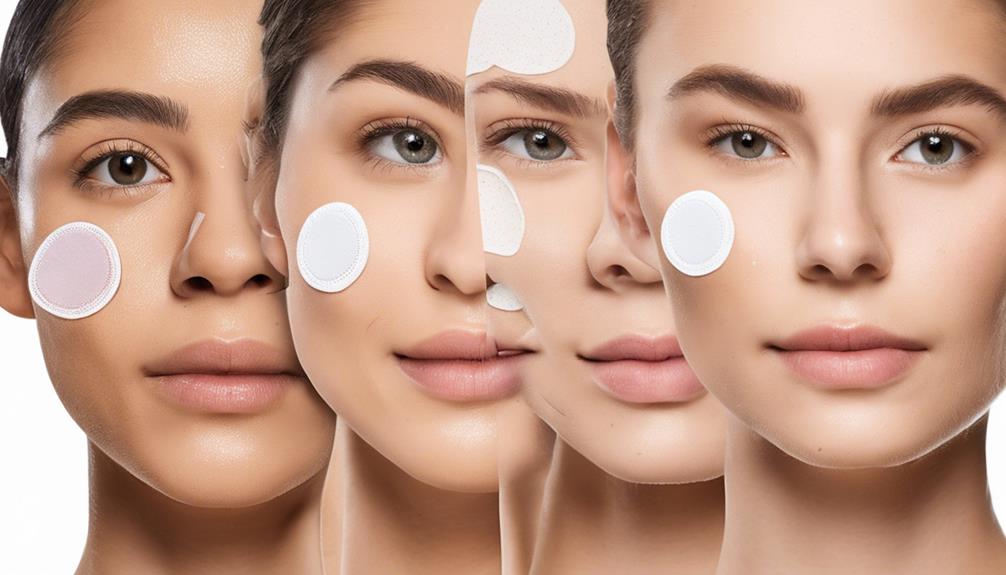
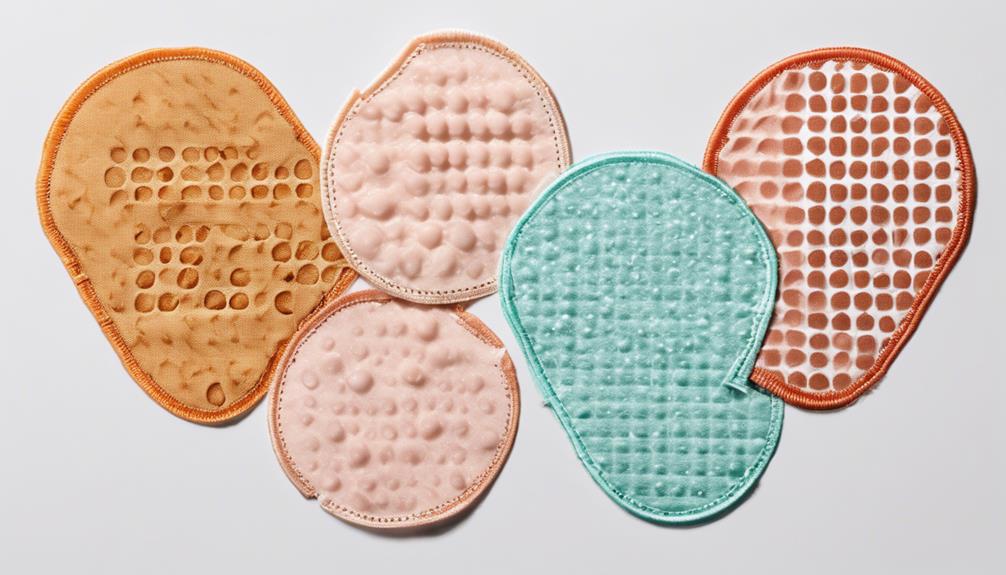
The best time to apply a pimple patch is when the blemish is red, inflamed, and filled with excess fluid, usually in its early stages before it fully develops. Applying the patch early helps absorb impurities, reduce swelling, and prevent the breakout from worsening or spreading. For maximum results, use it overnight after cleansing your skin thoroughly. Want to discover more tips for effective patching? Keep exploring for detailed advice.
Key Takeaways
- Apply during the early, inflamed stage when the pimple is red and filled with excess fluid.
- Best before bed to allow overnight healing and absorption of impurities.
- Ensure skin is thoroughly cleansed and dry before applying for optimal adhesion.
- Avoid daytime use if wearing makeup or outdoors to prevent patch displacement.
- Remove the patch once it’s filled with debris or after the recommended duration for maximum effectiveness.

Knowing the right time to apply a pimple patch can make a big difference in how effectively it works. When you choose the ideal moment, you give your skin the best chance for pimple healing. Typically, the best time to put on a patch is when your pimple is in its early stage—red, inflamed, and filled with excess fluid. At this stage, the patch can absorb impurities and prevent the pimple from worsening or spreading. Applying it as soon as you notice a developing blemish helps contain the breakout and speeds up healing.
If you’re aiming for overnight application, timing is especially important. Before you head to bed, cleanse your face thoroughly to remove dirt, oil, and makeup. Pat your skin dry gently, then apply the pimple patch directly onto the affected area. Doing this guarantees the patch adheres properly and works overnight. During sleep, your skin is more receptive to healing, and the patch can work uninterrupted, promoting pimple healing more effectively. Overnight application gives the patch ample time to absorb pus and reduce inflammation, often leading to a noticeable difference by morning.
Avoid applying a patch during the day if you’re planning to wear makeup or spend time outdoors, as oils and dirt can compromise adhesion. Also, don’t apply a patch over open wounds or broken skin, as this can cause irritation or infection. If your pimple has already come to a head, some prefer to pop it carefully before applying the patch, but only if it’s necessary and done hygienically. Otherwise, letting the pimple come to a head naturally and then applying the patch can still be effective for reducing swelling and redness.
Remember, the timing of application isn’t just about when you put it on but also about how long you leave it there. Most pimple patches are designed to be worn for several hours or overnight, so follow the instructions on the package. Leaving it on overnight maximizes the benefits, giving your skin time to heal without interruption. When you wake up, the patch will likely be filled with debris, indicating it’s done its job. Removing it gently, then applying a light moisturizer, can support ongoing healing.
Ultimately, the key time to apply a pimple patch is early in the pimple’s development, ideally before it fully inflames. Overnight application after a proper cleanse can greatly improve your pimple healing process, reducing the chance of scarring and getting you back to clear skin faster. Proper skin preparation enhances the efficacy of the patch and ensures it adheres properly for optimal results.
Frequently Asked Questions
Can I Wear a Pimple Patch Overnight?
Yes, you can wear a pimple patch overnight. Doing so fits well into your skincare routines, allowing the patch to work while you sleep. Overnight application enhances patch effectiveness by continuously absorbing impurities and reducing inflammation. Just make sure your skin is clean before applying, and avoid removing the patch prematurely. This way, you maximize benefits and wake up with clearer, calmer skin.
Should I Apply a Patch Before or After Cleansing?
Think of your skincare routine timing as setting the stage for success. You should apply the pimple patch after cleansing, when your skin is fresh and receptive. Cleansing clears away dirt and excess oil, allowing the patch to work effectively. Applying it beforehand can trap impurities. So, make cleansing your first step, then gently apply the pimple patch for ideal pimple patch application and better results.
How Long Can I Leave a Patch On?
You can leave a pimple patch on for up to 8-12 hours, following the duration guidelines on the packaging. Usually, it’s best to wear it overnight or during the day while you’re at home. Check the patch regularly; if it becomes loose or discolored, it’s time for patch removal. Removing it too early might reduce its effectiveness, so aim for the recommended duration to get the best results.
Can I Use a Patch on Sensitive Skin?
Think of your skin as a delicate garden—you wouldn’t want to plant anything harmful. Yes, you can use a patch on sensitive skin, but choose one labeled as gentle or compatible with skin sensitivity. Always patch-test first to check for reactions, as not all patches are created equal. Ensuring patch compatibility helps prevent irritation and keeps your skin happy, making your skincare routine both effective and gentle.
Is It Okay to Wear a Patch During Exercise?
Yes, you can wear a pimple patch during exercise, but choose one with sweat resistance and good patch durability. Sweat can cause the patch to loosen or fall off, so look for patches designed for active use. Make sure to apply it firmly before working out, and avoid excessive sweating or touching the patch to maintain its effectiveness. This way, your skin stays protected and the patch stays in place.
Conclusion
So, remember, timing is everything when it comes to pimple patches. Apply them when your pimple is fresh and dry for the best results—don’t wait until it’s fully inflamed or oozing. Think of it like catching a wave at just the right moment; if you miss it, you’re left paddling in the sand. Stay attentive to your skin’s signals, and you’ll keep that breakout in check before it gets out of hand.