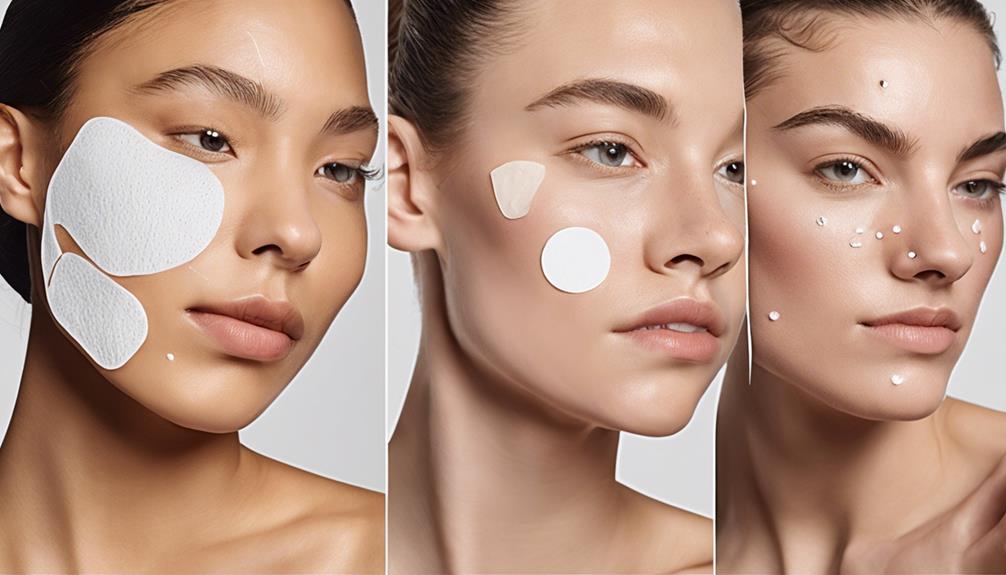
Before applying a pimple patch on an open pimple, clean your skin thoroughly and choose a patch designed for open wounds. Gently place it directly over the pimple, making sure it sticks well without stretching your skin. Keep the patch on for several hours or overnight, then carefully remove it by peeling from the edges. Proper use helps speed healing and prevents infection—if you want to learn more about this process, keep exploring for detailed tips.
Key Takeaways
- Choose a patch specifically designed for open wounds to prevent tearing and ensure proper adhesion.
- Cleanse and dry the skin thoroughly before applying the patch over the open pimple.
- Center the patch carefully over the open wound and press gently to secure it without stretching the skin.
- Leave the patch on for the recommended duration, typically several hours or overnight, and replace if saturated or lifted.
- Gently remove the patch by peeling from the edges, then apply a soothing moisturizer to support healing.
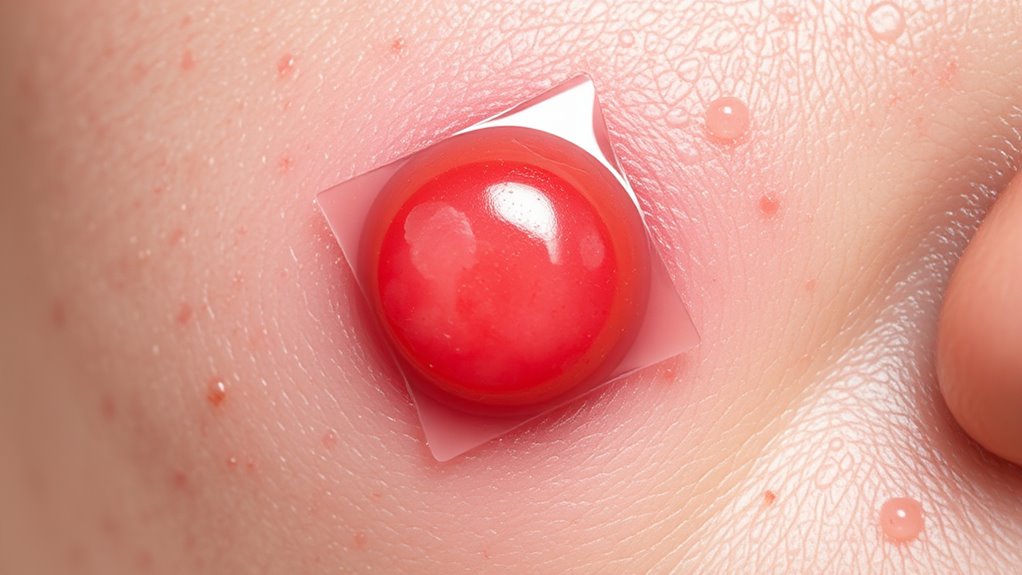
If you have an open pimple, applying a pimple patch might seem risky, but with the right approach, it can promote healing and protect the area. The key is understanding how to use patch application techniques effectively to avoid further irritation or infection. First, ensure your skin is thoroughly clean before applying the patch. Gently wash the area with a mild cleanser and pat it dry; this removes excess oil and dirt that could hinder pimple healing or cause bacteria to become trapped under the patch.
Once your skin is dry, examine the pimple carefully. If it’s actively bleeding or has broken skin, choose a patch designed specifically for open wounds. These patches usually have a slightly different design or adhesive to accommodate open areas without causing discomfort or tearing. When applying the patch, make sure to center it over the pimple, pressing gently to secure the edges without stretching the skin. Proper patch application techniques involve smoothing out any air bubbles to ensure full contact with the skin, which helps prevent bacteria from entering and promotes faster healing.
Center patch over open wound, gently press edges, and smooth air bubbles for optimal healing.
It’s important to leave the pimple patch on for the recommended duration, typically several hours or overnight, depending on the product instructions. During this time, the patch acts as a barrier, protecting the open pimple from bacteria, dirt, and further irritation. Many patches contain ingredients like hydrocolloid, which absorb excess fluid and reduce inflammation, aiding in pimple healing. If you notice the patch becoming saturated or lifting at the edges, replace it with a fresh one to maintain a clean environment for healing.
Removing the patch should be done gently, especially since the area is open. Carefully peel it back from the edges, avoiding pulling or tugging, which can reopen the wound or cause discomfort. After removal, assess the pimple. You might see a reduction in redness, swelling, or pus, indicating that healing is progressing. Applying a gentle, non-irritating moisturizer afterward can help soothe the skin and support recovery. Additionally, choosing patches formulated with hydrocolloid can enhance absorption and speed up the healing process.
Frequently Asked Questions
Can I Use a Pimple Patch on a Freshly Popped Pimple?
You can use a pimple patch on a freshly popped pimple, but it might slow down the healing process. The patch helps protect against dirt and bacteria, reducing skin irritation, but if the pimple is open, it could trap bacteria and worsen the inflammation. Make sure the area is clean and dry before applying the patch. If irritation occurs, remove it and give your skin time to heal naturally.
How Long Should I Leave a Pimple Patch on an Open Wound?
Time heals all wounds, but for open pimples, patience is key. You should leave a pimple patch on an open wound for about 6 to 8 hours, or overnight, to make sure proper open wound care is maintained. This allows the patch to absorb excess fluids and protect the area from bacteria. Keep an eye on it, and replace it if it becomes dirty or loose. Proper duration helps prevent scarring and speeds up healing.
Are Pimple Patches Safe for Sensitive or Allergy-Prone Skin?
Yes, pimple patches are generally safe for sensitive or allergy-prone skin when they contain hypoallergenic ingredients. You should look for patches designed specifically for skin sensitivity, as they minimize irritation and allergic reactions. Always do a patch test first to check for any adverse reactions. If you notice redness or discomfort, remove the patch immediately and consult a dermatologist. Using the right product helps protect your skin while treating pimples effectively.
Will Using a Patch Cause Scarring or Dark Spots?
Using a pimple patch generally won’t cause scarring or dark spots if you follow proper care. It acts as a gentle shield, helping to prevent scarring and dark spot formation by protecting your skin and reducing inflammation. Be sure to avoid picking or irritating the area further, and choose patches suited for sensitive skin. This mindful approach supports scarring prevention and dark spot mitigation, keeping your skin healthier and clearer.
Can I Apply Makeup Over a Pimple Patch on an Open Pimple?
Yes, you can apply makeup over a pimple patch on an open pimple, but it’s tricky. Make sure the patch adheres well before applying makeup, and use a gentle, non-comedogenic product to avoid disrupting the patch. Lightly tap the makeup over the patch to prevent it from lifting, and avoid heavy layers that could cause the patch to peel off. This way, you protect your skin while covering the blemish.
Conclusion
Remember, a stitch in time saves nine. When using a pimple patch on an open pimple, it’s best to wait until it’s closed to avoid infection or irritation. Be patient and listen to your skin’s cues. Treat your skin gently, and don’t rush the healing process. Sometimes, less is more—let your skin heal naturally. After all, good things come to those who wait, so give your skin the time it needs to recover fully.