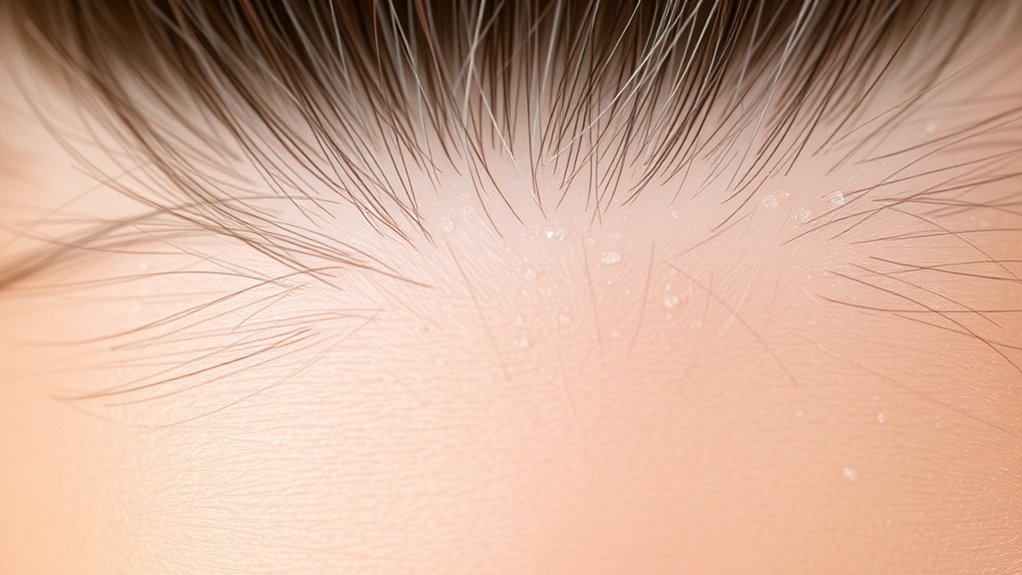

To balance your scalp’s oil, flakes, and irritation, focus on gentle cleansing with sulfate-free shampoos that don’t strip natural oils. Avoid over-washing, which can cause dryness or excess oil, and use scalp massages to promote circulation. Keeping your diet rich in vitamins and staying hydrated also helps. If issues persist, consulting a dermatologist can provide targeted solutions. Understanding these basics will help you maintain a healthier, calmer scalp over time.
Key Takeaways
- Maintain a balanced scalp by using gentle, sulfate-free shampoos to prevent oiliness and dryness.
- Manage dandruff with medicated shampoos containing zinc pyrithione, ketoconazole, or selenium sulfide.
- Regular scalp massages stimulate circulation and help regulate natural sebum production.
- Keep the scalp hydrated and support health through a balanced diet and adequate water intake.
- Consult a dermatologist for persistent issues like excessive oil, flakes, or irritation to receive targeted treatment.
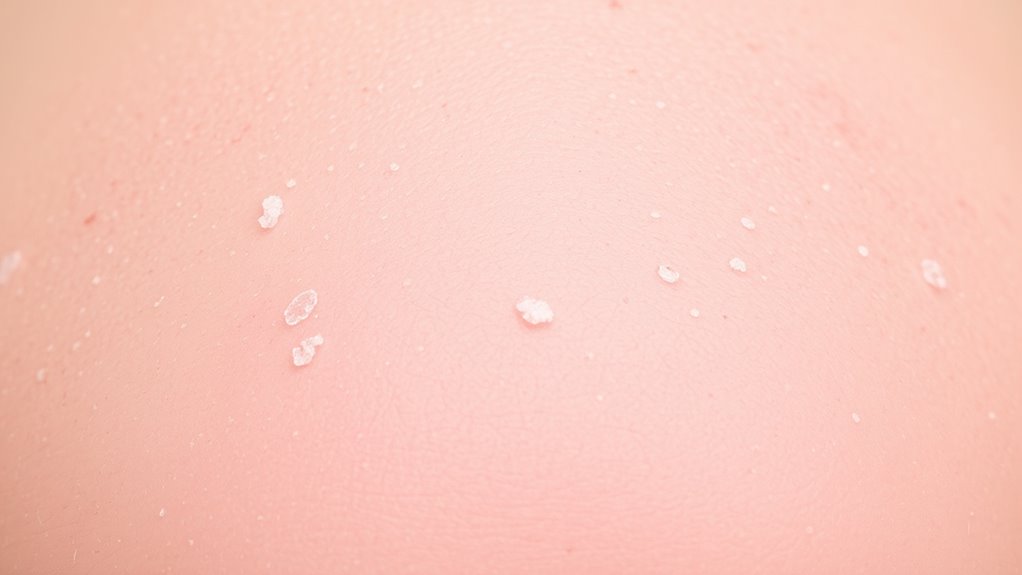
Have you ever wondered why a healthy scalp is the foundation for beautiful hair? It all starts with understanding how your scalp functions and what keeps it balanced. One key factor is sebum production. Sebum is the natural oil your scalp produces to keep hair moisturized and protected. When sebum levels are just right, your scalp stays lubricated without feeling greasy, and your hair looks shiny and healthy. But if your scalp produces too much sebum, it can lead to oily roots and make your hair appear flat or weighed down. On the other hand, too little sebum results in dryness, itchiness, and increased sensitivity. The goal is to maintain that perfect balance, so your scalp remains healthy and your hair looks its best.
Managing sebum production is vital, especially if you’re dealing with dandruff or other scalp issues. Dandruff treatment plays an important role here. Dandruff often results from an overgrowth of Malassezia yeast, which feeds on excess sebum. This overgrowth irritates the scalp, leading to flakes, redness, and itching. Using targeted dandruff treatments, such as medicated shampoos containing zinc pyrithione, ketoconazole, or selenium sulfide, helps control this yeast and reduce inflammation. Regularly shampooing with these products can keep the scalp clean, free of excess oil, and minimize flakes. It’s not about stripping your scalp completely but balancing sebum production so your scalp isn’t too oily or too dry.
Controlling dandruff involves targeted treatments to regulate yeast growth and balance scalp oils.
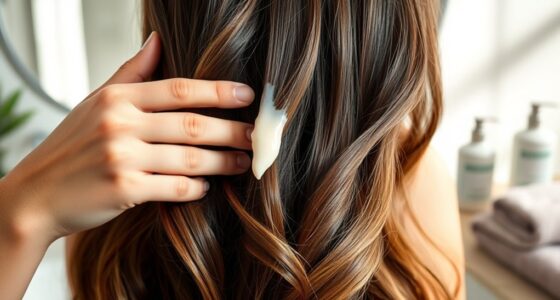
In addition to medicated treatments, adopting a gentle hair care routine supports healthy sebum levels. Avoid harsh shampoos and over-washing, which can strip away natural oils and trigger your scalp to produce even more sebum as a defense mechanism. Instead, opt for mild, sulfate-free shampoos that cleanse without disrupting the natural balance. Incorporating scalp massages can stimulate circulation and help regulate sebum production, promoting a healthier scalp environment. Proper scalp care is essential to prevent imbalances that lead to oiliness, dryness, or irritation.
Diet and hydration also influence sebum levels. Eating a balanced diet rich in vitamins and omega-3 fatty acids can support scalp health, while drinking plenty of water keeps your skin, including your scalp, hydrated. If you notice persistent issues with excess oil, flakes, or irritation, consult a dermatologist. They can recommend specific dandruff treatments or other solutions tailored to your scalp’s needs. Remember, maintaining a clean, balanced scalp is the first step toward healthier, more manageable hair, and a good dandruff treatment plan is essential to keep those flakes and irritation at bay.

Red Light Therapy for Hair Growth Device - FDA Cleared Hair Loss Treatment - Laser Cap for Hair Regrowth - Hair Thinning & Alopecia Treatment for Men & Women
Benefits: Delivers low-level laser therapy (LLLT) directly to the scalp and hair follicles to stimulate cell activity and...
As an affiliate, we earn on qualifying purchases.
Frequently Asked Questions
Can Scalp Health Affect Overall Hair Growth?
Yes, scalp health directly affects your overall hair growth. When your scalp maintains proper oil regulation, it prevents excess oil buildup and dryness, which can clog hair follicles. Healthy hair follicle function promotes stronger, thicker hair. If your scalp is irritated or imbalanced, it hampers hair follicle health, leading to thinning or hair loss. So, caring for your scalp supports ideal hair growth and keeps your hair looking its best.
Are Natural Remedies Effective for Scalp Irritation?
Yes, natural remedies can effectively soothe scalp irritation. Herbal remedies and essential oils deliver calming, cleansing, and nourishing benefits that help reduce redness and discomfort. You might try tea tree or lavender oil for their anti-inflammatory properties, or aloe vera for soothing relief. Regularly using these natural solutions can restore balance, bolster scalp health, and bring about noticeable relief—making your scalp feel healthier and happier naturally.
How Often Should I Wash My Scalp to Maintain Balance?
You should wash your scalp 2 to 3 times a week to maintain balance through proper scalp cleansing. Adjust your washing frequency based on your scalp type—more often if you have oily skin, less if it’s dry. Using a gentle shampoo helps remove excess oil and flakes without stripping natural moisture. Pay attention to how your scalp responds and tweak your washing routine accordingly for ideal scalp health.
What Ingredients Should I Avoid in Scalp Care Products?
You should avoid scalp care products with chemical preservatives and synthetic fragrances. These ingredients can irritate your scalp, cause dryness, or trigger allergic reactions. Opt for natural, gentle formulas that are free from harsh chemicals. Always check labels carefully, and choose products with soothing, nourishing ingredients like tea tree oil or aloe vera. Protect your scalp’s health by making mindful choices and staying away from potentially irritating substances.
Can Scalp Issues Be Linked to Diet and Nutrition?
Think of your scalp as a well-tuned engine, where diet impact and nutritional links play vital roles. Poor nutrition can lead to oil imbalance, dryness, or flakes, causing irritation. Consuming too many processed foods or lacking essential nutrients like zinc, omega-3s, and vitamins A, B, and D can worsen scalp issues. To maintain healthy hair, prioritize a balanced diet rich in these nutrients, fostering healthier scalp and hair growth.

2026 Upgrade Laser Cap, Red Light Therapy for Hair Growth
Laser Cap is a hand-held cap-shaped low level laser therapy device that emits laser light designed to promote...
As an affiliate, we earn on qualifying purchases.
Conclusion
Maintaining scalp health involves balancing oil production, controlling flakes, and soothing irritation. Some believe that natural oils protect your scalp’s barrier, preventing issues, while overproduction causes problems. Notably, research suggests that mild scalp dryness might trigger more oil production as your skin tries to compensate, so gentle moisturization can help. By understanding these dynamics, you can better care for your scalp and keep your hair looking healthy and vibrant.

EKZ Sonic Vibrating Scalp Massager Shampoo Brush: Electric Silicone Hair Scrubber for Deep Scalp Clean, Dandruff Removal, Exfoliation, Stress Relief & Hair Growth –Suitable for Women, Men, Kids & Pets
【Ultimate Scalp Massage & Cleansing】Built-in silicone scalp massager with high-frequency vibrations (up to 9,000/min) deeply cleanses oil, dandruff,...
As an affiliate, we earn on qualifying purchases.

IKONIC 3-in-1 Electric Scalp Massager for Hair Growth -Vibrating Head Massager Brush for Stimulation and Circulation, Use as Exfoliator, Scrub, Massager, Hair Detangle, Massage Gift for Men and Women
Electric Hair Brush : Stimulate circulation and promote scalp health with this 3-in-1 scalp massager brush. Ideal for...
As an affiliate, we earn on qualifying purchases.