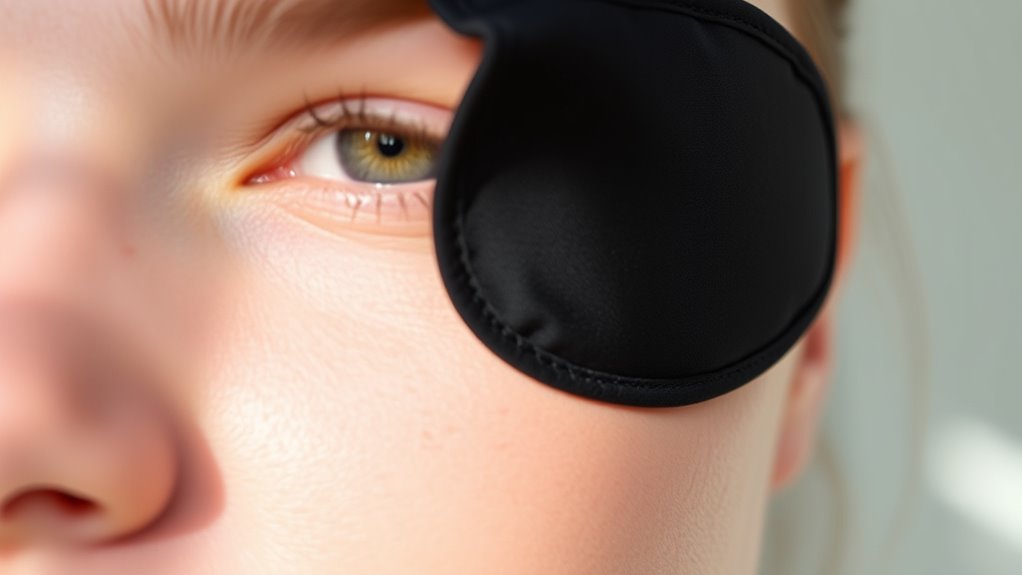

Eye patches can slip when the adhesive isn’t strong enough, your skin is oily or sweaty, or if the patch doesn’t fit your eye shape properly. Movements like blinking, squinting, or smiling put stress on the adhesive, causing it to loosen. Poor application techniques or using a patch made from unsuitable materials can also lead to slipping. To keep your eye patch secure, understanding these factors can help you troubleshoot effectively and improve adhesion.
Key Takeaways
- Poor skin preparation, such as oils or lotions, can weaken adhesion and cause patches to slip.
- Facial movements like blinking or smiling stretch skin and stress the adhesive bond.
- Using the wrong size or shape that doesn’t conform to eye contours reduces patch stability.
- Insufficient pressure during application or not pressing edges firmly can lead to slippage.
- Adhesive formulations designed for sensitive skin may have less grip, affecting adherence during movement.
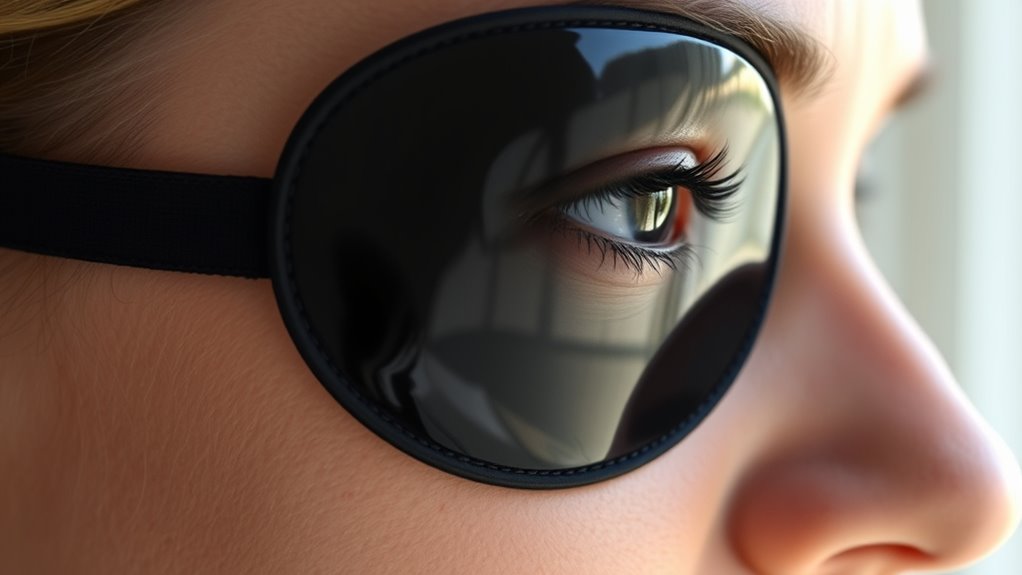
Eye patches sometimes slip off because of the way they’re designed and how they interact with your skin and movement. One of the main factors contributing to this issue is the adhesive strength of the patch. If the adhesive isn’t strong enough, it won’t grip your skin securely, especially during activities or facial expressions that involve movement. Weak adhesion can be caused by factors like skin oil, sweat, or even the formulation of the adhesive itself. When the skin is oily or sweaty, it creates a barrier that prevents the adhesive from sticking properly, leading to slippage. Additionally, some adhesives are formulated to be gentle on sensitive skin but may sacrifice holding power, which is something to contemplate when choosing your eye patch.
Facial movements play a significant role in causing patches to slip. Every time you blink, squint, or move your eyebrows, your skin stretches and shifts. If the adhesive isn’t designed to accommodate these movements, the patch can easily come loose. For example, smiling or frowning causes the skin around the eyes to move, which puts additional stress on the adhesive. Over time, this stress can weaken the bond between the patch and your skin, resulting in slipping or falling off altogether. The more expressive your face, the higher the likelihood of the patch losing its grip. To mitigate this, you might want to choose patches with flexible, elastic adhesives that move with your skin rather than against it.
Another aspect to think about is the shape and size of the eye patch. A patch that doesn’t fit well around your eye contours can be prone to slipping. If it’s too small, it won’t cover enough area or stay securely in place; if it’s too large, it might not adhere properly at the edges. Ensuring that the patch conforms to your eye shape can improve adhesion and reduce slipping. Proper application technique is also essential — clean your skin thoroughly before applying the patch, avoiding lotions or oils, and press down firmly along the edges to ensure a good seal. Using a gentle, skin-friendly adhesive or choosing patches specifically designed for different skin types can also make a difference.
Frequently Asked Questions
Can Different Materials Affect Patch Grip?
Yes, different materials can affect patch grip because material compatibility plays a vital role. Some materials, like silicone or latex, adhere better to skin than others, ensuring a more secure fit. Additionally, the patch design influences grip; patches with textured or adhesive-backed surfaces tend to stay in place longer. Choosing a patch made from compatible materials and a design suited to your skin type can help prevent slipping and improve comfort.
Is Skin Type a Factor in Patch Slipping?
Did you know that about 60% of people report skin sensitivity affecting how well patches stay in place? Yes, your skin type can influence patch slipping—sensitive skin might cause discomfort and reduce grip. If you have sensitive skin, you may find patches slide more easily, impacting patch comfort. To improve grip, choose patches designed for sensitive skin or try using a skin-safe adhesive to keep it secure.
How Does Sweating Impact Patch Adhesion?
Sweating can considerably impact patch adhesion by causing moisture interference, which weakens the adhesive’s grip on your skin. When you sweat, moisture breaks down the adhesive, making it easier for the eye patch to slip off. To prevent this, make sure your skin is dry before applying the patch, and consider using a sweat-resistant or stronger adhesive if you know you’ll be active or in a humid environment.
Are There Specific Techniques for Applying Patches?
Think of applying your patch like laying a foundation—precision matters. To optimize adhesive strengths, start with clean, dry skin and gently press the patch, smoothing out air bubbles. Use application techniques like warming the patch slightly or applying gentle pressure to enhance adhesion. These steps help your eye patch stay put, preventing slips and ensuring comfort. Proper technique guarantees a secure fit, so your treatment remains effective and hassle-free.
Do Eye Conditions Influence Patch Stability?
Yes, eye conditions can influence patch stability. If you have sensitive skin or skin irritation, your eye patch adhesives might not stick well or could cause discomfort, making slipping more likely. To improve stability, choose hypoallergenic adhesives suited to your skin type and make sure your skin is clean and dry before applying. Proper application and choosing the right adhesive can help prevent your eye patch from slipping, especially if you have skin sensitivities.
Conclusion
In short, slipping eye patches can frustrate, but with a few simple steps, you’ll stay secure. Stick to snug straps, smooth out skin, and choose the right patch for your shape. Remember, patience and proper placement prevent problems and promote better healing. So, stay steadfast, stay secure, and soon you’ll see the silent success of a snug, slip-free eye patch. Your eye care journey just got a lot simpler and more satisfying!