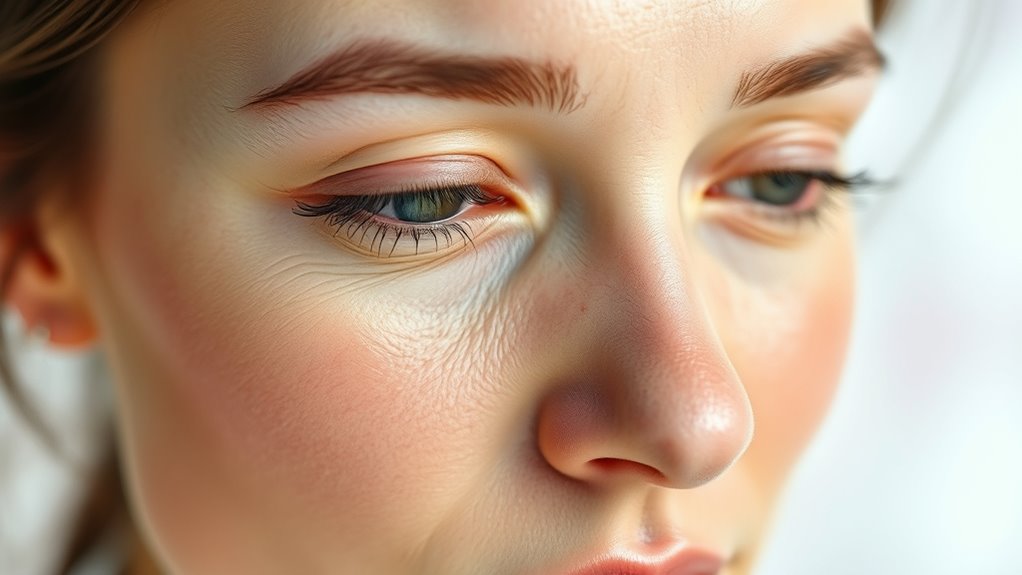

Under-eye puffiness is often triggered by dehydration, poor sleep, stress, and high salt intake, which cause fluid to build up under your skin. Rubbing your eyes and exposing yourself to harsh sun can worsen swelling, while lifestyle habits like irregular sleep and dehydration make it worse over time. To soothe puffiness, try applying cold compresses, elevating your head while sleeping, and maintaining a balanced routine. Keep exploring for more tips to keep your eyes looking fresh.
Key Takeaways
- Dehydration and excessive late-night water intake can cause fluid retention, leading to puffiness under the eyes.
- Poor sleep quality, irregular routines, and elevated stress levels increase blood vessel visibility and swelling.
- Rubbing eyes and harsh skincare damage delicate skin, worsening puffiness and inflammation.
- Sun exposure weakens skin around the eyes, while cold compresses and gentle massages help reduce swelling.
- Elevating the head during sleep and maintaining consistent routines support long-term reduction of under-eye puffiness.
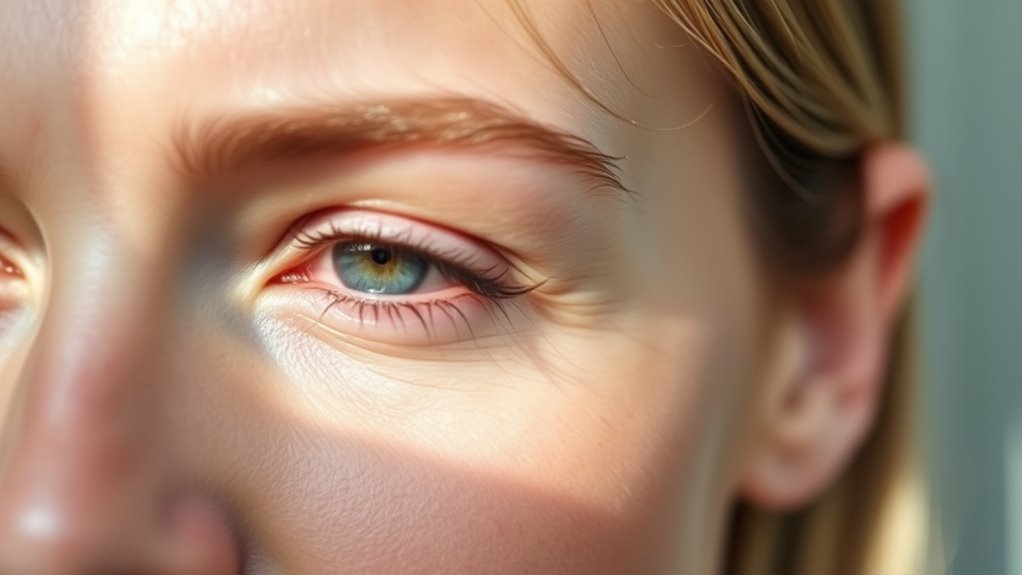
Have you ever noticed those stubborn bags or swelling under your eyes that just won’t go away? If so, you’re not alone. Under-eye puffiness is a common concern, and understanding what triggers it can help you take better care of yourself. One of the most effective starting points is examining your hydration habits. When you don’t drink enough water, your body can become dehydrated, leading to fluid retention in areas like your eye sockets. Conversely, drinking excessive amounts of water late at night can also contribute to swelling. Striking a balance by staying well-hydrated throughout the day helps maintain your skin’s elasticity and reduces puffiness. It’s also essential to limit your intake of salty foods, which can cause your body to hold onto excess water, intensifying under-eye swelling.
Another important factor is sleep quality. Poor sleep or irregular sleep patterns can markedly impact the appearance of your under-eye area. When you don’t get enough restorative sleep, your blood vessels can become more prominent, leading to dark circles and puffiness. Additionally, sleep deprivation hampers your body’s ability to repair and regenerate skin cells, making puffiness more noticeable. To improve sleep quality, establish a consistent bedtime routine, avoid screens at least an hour before bed, and create a relaxing environment in your bedroom. Elevating your head slightly while sleeping can also prevent fluid from pooling around your eyes overnight, reducing morning swelling. Using appropriate skincare products can also support skin health and reduce inflammation around the eyes.
Improving sleep quality reduces under-eye puffiness and dark circles.
Beyond hydration and sleep, other habits contribute to under-eye puffiness. For example, if you frequently rub your eyes or use harsh skincare products, you may irritate the delicate skin around your eyes, worsening swelling. Sun exposure can also weaken the skin and exacerbate puffiness, so always wear sunglasses and apply a broad-spectrum sunscreen. Managing stress is equally important, as high stress levels can lead to increased cortisol production, which may cause fluid retention and inflammation. Incorporating gentle eye massages or cold compresses can provide immediate relief by constricting blood vessels and decreasing swelling.
Ultimately, addressing under-eye puffiness involves a combination of good hydration habits, quality sleep, and mindful skincare routines. By staying consistent and attentive to these areas, you can minimize swelling and help your under-eye area look fresher and more vibrant. Remember, small changes in your daily habits can make a profound difference over time, giving you a more rested and rejuvenated appearance.
Frequently Asked Questions
Can Allergies Cause Under-Eye Puffiness?
Yes, allergies can cause under-eye puffiness. When you’re allergic, your immune system releases histamines, leading to allergy symptoms like swelling and inflammation. These puffiness causes make your under-eye area look swollen and tired. To soothe it, try applying cold compresses, staying hydrated, and taking allergy medications if needed. Identifying and avoiding allergens helps prevent future puffiness caused by allergies, keeping your eyes looking fresh and less swollen.
Are There Specific Foods That Worsen Puffiness?
Think of your body as a delicate garden, and certain foods as weeds that can cause chaos. Dietary triggers like salty snacks, processed foods, and alcohol can lead to water retention, worsening puffiness. Food sensitivities also play a role, making your under-eye area swell with irritation. To keep your garden healthy, cut back on these triggers, stay hydrated, and choose fresh, anti-inflammatory foods that soothe and rejuvenate your skin.
How Long Does Puffiness Typically Last Overnight?
Puffiness overnight typically lasts around 8 to 12 hours, depending on your sleep position and overall health. If you sleep on your back with your head elevated, you’ll notice less swelling upon waking. However, sleeping face down or with your face pressed into the pillow can increase overnight duration of puffiness. To reduce this, try adjusting your sleep position and using a gentle eye cream or cold compress in the morning.
Can Exercise Reduce Under-Eye Swelling?
Think of exercise as a magic wand for puffiness. You can reduce under-eye swelling through facial massage and eye exercises, which boost circulation and drain excess fluid. Regularly practicing gentle eye movements and massaging the area helps your body’s natural detox process. While exercise alone might not eliminate puffiness completely, it definitely supports overall eye health and can make your under-eye area look fresher and less swollen.
Is It Safe to Use Home Remedies Regularly?
Yes, it’s generally safe to use natural remedies regularly, but you should always consider your skin sensitivity. If you have sensitive skin, start with small amounts and monitor how your skin reacts. Natural remedies like cucumber slices or cold tea bags can soothe puffiness without harsh chemicals. However, consult a dermatologist if you notice irritation or if you’re unsure about a remedy, to avoid adverse reactions.
Conclusion
Now that you know what causes under-eye puffiness and how to soothe it, you’re armed with the secrets to banishing those tired-looking bags. With consistent care, you can turn back the clock and keep your eyes looking bright and refreshed—almost like they’ve been kissed by a miracle. Don’t let puffiness steal your confidence; instead, embrace these tips and let your eyes shine brighter than the stars on a clear night.