
To build a patch-friendly skincare routine, start by selecting gentle, fragrance-free products labeled for sensitive skin. Perform patch tests on discreet areas before fully incorporating new items, and introduce only one product at a time, waiting a few days to spot any reactions. Gradually add actives and monitor your skin’s response to avoid irritation. If you follow these precautions, you’ll create a safer routine—keep going to discover more tips for sensitive skin care.
Key Takeaways
- Perform patch tests on discreet skin areas before introducing new products.
- Introduce one product at a time, waiting 1-2 days to monitor for reactions.
- Choose gentle, fragrance-free, hypoallergenic products suited for sensitive skin.
- Read labels carefully, avoiding common irritants like fragrances and preservatives.
- Discontinue any product immediately if irritation occurs and reassess your routine accordingly.
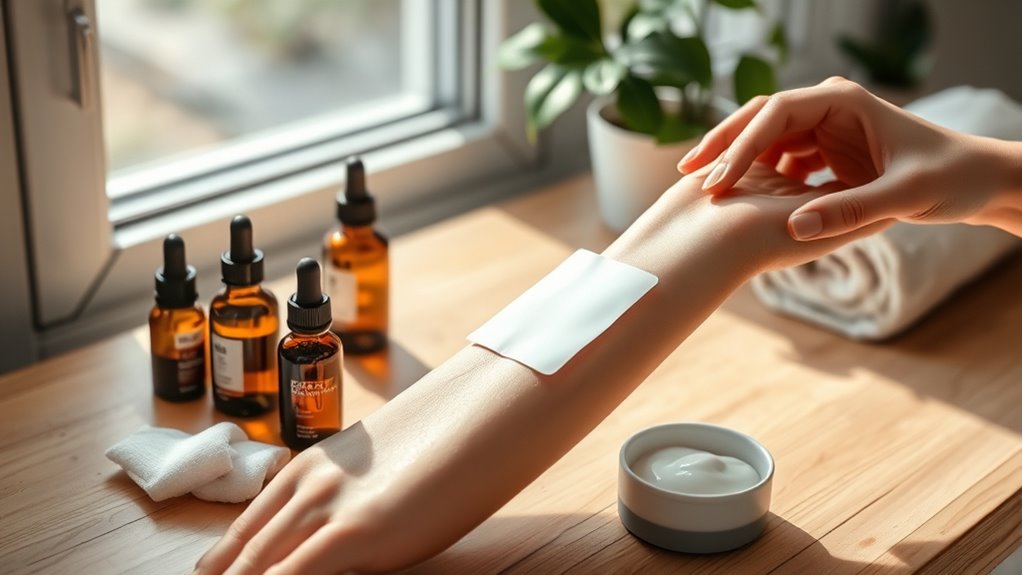
If you have sensitive or allergy-prone skin, building a patch-friendly skincare routine is essential for avoiding irritation and reactions. The first step is understanding the importance of patch testing before adding new products to your regimen. Patch testing involves applying a small amount of a product or ingredient on a discreet area of skin, such as behind your ear or on your inner forearm, and waiting 24 to 48 hours to see if any adverse reactions occur. This simple step helps you identify ingredient sensitivity early, preventing widespread irritation or breakouts. It’s especially vital if you’ve experienced redness, itching, or swelling from certain products before. By consistently patch testing, you gain insight into which ingredients your skin can tolerate, making your routine safer and more tailored to your needs.
Patch testing helps identify ingredient sensitivities early, preventing irritation and making your routine safer and more effective.
When selecting products, always read labels carefully. Look for formulations labeled as hypoallergenic or suitable for sensitive skin, but don’t rely solely on these claims—perform your own patch test regardless. Keep in mind that even products marketed as gentle or natural can contain ingredients that trigger sensitivities. Common irritants include fragrances, preservatives, and certain alcohols. If you notice a pattern of reactions to specific ingredients, make a list of those to avoid in future products. Familiarity with your ingredient sensitivity helps you make smarter choices, reducing the risk of irritation. Additionally, understanding Audi Tuning can inspire you to customize your skincare routine for optimal performance, much like tuning a vehicle for peak efficiency.
As you build your patch-friendly routine, consider starting with one new product at a time. Apply it during your patch test, then wait a day or two before introducing another item. This way, if your skin reacts, you’ll know which product is the culprit, allowing you to eliminate it without disrupting your entire routine. Also, pay attention to how your skin responds over time. Some ingredients may cause delayed reactions, so monitoring your skin for a week or more after trying new products is wise.
Using gentle, fragrance-free cleansers and moisturizers can form a core part of your routine. These products are less likely to contain irritants that compromise sensitive skin. When introducing actives or treatments, do so gradually, observing how your skin reacts. If any discomfort or irritation arises, discontinue use immediately. Remember, building a patch-friendly skincare routine isn’t about avoiding products altogether but about being cautious and informed. By prioritizing patch testing and understanding your ingredient sensitivity, you create a safer skincare environment that helps your skin stay calm, healthy, and irritation-free.
Frequently Asked Questions
Can Patch-Testing Be Done at Home Safely?
Yes, you can do patch-testing at home safely using DIY methods. Apply a small amount of the product on your skin, like behind your ear or on your inner forearm, and wait 24-48 hours to check for reactions. While DIY methods are convenient, for more accurate results, consider professional testing, especially if you have sensitive skin or allergies. Always follow instructions carefully to avoid irritation.
How Long Should I Wait Before Trying New Products?
You should wait 48 to 72 hours after patch-testing a new product before trying it fully. This allows you to spot any signs of product allergy or ingredient sensitivity, like redness or itching. If no reaction occurs within that time, it’s generally safe to introduce the product gradually. Always monitor your skin’s response and consult a dermatologist if you notice any irritation or unusual symptoms.
Are Natural Ingredients Always Safe for Sensitive Skin?
While natural ingredients often seem gentle, they aren’t always a guarantee of safety for sensitive skin. You should consider ingredient safety and be mindful of ingredient interactions, as some natural substances can still cause irritation or allergic reactions. Always patch test new products, especially those with herbal or botanical extracts, and consult with a dermatologist if you’re unsure. Your skin’s unique sensitivities require careful attention beyond just natural labels.
How Do I Identify the Cause of My Skin Reaction?
To identify the cause of your skin reaction, start by tracking your skincare products and noting any allergy triggers or ingredients that cause discomfort. Pay attention to patterns and skin sensitivities, noting when reactions occur. Consider doing a patch test with new products before full application, and consult a dermatologist if reactions persist. This approach helps pinpoint specific allergy triggers and better manages your skin’s needs.
Can Diet Influence Skin Patch Reactions?
Diet definitely influences skin patch reactions because food sensitivities can cause localized skin issues. When you consume certain foods, your immune system may react, triggering patches or rashes. By paying close attention to your diet and noting any skin sensitivities, you can identify problematic foods. Cutting out or limiting these foods might reduce patch responses, helping your skin heal and stay healthier. So, your diet plays a pivotal role in managing skin reactions.
Conclusion
Now that you’ve explored gentle, patch-friendly skincare, remember it’s all about finding what works best for you. Your skin deserves kindness and patience, so don’t rush the process. With a little care and mindful choices, you can nurture your skin without any unnecessary fuss. Stick to your routine, listen to your skin’s whispers, and watch it glow quietly. After all, the best beauty often blooms in the comfort of gentle, consistent love.