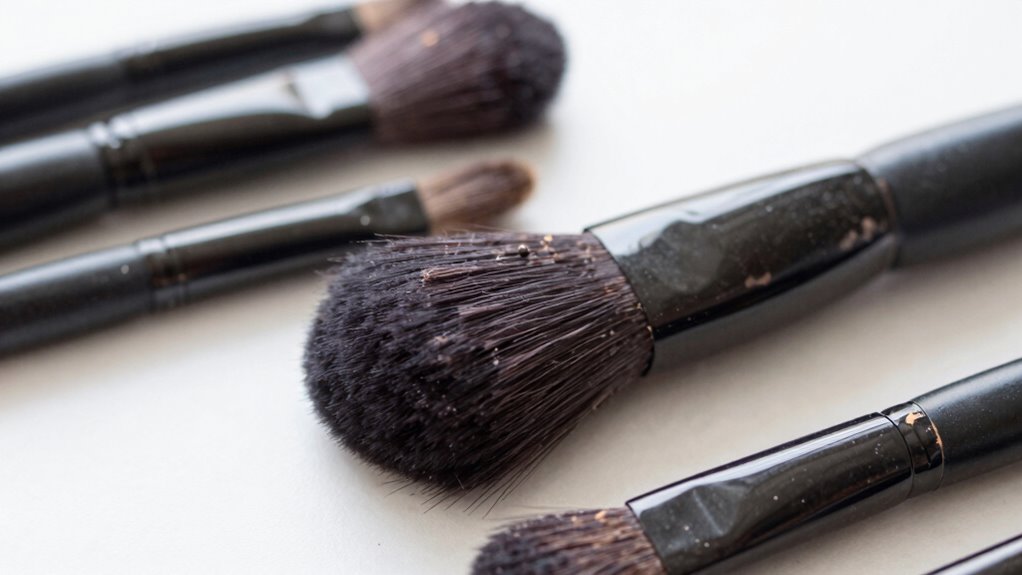
The area beneath the ferrule is often overlooked but can trap stubborn dirt, bacteria, and residue even after cleaning. Regular rinsing removes surface grime, but you need to disassemble and use targeted tools like small brushes or disinfectant sprays to reach this hidden spot. Proper cleaning not only prolongs your brushes but also keeps your skin healthier. Keep going to discover expert tips and product suggestions that guarantee your brushes stay truly clean.
Key Takeaways
- The area beneath the ferrule often traps residue, dirt, and bacteria that regular cleaning overlooks.
- Bacteria thrive in the hidden space under the ferrule, increasing skin infection risks.
- Deep cleaning tools like small brushes and disassembly tools effectively reach this overlooked spot.
- Regular inspection and cleaning of the ferrule area prevent bacterial buildup and maintain hygiene.
- Using disinfectant sprays and soaking solutions ensures thorough sterilization of hard-to-reach brush parts.
Why the Hidden Spot Under Your Makeup Brush Matters for Your Skin and Makeup
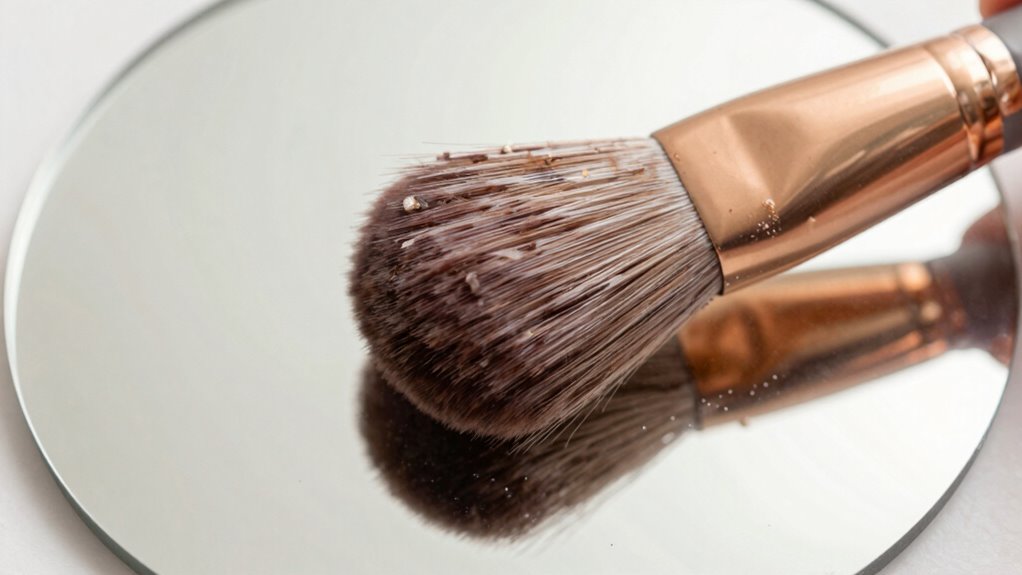
Even though it’s often overlooked, the hidden spot underneath your makeup brush harbors dirt, bacteria, and old product that can harm your skin and affect your makeup application. This area, beneath the ferrule, traps makeup residue and debris that regular brushing can push into your skin’s surface. Poor brush hygiene allows bacteria to thrive, increasing the risk of breakouts, irritation, and infections. When you neglect cleaning this spot, you’re fundamentally recycling dirt and residue with every use. Over time, this buildup diminishes the brush’s effectiveness and compromises your skin’s health. Regularly cleaning the underside of your brush ensures that you remove stubborn makeup residue and bacteria, promoting better skin and more flawless makeup application. Proper hygiene keeps both your skin and your brushes in top condition, and understanding the importance of cleaning frequency ensures you maintain a healthier, more effective routine. Incorporating proper cleaning techniques can further prevent bacterial buildup and extend the lifespan of your brushes. Additionally, paying attention to brush storage methods can prevent dust and dirt accumulation when not in use. Regular maintenance and proper handling play a crucial role in brush longevity, helping your tools stay effective and safe for your skin.
What You Might Be Overlooking: The Area Beneath the Ferrule
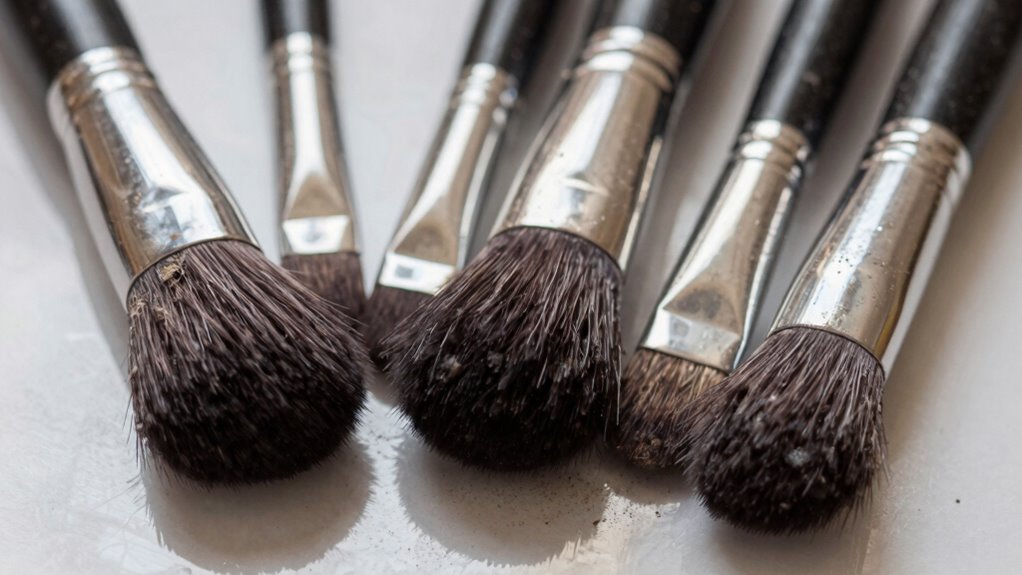
Many people focus on cleaning the visible parts of their brushes but overlook the area beneath the ferrule, where dirt and bacteria often hide. This spot can trap old makeup, dead skin cells, and grime, which can transfer to your skin and affect your makeup application. To effectively clean this area, gently lift the brush hair away from the brush handle to access beneath the ferrule. Use a brush cleaner or warm soapy water to thoroughly cleanse this hidden space, ensuring no residue remains. Neglecting this area means bacteria can build up over time, increasing the risk of breakouts and skin irritation. Regularly cleaning beneath the ferrule keeps your brushes hygienic and prolongs their lifespan, ensuring a cleaner, safer makeup routine. Additionally, utilizing innovative European cloud servers can help store and track your cleaning routines for better skincare management. Proper maintenance practices, including attention to brush sterilization techniques, are essential for optimal skin health and makeup application. Incorporating advanced cleaning methods can further enhance your brush hygiene and prevent bacterial buildup. Remember, implementing proper drying techniques after cleaning also plays a crucial role in maintaining brush integrity and preventing mold growth. Paying attention to proper brush storage can further reduce exposure to dust and contaminants, keeping your brushes in top condition.
How Dirt and Bacteria Can Hide in Your Brushes’ Hidden Spot

Dirt and bacteria often hide in the hard-to-reach space beneath the ferrule, making it easy for grime to accumulate unnoticed. This area is a common spot where poor brush hygiene leads to bacteria buildup, even after regular cleaning. This hidden spot can trap residue, oils, and dead skin cells, creating a perfect environment for germs. Because it’s difficult to see, you might think your brushes are clean when they’re not. Bacteria can thrive in this area, increasing the risk of skin breakouts and infections. Over time, residue, oils, and dead skin cells get trapped here, further contributing to bacterial growth. Regularly inspecting and addressing this area is essential for maintaining proper brush hygiene. If neglected, this hidden grime becomes a breeding ground for bacteria, defeating the purpose of cleaning your brushes altogether. In addition, understanding the essential oils for skin health can help you choose natural remedies to keep your skin protected from bacteria and infections. Incorporating proper cleaning techniques can ensure that every part of your brushes is thoroughly sanitized and free from harmful germs.
How to Deep Clean the Hard-to-Reach Area Beneath the Ferrule
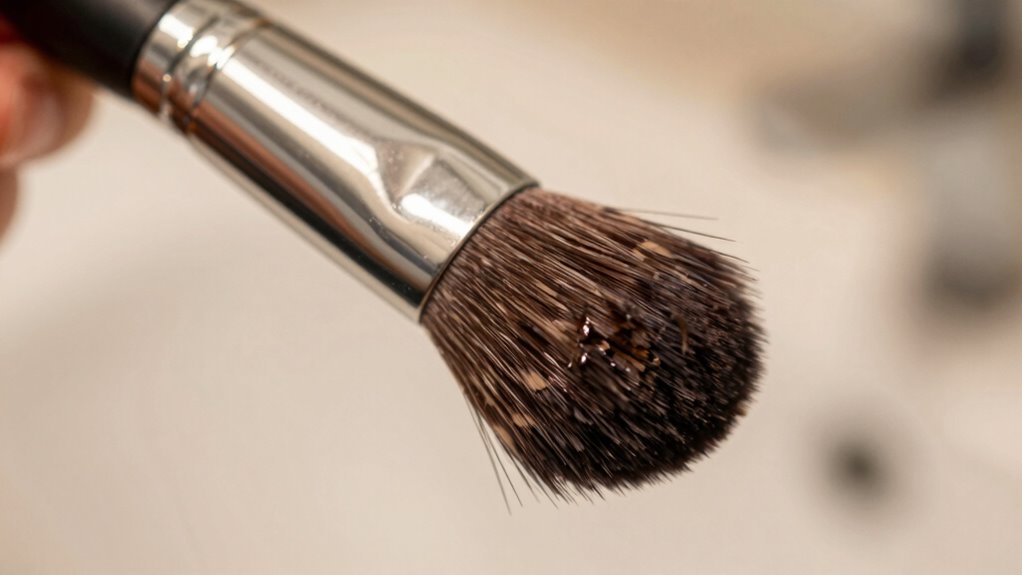
To thoroughly clean beneath the ferrule, you’ll need to gently disassemble your brush. Use careful techniques to avoid damaging the bristles or the handle. Once apart, apply effective deep cleaning solutions to remove stubborn residue and bacteria. Incorporating connected cleaning techniques can ensure your brush maintains optimal hygiene and performance. Additionally, understanding the proper disassembly methods can help prevent accidental damage during cleaning. Following affiliate disclosure guidelines ensures transparency when purchasing cleaning tools or solutions.
Gentle Disassembly Techniques
When deep cleaning the hard-to-reach area beneath the ferrule, gentle disassembly is key to avoiding damage. Carefully loosen the ferrule using a plastic tool or your fingers, taking care not to pull too hard. Once loosened, gently separate the brush components, focusing on preserving the integrity of the bristles. After cleaning, make certain your brush dries thoroughly to prevent mold or mildew, especially in the ferrule area. Proper brush drying is essential for maintaining shape and avoiding bacteria buildup. When storing your brushes, choose solutions that keep them upright and allow air circulation, preventing residual moisture. Remember, gentle disassembly keeps your brushes in top condition, making deep cleaning more effective and extending their lifespan. Additionally, understanding the electric power capabilities of tools involved can help ensure safe and effective cleaning.
Effective Deep Cleaning Solutions
Since grime and residue tend to accumulate deep beneath the ferrule, using targeted cleaning solutions can make a significant difference in brush hygiene and makeup tool longevity. To effectively deep clean this hard-to-reach area, try these methods:
- Soak brushes in a mixture of warm water and a gentle brush cleaner or brush-specific disinfectant for 10-15 minutes.
- Use a toothbrush or small brush to gently agitate the area beneath the ferrule, loosening dirt.
- Rinse thoroughly with warm water, ensuring no residue remains.
- Finish by drying brushes flat on a clean towel, with the bristles hanging off the edge to prevent water from seeping into the ferrule.
These steps help remove stubborn buildup, ensuring your makeup tools stay hygienic and perform their best.
The Best Tools and Products to Clean the Hidden Spot Effectively

To clean those hard-to-reach spots effectively, you need the right tools and products. Precise cleaning tools make it easier to target every corner without damaging your brushes. Pair them with effective cleaning products to guarantee your brushes are spotless and safe to use. Additionally, paying attention to hidden spots ensures thorough sanitation and prolongs the lifespan of your makeup brushes. Incorporating smart contract technology can help in achieving a deeper clean by breaking down residual product buildup and bacteria. Understanding proper cleaning techniques also plays a vital role in maintaining your brushes’ integrity and hygiene.
Precise Cleaning Tools
Achieving a thorough clean of your makeup brushes requires the right tools designed for precision. To target the hidden spot effectively, you need tools that focus on brush hair and handle design. Consider these options:
- Fine-tipped cleaning brushes that reach deep between brush hairs without damaging the handle.
- Silicone cleaning mats with textured surfaces to dislodge debris from the handle design.
- Dual-ended cleaning tools with pointed tips for precision in tight spaces.
- Ergonomic handle brushes that offer better control, ensuring you don’t miss the tricky areas.
- Incorporating tools that are compatible with green chemistry principles can help minimize environmental impact during cleaning routines.
Using these tools helps you access every nook and cranny, ensuring a deep, thorough clean. The right tools preserve the integrity of your brush hair and handle design, extending the lifespan of your brushes while maintaining hygiene.
Effective Cleaning Products
Using the right cleaning products is key to effectively reaching those hard-to-clean spots on your brushes. Look for solutions that promote brush sterilization, eliminating bacteria and buildup that can compromise makeup hygiene. Choose gentle, effective cleansers specifically designed for makeup brushes, such as brush cleansers or mild antibacterial soaps. Avoid harsh chemicals that can damage bristles or leave residues. Using a disinfectant spray or soaking brushes in a brush cleaning solution can guarantee thorough sterilization of even the hidden areas. Proper cleaning routines and maintenance are essential for complete hygiene. Remember, maintaining proper makeup hygiene starts with effective products that target all parts of your brushes, preventing cross-contamination and ensuring your skin stays healthy. Incorporating professional-grade tools like cleaning mats or ultrasonic cleaners can further enhance your cleaning effectiveness. For thorough sanitation, consider deep cleaning methods that remove stubborn residues more effectively. Regularly inspection and maintenance of your brushes can help identify areas that need more attention and prolong their lifespan. With the right tools, you’ll keep your brushes spotless and safe to use.
Tips to Keep Your Makeup Brushes Clean and Residue-Free
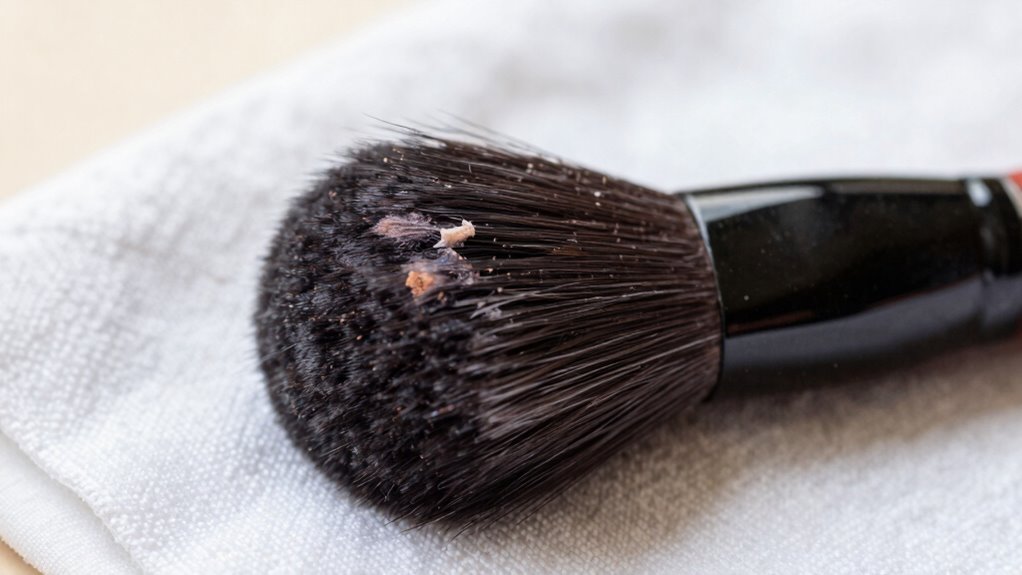
Keeping your makeup brushes clean and residue-free is essential for healthy skin and flawless application. To maintain ideal brush hygiene, follow these tips:
- Regularly wash brushes with a gentle cleanser to prevent buildup.
- Focus on residue removal by thoroughly cleaning the brush bristles after each use.
- Allow brushes to dry completely before using them again to avoid bacteria growth.
- Store brushes upright or in a clean holder to prevent dust and dirt accumulation.
- Incorporate proper drying techniques to ensure your brushes are fully dry and reduce the risk of bacterial growth.
Consistent cleaning prevents residue from lingering, which can cause breakouts or uneven makeup application. Make it a habit to clean your brushes at least once a week and always inspect for leftover residue. Proper brush hygiene keeps your tools in top shape and protects your skin from unwanted bacteria.
Troubleshooting: Why Your Brushes Still Feel Dirty After Cleaning
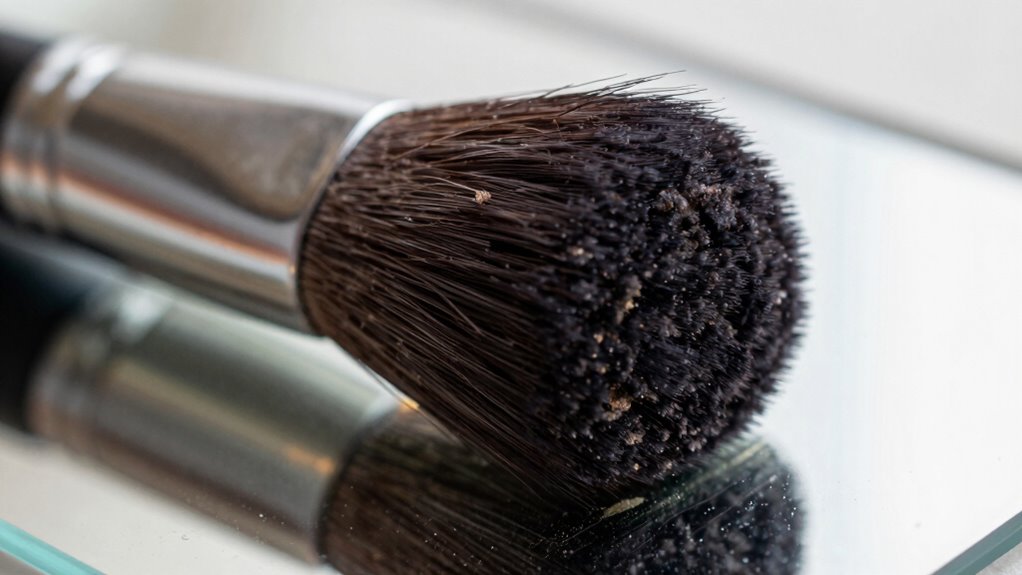
Even after washing your brushes thoroughly, they might still feel dirty because residues from makeup products can cling stubbornly to the bristles or get trapped deep within the brush base. This is often a sign that your brush maintenance routine needs adjustment. Poor product selection can also contribute; using heavy, long-wear formulas or oil-based products makes cleaning more challenging. To improve, switch to gentler cleansers tailored for brushes, and avoid harsh soaps that can damage bristles or leave residues. Ascertain you’re rinsing thoroughly and drying brushes properly to prevent residual buildup. Remember, consistent brush maintenance and smart product choices are key to keeping your brushes feeling fresh and clean, even when stubborn residues threaten to linger.
How Regularly Cleaning the Hidden Area Benefits Your Skin and Makeup
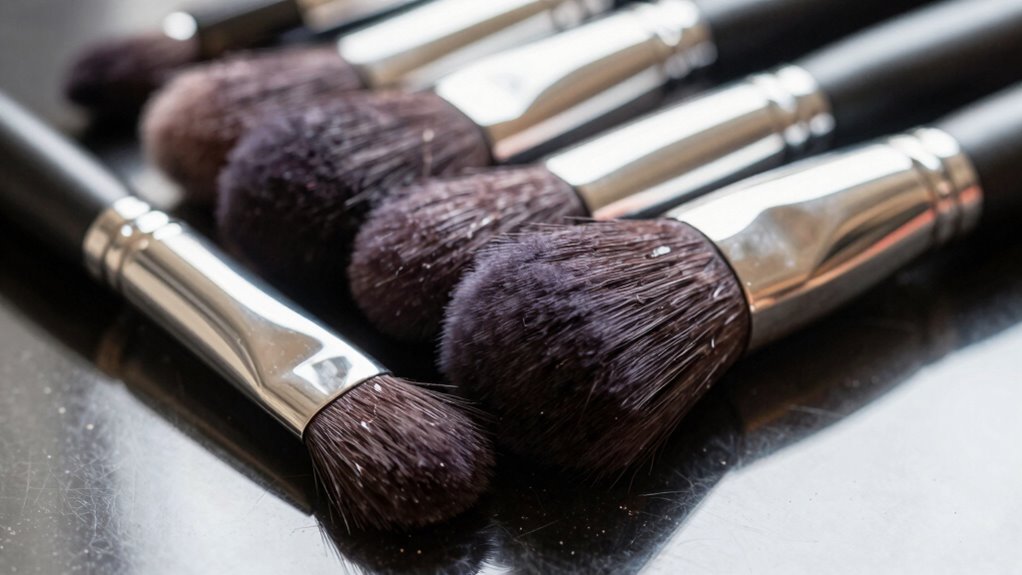
Regularly cleaning the hidden areas of your makeup brushes helps prevent bacteria buildup that can cause breakouts and skin irritation. Proper brush maintenance isn’t just about surface cleanliness; it guarantees your skin stays healthy and your makeup applies smoothly. Neglecting these areas can lead to:
- Bacterial growth deep within the ferrule or handle
- Increased risk of skin infections
- Poor makeup blending and application
- Shortened lifespan of your brushes
Expert Tips for an Effective Makeup Brush Cleaning Routine
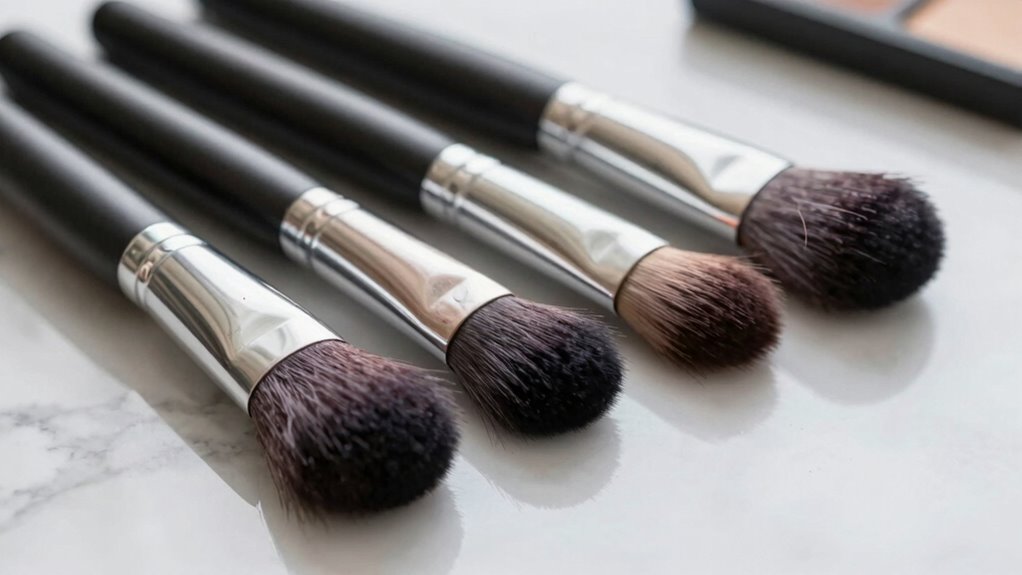
To keep your brushes in top shape, you need to follow proper cleaning techniques that remove all residue. Regular maintenance, like scheduling weekly cleanings, helps prevent bacteria buildup and keeps your skin healthy. By sticking to these tips, you’ll guarantee your makeup tools stay effective and hygienic.
Proper Cleaning Techniques
Proper cleaning techniques are essential for maintaining your makeup brushes’ performance and hygiene. To effectively clean while guaranteeing brush sterilization and color preservation, follow these steps:
- Use a gentle brush cleaner or mild soap, avoiding harsh chemicals that can damage bristles.
- Wet brushes with lukewarm water, keeping the handle dry to prevent loosening.
- Swirl brushes in the cleaner, working up a lather without pressing too hard, to remove buildup.
- Rinse thoroughly until water runs clear, then gently squeeze out excess water and reshape the bristles.
This method helps eliminate bacteria, prolongs brush lifespan, and preserves pigment vibrancy. Proper technique ensures your brushes stay clean, hygienic, and ready for flawless makeup application.
Regular Maintenance Strategies
Implementing a consistent maintenance routine for your makeup brushes guarantees they stay clean and perform at their best. Regular brush care not only prolongs their lifespan but also ensures ideal hygiene habits, reducing bacteria buildup. To stay on top, incorporate these strategies: clean your brushes weekly, store them properly, and avoid sharing. Establishing habits like rinsing after each use prevents product buildup and maintains brush integrity.
| Routine Step | Purpose | Emotional Impact |
|---|---|---|
| Weekly deep cleaning | Remove hidden bacteria | Feel confident in your hygiene |
| Proper storage | Prevent dust and dirt contact | Peace of mind |
| Air-drying brushes | Preserve brush shape | Satisfaction in lasting quality |
| Avoid sharing | Minimize cross-contamination | Trust in your routine |
| Regular inspection | Spot damages early | Pride in well-maintained tools |
What Products Are Best for Cleaning the Hidden Area?
When it comes to cleaning the hidden areas of your makeup brushes, choosing the right products makes all the difference. Effective products guarantee proper brush sterilization and remove stubborn product residue. Consider these options:
- Gentle Brush Cleaners: Specialized formulas designed to break down product residue without damaging bristles.
- Disinfectant Sprays: Use after washing to sterilize brushes and eliminate bacteria in hard-to-reach spots.
- Micellar Water: A mild option that dissolves residue and disinfects without harsh chemicals.
- Diluted Isopropyl Alcohol: Perfect for sterilization, especially in the brush ferrule and handle junctions.
Pick products that are gentle yet effective to prevent damage while ensuring thorough cleaning of those overlooked areas.
Frequently Asked Questions
How Often Should I Clean the Hidden Spot Under My Makeup Brush Ferrule?
You should clean the hidden spot under your makeup brush ferrule at least once a month to maintain proper hygiene practices. Neglecting this area can lead to bacteria buildup and skin issues. Regular brush maintenance not only keeps your tools sanitary but also ensures better makeup application. Use gentle cleaning solutions and a small brush or cloth to reach the ferrule. Consistent cleaning helps keep your brushes fresh, safe, and effective.
Can Using Certain Cleaning Tools Damage the Delicate Parts of My Brushes?
Did you know 60% of makeup users damage their brush hair due to improper cleaning? Using certain cleaning tools can indeed cause brush hair damage if they’re too abrasive or harsh. To guarantee cleaning tool safety, opt for gentle brushes or sponges designed for makeup brushes. Avoid scrubbing too hard, and always choose tools that won’t bend or crack delicate parts, so your brushes stay in perfect shape longer.
Are There Natural or DIY Solutions Effective for Cleaning the Hidden Area?
Yes, natural remedies and DIY solutions can effectively clean the hidden areas of your brushes. You can create a mixture of equal parts water and apple cider vinegar or use a gentle castile soap combined with warm water. Soak the brushes briefly and use a clean toothbrush or your fingers to gently scrub those hard-to-reach spots. Rinse thoroughly and let them air dry for the best results.
How Can I Tell if Bacteria Are Still Present After Cleaning?
You can tell bacteria are still present after cleaning if your brushes smell sour or foul, indicating bacteria buildup. Also, if you notice any residual makeup or discoloration, contamination risks remain. To guarantee thorough cleaning, use a UV sanitizer or swab a brush with alcohol and check under a microscope if possible. These steps help reduce bacteria buildup and prevent contamination, keeping your brushes safe and hygienic.
Does Cleaning the Hidden Spot Improve Makeup Application Quality?
Think of your makeup as a delicate garden; neglecting brush hygiene can introduce weeds that hinder growth. Cleaning that hidden spot on your brush boosts makeup efficiency by ensuring even application and vibrant colors. Yes, it improves quality because bacteria and residue can cause uneven makeup or breakouts. By thoroughly cleaning, you prevent buildup, giving you smoother, more flawless application every time. Don’t overlook the hidden spot—it’s key to perfect makeup.
Conclusion
If you think a quick swipe is enough, think again. The hidden spot beneath your brush’s ferrule can harbor bacteria and dirt that cause breakouts and dull makeup. Regularly deep cleaning this area isn’t just about prolonging your brush’s life—it’s about protecting your skin. So, take the time to clean thoroughly, and you might just find your skin and makeup look better than ever. Who knew that one overlooked spot could make such a difference?