
To know when to toss your products, check the PAO symbol, which shows how many months you should use the product after opening, like “6M” for six months. Also, watch for expired dates, discoloration, bad odors, or separation. If any signs appear or the PAO date has passed, it’s time to discard. Understanding these cues helps keep your skin safe and effective. Keep going to learn more about managing your products properly.
Key Takeaways
- Check the PAO symbol on packaging; discard product after the indicated months have passed since opening.
- Look for signs of spoilage such as discoloration, bad odor, or separation, and toss if observed.
- Regularly review expiration dates and discard products past their printed expiration or PAO period.
- Products with damaged packaging or changes in texture should be discarded to prevent skin irritation.
- Understand that expired products lose effectiveness and may cause skin reactions, so replace them promptly.
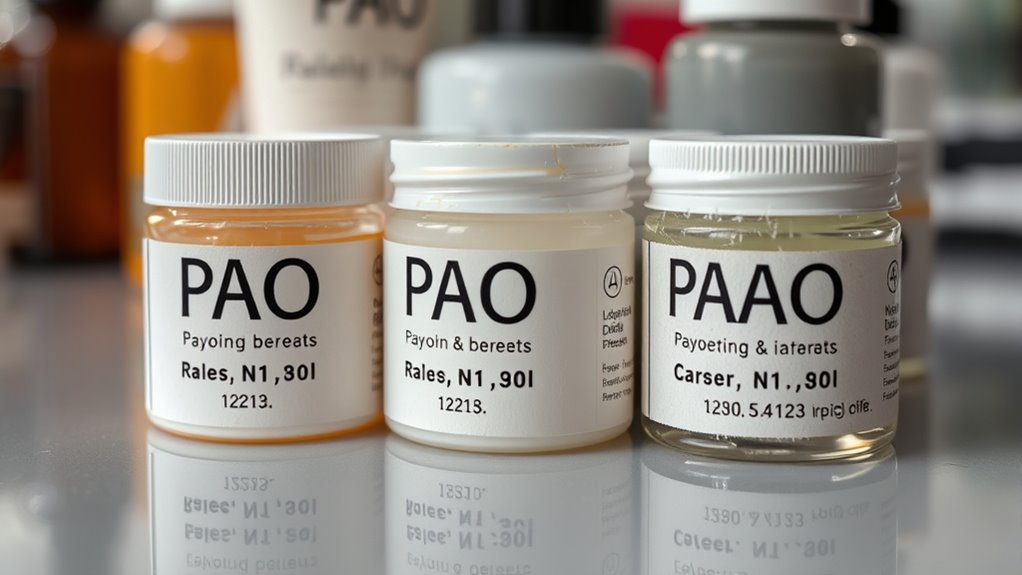
Understanding expiration dates and PAO symbols is essential for guaranteeing the safety and effectiveness of your cosmetics and skincare products. These indicators help you determine how long your products remain usable and safe to use. Shelf life refers to the period during which a product maintains its intended quality, safety, and efficacy. Once this period has passed, the product can degrade, lose potency, or potentially cause irritation or infection. Packaging symbols, including the PAO (Period After Opening) symbol, provide visual cues to help you understand when to start using the product and when to toss it.
Knowing expiration dates and PAO symbols ensures your skincare remains safe and effective.
The shelf life of a cosmetic or skincare product varies depending on its ingredients, formulation, and storage conditions. Typically, products like cleansers and powders have longer shelf lives, often lasting a year or more, while serums, creams, and items containing active ingredients tend to have shorter shelf lives, usually between three to six months once opened. It’s crucial to pay attention to these timeframes because using expired products can lead to reduced effectiveness or skin reactions. For example, a moisturizer that’s gone bad might not only be less hydrating but could also irritate your skin or cause breakouts.
Packaging symbols serve as quick references to help you manage your products better. The PAO symbol, which looks like a small open jar with a number and the letter ‘M’ inside, indicates how many months you should use the product after opening. For instance, a PAO symbol with “6M” suggests you should discard the product six months after first opening it. It’s important to note that the PAO symbol doesn’t necessarily reflect the product’s expiration date but rather guidance for ideal safety and efficacy after opening. Other packaging symbols include the “period after opening” icon, recycling symbols, and expiration date markings, all of which provide useful information.
You should develop a habit of checking these symbols regularly. When you notice a product’s PAO date has passed, or if the packaging shows signs of damage, discoloration, or an unusual odor, it’s time to throw it out. Expired products can harbor bacteria, lose their active ingredients, or cause allergic reactions. Additionally, understanding headphone compatibility with your devices can prevent damage and ensure optimal audio quality. Remember, your skin’s health depends on using products within their recommended shelf life. By understanding these symbols and paying attention to expiration dates, you guarantee that your skincare routine remains safe, effective, and beneficial. Keep your products well-organized and take a moment to review their packaging symbols periodically—your skin will thank you.
Frequently Asked Questions
How Do PAO Symbols Differ Across Product Types?
You’ll notice PAO symbol variations depending on the product type, as they’re designed to match how long each item stays safe and effective. For example, cosmetics might have a symbol with a number of months, while skincare or medicines often show a specific period after opening. Product type influence determines the PAO’s appearance and meaning, helping you understand when to toss items to ensure safety and potency.
Are Expiration Dates Always Accurate Indicators of Safety?
Expiration dates aren’t always foolproof indicators of safety because shelf life depends on storage conditions and how you handle products. If you store items properly—away from heat, light, and moisture—they may last longer than the date suggests. However, always check for signs of spoilage like bad odor, discoloration, or texture changes. Relying solely on expiration dates isn’t enough; your senses and proper storage play vital roles in safety.
Can Products Be Used After the PAO Symbol Expires?
Think of the PAO symbol like a ticking clock—once it expires, your product’s effectiveness and safety could fade like a sunset. You shouldn’t use products after the PAO date, even if they look okay. To extend shelf life and stay safe, follow proper storage tips like keeping items in cool, dry places and sealing containers tightly. Trust your senses and discard anything that smells or looks off, regardless of the date.
What Are Signs a Product Has Gone Bad Before Expiration?
You’ll notice signs of product spoilage before the expiration date if you observe sensory indicators. Check for an off smell, unusual texture, or discoloration. If the product feels slimy, has mold, or develops a strange taste, it’s best to toss it. These sensory clues help you identify spoilage early, ensuring you don’t consume unsafe products. Always trust your senses to determine if a product has gone bad.
Do Homemade Products Have PAO Symbols or Expiration Dates?
You won’t find PAO symbols or expiration dates on homemade products because they’re crafted with love, not labels! For DIY safety, your homemade shelf life depends on ingredients and storage, not dates. Think of it like a secret recipe—trust your senses. If it smells off, changes color, or has mold, toss it. Keep an eye on your creations, and enjoy the thrill of safe, fresh homemade goodness!
Conclusion
So, next time you’re checking those expiration dates or PAO symbols, remember that your senses matter too. While some products might be safe past their date, others could be risky. It’s a myth that all expired items are automatically dangerous—trust your nose and sight. When in doubt, toss it. After all, your health’s worth more than saving a few bucks on something that’s gone bad. Stay cautious and keep enjoying safe, fresh products!