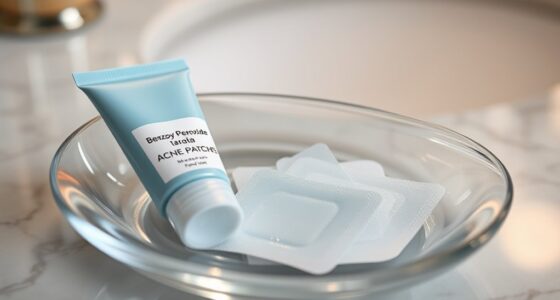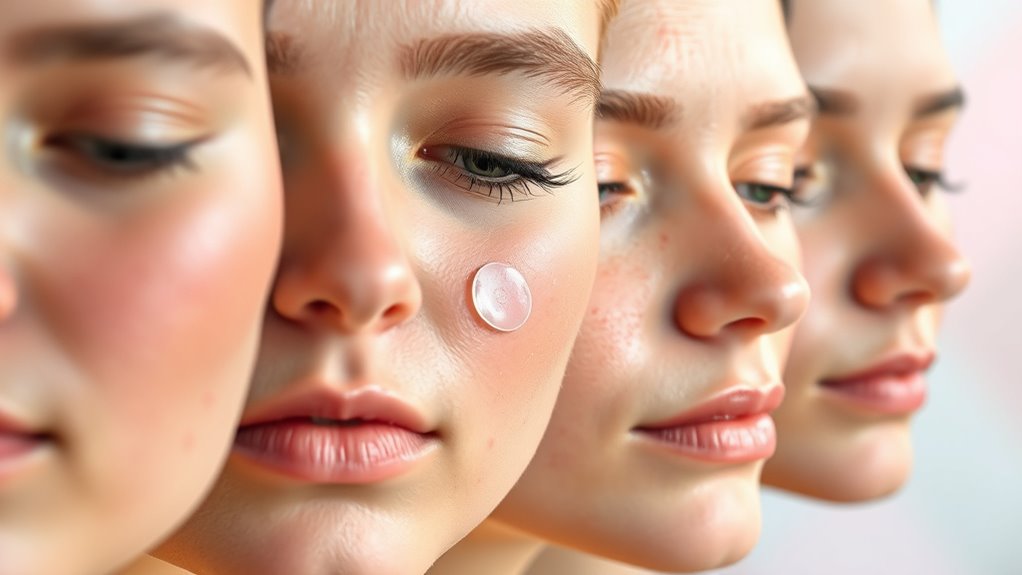

Many believe acne patches only work on small, surface-level pimples, but they can also help absorb fluid and reduce inflammation. Common myths say patches cause irritation or dryness, yet when used properly, they maintain skin hydration and prevent flakiness. They’re not effective for cystic or deep-seated acne, but they’re great for quick relief on early-stage spots. To discover more about what’s true and false, keep exploring the facts behind acne patches.
Key Takeaways
- Acne patches effectively target small, superficial pimples and absorb excess fluid, but are not a cure for cystic or severe acne.
- They contain ingredients that promote hydration, preventing dryness; overuse can cause skin tightness or irritation.
- Best applied early when a pimple is small and fluid-filled, not on fully matured or dried-out blemishes.
- Myth: They cause more irritation; fact: when used properly, they can reduce inflammation and promote faster healing.
- Acne patches are a helpful addition to skincare routines but should not replace long-term treatments for persistent or hormonal acne.
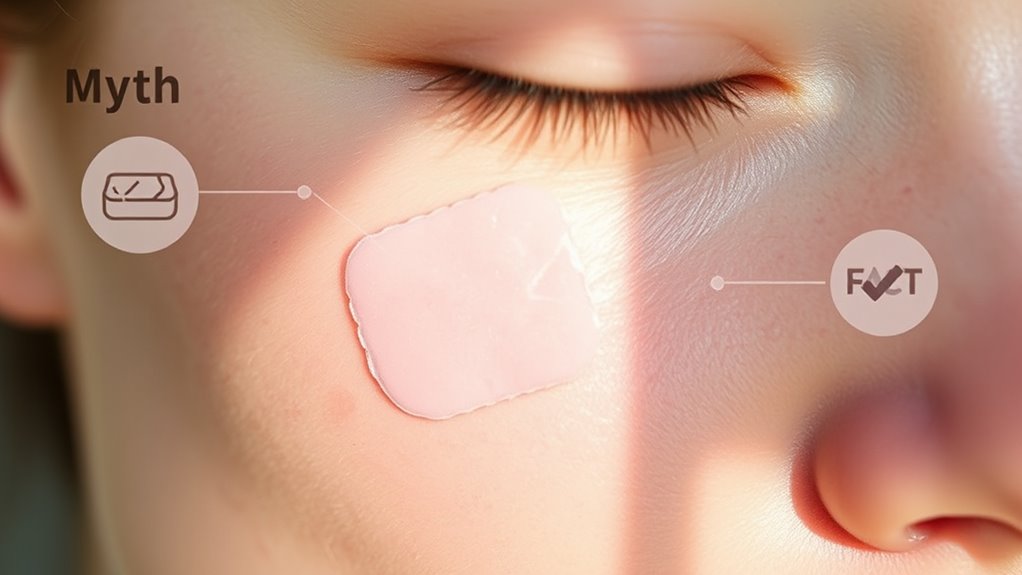
Acne patches have become a popular solution for quick spot treatment, but many myths about their effectiveness and safety persist. You might have heard that they’re only good for small pimples or that they can cause more skin irritation than they help. The truth is, acne patches are versatile tools in pimple treatment, designed to target specific spots quickly and effectively. They contain ingredients like hydrocolloid, which absorbs excess fluid and pus from acne, reducing inflammation and promoting faster healing. When used properly, they don’t just treat the pimple but also help maintain skin hydration, preventing the skin from becoming overly dry or flaky around affected areas. This balance is essential because overly drying your skin can trigger more oil production, leading to more breakouts.
Many people assume that acne patches are only useful for superficial pimples and can’t handle deeper cystic acne. That’s a misconception. While they work best on surface-level spots, some advanced formulations can help reduce the size and redness of larger or more stubborn pimples, especially when combined with good skin care routines. It’s important to remember, though, that acne patches aren’t a cure-all for severe cystic acne or hormonal breakouts. They’re meant for targeted, quick relief, not long-term solutions for persistent, deep-seated acne.
Acne patches help with stubborn pimples but aren’t a cure for severe cystic acne.
Another misunderstanding is that acne patches will dry out your skin completely, worsening your overall skin hydration. This isn’t necessarily true. Many patches are formulated with ingredients that promote skin hydration and help maintain a healthy moisture barrier. When you use them correctly—applying them only on the pimple and not over large areas—you can minimize the risk of dryness or irritation. Proper skin hydration is vital because it helps your skin recover faster and reduces the likelihood of post-inflammatory hyperpigmentation and scarring. If you notice your skin feeling dry or tight, it’s a sign to incorporate a gentle moisturizer into your routine and not overuse patches.
Some believe that acne patches can be used at any stage of a pimple’s development, but that’s a misconception. For best results, you should apply them when the pimple is small, red, and filled with fluid. Waiting until the pimple has come to a head allows the patch to absorb excess fluid more efficiently, speeding up healing. Trying to use patches on fully matured or dried-out pimples might not be effective and could even irritate your skin.
Frequently Asked Questions
Can Acne Patches Work on Cystic Acne?
Acne patches generally aren’t effective on cystic acne, as this type involves deep, painful cysts below the skin’s surface. While patches work well for surface-level pimples, they can’t penetrate deeply enough to treat cystic acne effectively. If you’re dealing with cystic acne, it’s best to consult a dermatologist for targeted treatments. Patches may provide some relief for smaller, surface blemishes but aren’t a reliable solution for cystic breakouts.
Are Acne Patches Effective for All Skin Types?
Acne patches can be effective across various skin types, but their skin compatibility varies. You should look for patches designed for your specific skin needs, as some contain ingredients that might irritate sensitive skin. Their product versatility means many options are available, from hydrocolloid to medicated patches. Testing a small area first helps make certain they work well for you without causing irritation, making them a practical addition to your skincare routine.
How Long Do Acne Patches Typically Need to Stay On?
You should keep acne patches on for about 6 to 8 hours for ideal duration effectiveness. Typically, you’ll want to remove the patch once it’s turned white or after the recommended time on the packaging. Leaving it on too long can cause skin irritation, while removing it too early may lessen its effectiveness. Always follow the patch’s instructions for proper patch removal timing to get the best results.
Do Acne Patches Cause Skin Irritation or Allergic Reactions?
Skin sensitivity can make you wonder if acne patches cause irritation or allergic responses. Usually, they’re gentle, but if you have sensitive skin, you might experience redness or itching—like a twinge of a warning bell. Always check ingredients for potential allergens, and do a patch test before full use. If irritation occurs, remove the patch and consult a dermatologist to avoid worsening your skin’s condition.
Can Acne Patches Be Used Alongside Other Skincare Treatments?
Yes, you can use acne patches alongside other skincare treatments, but you should verify their patch compatibility first. Combining skincare products with patches can be effective if you choose compatible ingredients and follow proper layering. Always apply patches on clean skin and avoid using harsh or irritating products underneath. This approach helps prevent reactions and ensures your combination skincare routine works well without compromising the patch’s effectiveness.
Conclusion
Think of acne patches as tiny knights guarding your skin fortress. Some believe they’re invincible, while others see them as mere illusions. The truth is, they’re your allies in the battle against breakouts—powerful yet not all-encompassing. Trust in their shield, but remember, no single knight can win the war alone. Embrace the journey, knowing each patch is a step forward, adding layers to your defenses in the ongoing quest for clearer skin.