Pimple patches directly target surface blemishes by absorbing excess oil, pus, and providing active ingredients like salicylic acid or tea tree oil for quick healing. Clay spot treatments dive deeper, using bentonite or kaolin to absorb oil, impurities, and bacteria from pores, making them better for oily skin and multiple pimples. If you want to understand which suits your skin type and needs best, more details are just ahead.
Key Takeaways
- Pimple patches target surface blemishes by absorbing oil and pus, providing quick, targeted relief.
- Clay spot treatments offer deep cleansing by absorbing excess oil, impurities, and toxins from pores.
- Pimple patches are worn on the blemish for continuous active ingredient delivery; clay treatments are rinsed off after application.
- Pimple patches are ideal for isolated, surface-level pimples; clay treatments suit multiple blemishes and oily skin.
- The choice depends on whether you need immediate, targeted relief or deep pore cleansing based on skin type and pimple severity.
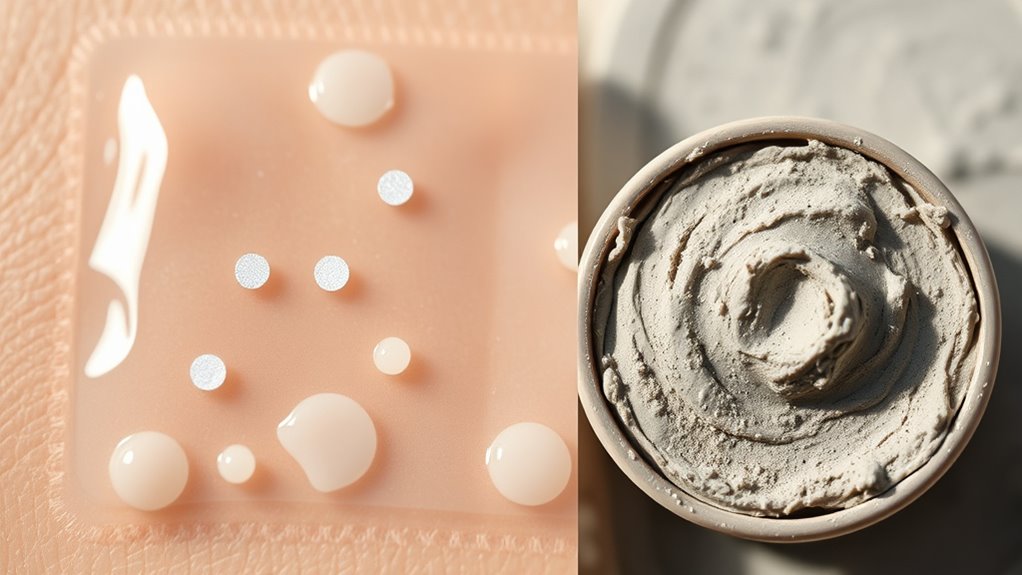
When dealing with pimples, choosing the right treatment can make all the difference. Two popular options are pimple patches and clay spot treatments, each with its own benefits and application methods. Understanding the ingredient comparison between these treatments and how you apply them can help you decide which works best for your skin.
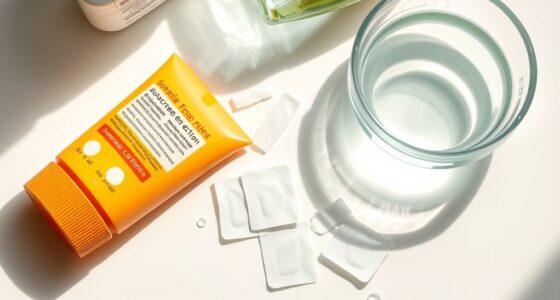
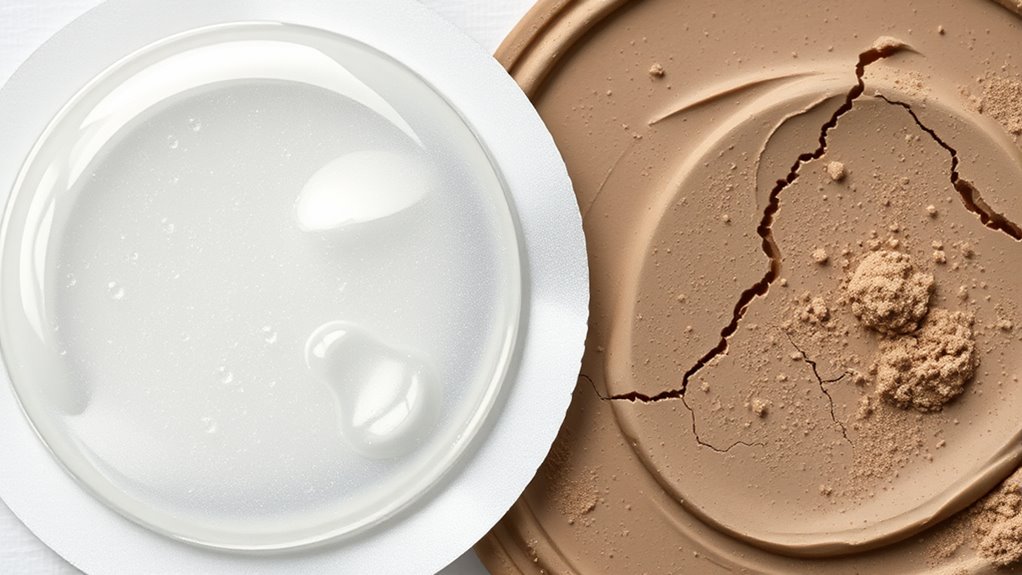
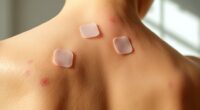
Pimple patches are small, adhesive stickers infused with active ingredients designed to target blemishes directly. These patches typically contain ingredients like hydrocolloid, salicylic acid, or tea tree oil. Hydrocolloid helps absorb excess oil and pus, reducing inflammation and drawing out impurities. Salicylic acid, a beta hydroxy acid, penetrates deep into pores to exfoliate and clear blockages, while tea tree oil offers antibacterial properties that combat acne-causing bacteria. When comparing ingredients, pimple patches focus on delivering these actives locally, often in a concentrated form, to promote quick healing.
Clay spot treatments, on the other hand, usually come in a paste or mask form with ingredients like bentonite or kaolin clay. These clays work by absorbing excess oil, impurities, and toxins from the skin’s surface, helping to reduce the size and redness of pimples. Many clay spot treatments include additional ingredients such as salicylic acid, benzoyl peroxide, or sulfur to enhance their efficacy against acne. The ingredient comparison shows that while clay treatments primarily draw out impurities from the surface and pores, they also often contain active ingredients that penetrate deeper to target bacteria and inflammation.
Application methods differ markedly. Pimple patches are straightforward—you peel off the backing and stick them directly onto the blemish. They’re discreet, easy to use, and can be worn throughout the day or overnight. You don’t need to wash your face immediately after applying, and the patch works continuously to absorb fluids and deliver ingredients. Clay spot treatments require a different approach; you typically apply a thin layer over the affected area, leave it on for a specified time—usually 10 to 15 minutes—and then rinse off. This process often involves a bit more prep and cleanup but can provide a more thorough treatment, especially if you’re dealing with multiple blemishes or oily skin.
Ultimately, your choice depends on your skin type, the severity of your pimples, and your lifestyle. Pimple patches are great for quick, targeted relief and work well on surface-level blemishes. Clay treatments are more suited for oil control and deep cleansing, especially if you prefer a mask-like solution. Both have their strengths, but understanding their ingredient comparison and application methods helps you use each treatment effectively, giving you clearer, healthier skin.

LivaClean 330 CT Pimple Patches for Face w/Salicylic Acid, Tea Tree Oil & Calendula Oil – Four Sizes – Pimple Patch, Hydrocolloid Patch, Acne Patches for Face
- Effective Pimple Absorption: Absorbs impurities and minimizes blemishes
- Discreet, Four Sizes: Fits easily in purse or bathroom kit
- Infused with Natural Oils: Contains Tea Tree, Salicylic Acid, Calendula
As an affiliate, we earn on qualifying purchases.
As an affiliate, we earn on qualifying purchases.
Frequently Asked Questions
Can Both Treatments Be Used Together Effectively?
Yes, you can use both treatments together effectively through combination therapy. They’re generally compatible, allowing you to target pimples with a pimple patch for immediate protection and a clay spot treatment to absorb excess oil and reduce inflammation. Just make certain you apply the pimple patch first, followed by the clay treatment if needed, and avoid over-treating to prevent irritation. This approach maximizes their benefits while minimizing risks.
Are Pimple Patches Suitable for All Skin Types?
Did you know that over 50% of people with sensitive skin struggle to find suitable treatments? Pimple patches may not be ideal for everyone, especially if you have highly sensitive or reactive skin. They’re generally compatible with most skin types, but it’s best to patch-test first. If you have skin sensitivity, look for gentle, hypoallergenic options to avoid irritation and guarantee product compatibility for effective pimple care.
How Long Does Each Treatment Typically Take to Show Results?
You’ll notice visible results from pimple patches within a few hours to overnight, thanks to their targeted treatment speed. Clay spot treatments generally take longer, often a few days, to show significant results as they work to absorb excess oil and reduce inflammation gradually. For faster results, pimple patches are your best bet, while clay treatments are better suited for ongoing skin care and deeper cleansing over time.
Can Clay Spot Treatments Cause Skin Dryness or Irritation?
Did you know that nearly 30% of users report skin sensitivity issues with clay spot treatments? Yes, they can cause dryness or irritation, especially if you have sensitive skin or ingredient irritation. You might notice redness, peeling, or discomfort after use. To prevent this, choose formulations suited for sensitive skin and avoid overuse. Always patch-test new treatments to protect your skin’s health and avoid unwanted reactions.
Which Treatment Is More Cost-Effective Long-Term?
You’ll find that pimple patches are more cost-effective long-term because they target specific pimples without overusing products, reducing waste. Clay spot treatments might seem cheaper initially but can lead to more frequent purchases due to limited effectiveness or skin irritation. For better long-term savings, consider the cost comparison, and choose the method that keeps your skin clearer with fewer applications, saving you money over time.
Conclusion
So, whether you prefer a tiny patch or a soothing clay spot, you’re still battling the same stubborn pimple. Ironically, the quick fix might actually take longer to see results, and the natural approach could be just as effective—if not more. In the end, it’s all about finding what works for you, because no matter what you choose, that pesky zit still manages to steal the spotlight. Guess skincare is a true test of patience after all.